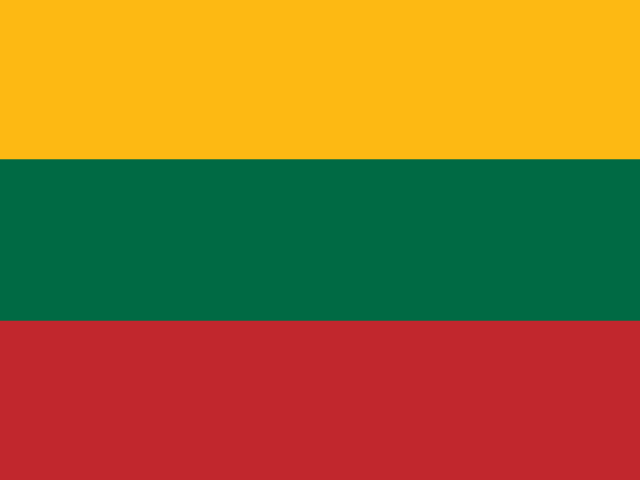
Lithuania is a Baltic country in northeastern Europe, bordered by Latvia, Belarus, Poland, and the Kaliningrad region of Russia. It is known for its medieval old town, amber coastline along the Baltic Sea, and a rich folk tradition. Lithuania was the last country in Europe to officially adopt Christianity, giving it a uniquely layered cultural heritage.
- Capital
- Vilnius
- Continent
- Europe
- Region
- Northern Europe
- Area
- 65,300 km²
- Coordinates
- 56° N, 24° E
- Languages
- Lithuanian
- Currency
- EUR €
- Domain
- .lt
- Calling code
- +370
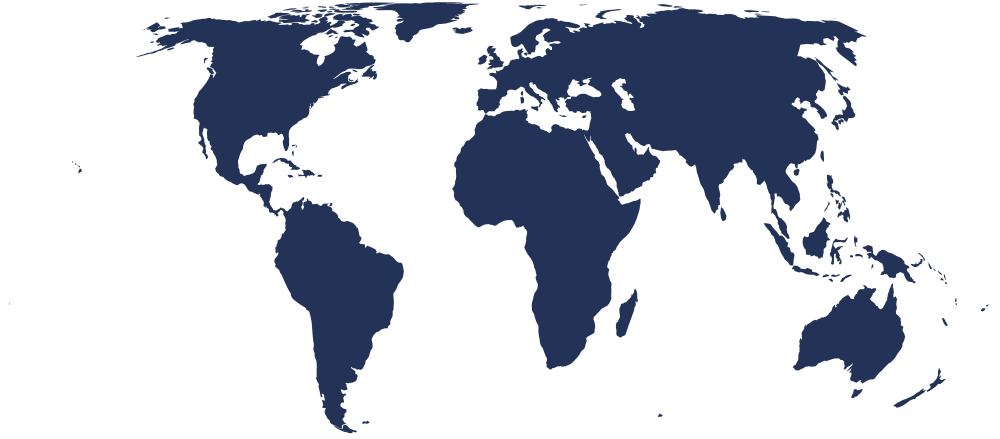
On the world map
Bordering countries
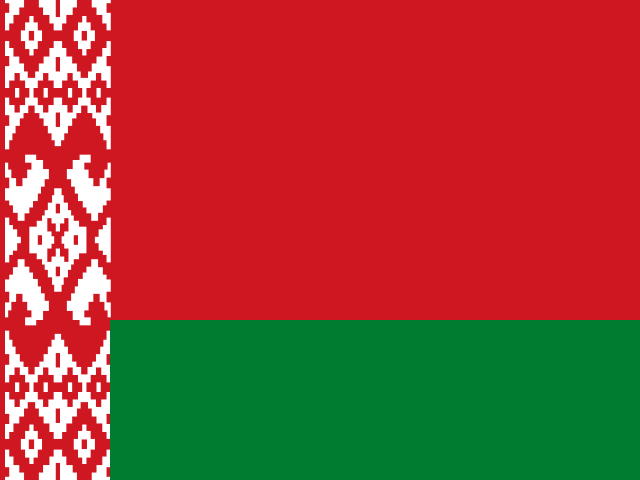 Belarus
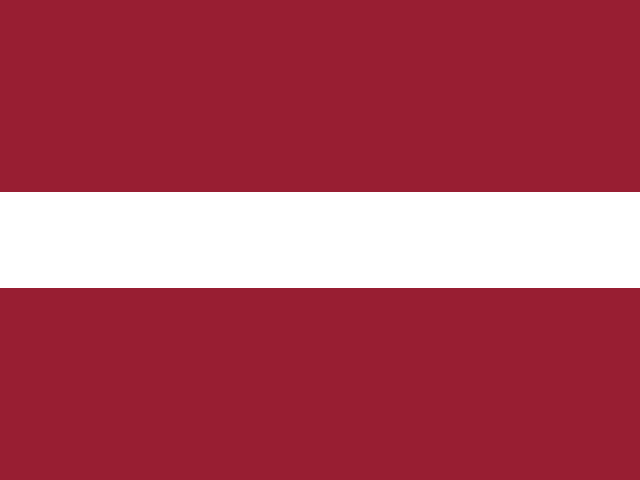 Latvia
 Poland
 Russia
Country facts
- Lithuania declared the restoration of its independence from the Soviet Union on March 11, 1990, becoming the first Soviet republic to do so.
- The Lithuanian language is one of the oldest living Indo-European languages and has preserved many archaic features.
- Lithuania is home to a UNESCO-listed region called the Curonian Spit, a narrow sand dune peninsula shared with Russia.
- Basketball is enormously popular in Lithuania, and the country has produced many players who competed at the highest international level.
- The national symbol of Lithuania is the mounted knight known as Vytis, which has appeared on the country's coat of arms for centuries.
Capital facts
- Vilnius is one of the largest surviving medieval old towns in Europe and is a UNESCO World Heritage Site.
- The city sits at the confluence of the Neris and Vilnia rivers, with the Vilnia river giving the capital its name.
- Gediminas Tower, perched on a hill above the city, is a landmark remnant of the medieval Upper Castle and a national symbol.
- Vilnius has a remarkable concentration of Baroque architecture, earning it the nickname the 'Baroque capital of Eastern Europe.'
- The quirky Užupis district declared itself an independent republic on April 1, 1997, and has its own tongue-in-cheek constitution.