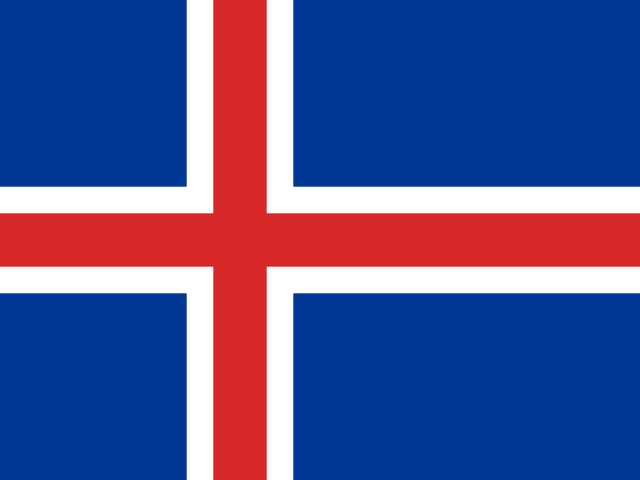
Iceland is a Nordic island nation situated in the North Atlantic Ocean, just below the Arctic Circle. It is renowned for its dramatic volcanic landscapes, geothermal hot springs, and the dancing lights of the aurora borealis. The country sits on the Mid-Atlantic Ridge, making it one of the most geologically active places on Earth.
- Capital
- Reykjavik
- Continent
- Europe
- Region
- Northern Europe
- Area
- 103,000 km²
- Coordinates
- 65° N, 18° W
- Languages
- Icelandic
- Currency
- ISK kr
- Domain
- .is
- Calling code
- +354
On the world map
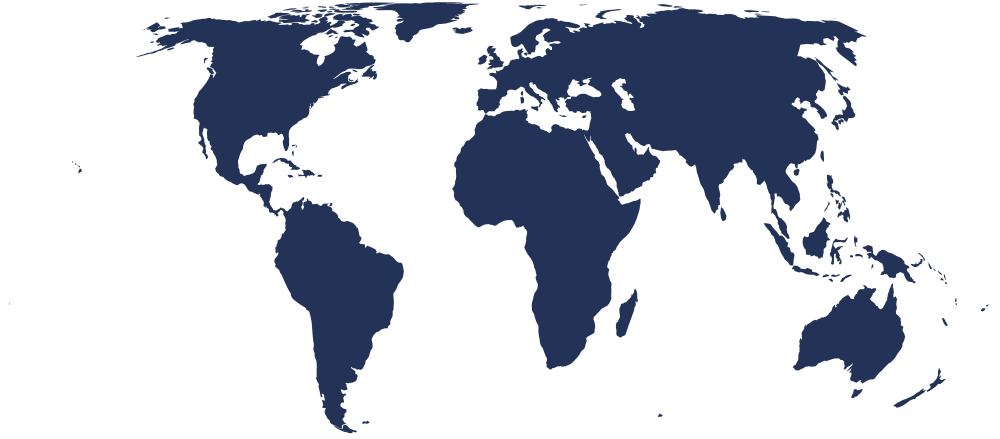
Bordering countries
No land borders — this is an island nation.
Country facts
- Iceland was settled by Norse Vikings in the late 9th century, making it one of the last places in Europe to be permanently inhabited.
- The Icelandic language has changed so little over centuries that modern Icelanders can still read the medieval Viking sagas in their original form.
- Iceland generates nearly all of its electricity from renewable sources, primarily geothermal and hydropower.
- The country has no standing army and is one of the most peaceful nations in the world.
- Iceland is home to Vatnajökull, the largest glacier in Europe by volume.
Capital facts
- Reykjavik is the northernmost capital city of a sovereign state in the world.
- Its name means 'Smoky Bay' in Old Norse, a name given by the first settler Ingólfr Arnarson who saw steam rising from geothermal vents.
- The striking Hallgrímskirkja church, designed to resemble Iceland's basalt lava columns, dominates the city's skyline.
- Reykjavik hosts one of the world's most famous outdoor music festivals, Iceland Airwaves, each autumn.
- The city is heated almost entirely by geothermal hot water piped directly from underground springs.