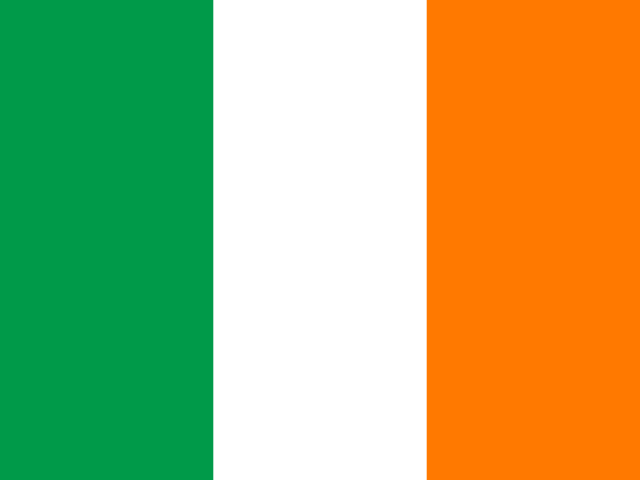
Ireland is an island nation in northwestern Europe, situated in the North Atlantic Ocean west of Great Britain. It is known for its lush green landscapes, rich literary tradition, and vibrant Celtic culture. The country shares the island with Northern Ireland, which is part of the United Kingdom.
- Capital
- Dublin
- Continent
- Europe
- Region
- Northern Europe
- Area
- 70,273 km²
- Coordinates
- 53° N, 8° W
- Languages
- English, Irish
- Currency
- EUR €
- Domain
- .ie
- Calling code
- +353
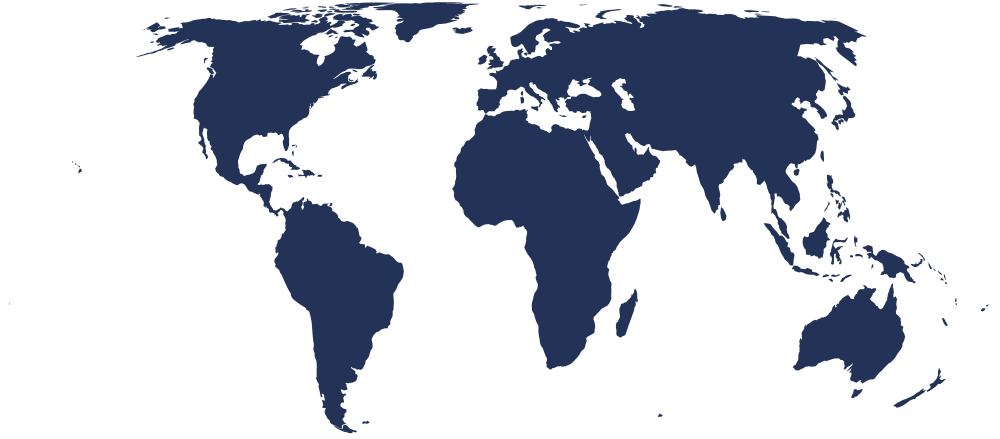
On the world map
Bordering countries
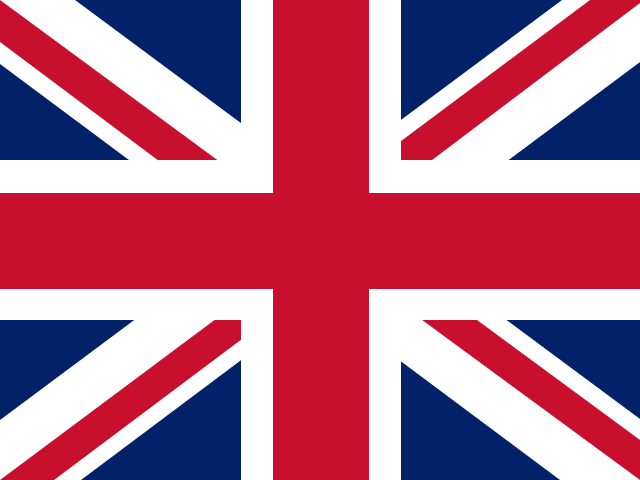 United Kingdom
Country facts
- Irish, also called Gaeilge, is one of the oldest written languages in Europe and remains an official language alongside English.
- Ireland is home to the Cliffs of Moher, dramatic sea cliffs on the western coast that rise up to around 214 metres above the Atlantic Ocean.
- The shamrock became a national symbol because Saint Patrick reportedly used it to explain the concept of the Holy Trinity during the 5th century.
- Ireland has a strong literary heritage, producing four Nobel Prize winners in Literature, including W.B. Yeats and Samuel Beckett.
- Halloween has roots in the ancient Celtic festival of Samhain, which originated in Ireland over 2,000 years ago.
Capital facts
- Dublin's name derives from the Irish 'Dubh Linn', meaning 'black pool', referring to a dark tidal pool where the River Poddle met the River Liffey.
- Trinity College Dublin, founded in 1592, is the oldest university in Ireland and houses the famous Book of Kells, an elaborately decorated medieval manuscript.
- The Guinness Storehouse near St. James's Gate Brewery is one of Ireland's most visited tourist attractions.
- The River Liffey flows through the heart of Dublin and is crossed by numerous bridges, including the distinctive Ha'penny Bridge, built in 1816.
- Dublin was a major Viking settlement, and archaeological excavations at Wood Quay revealed extensive evidence of the city's Norse origins from around the 9th century.