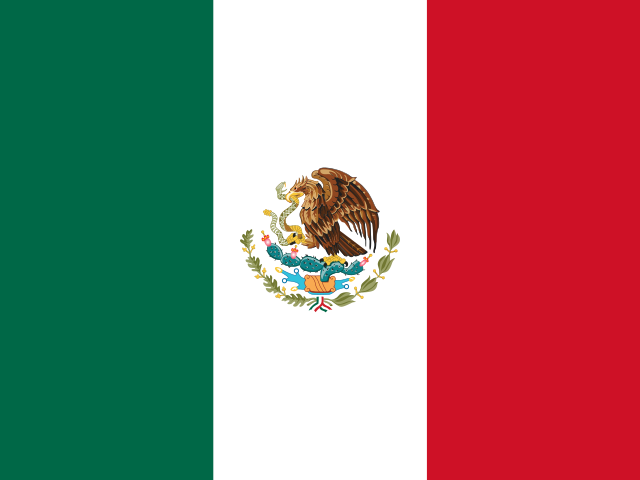
Mexico is a large country in southern North America, bordered by the United States to the north and Guatemala and Belize to the south. It is known for its ancient civilizations, vibrant culture, and diverse landscapes ranging from deserts and mountains to tropical coastlines. Mexico has the world's largest Spanish-speaking population and is one of the most biologically diverse countries on Earth.
- Capital
- Mexico City
- Continent
- Americas
- Region
- North America
- Area
- 1,964,375 km²
- Coordinates
- 23° N, 102° W
- Languages
- Spanish
- Currency
- MXN $
- Domain
- .mx
- Calling code
- +52
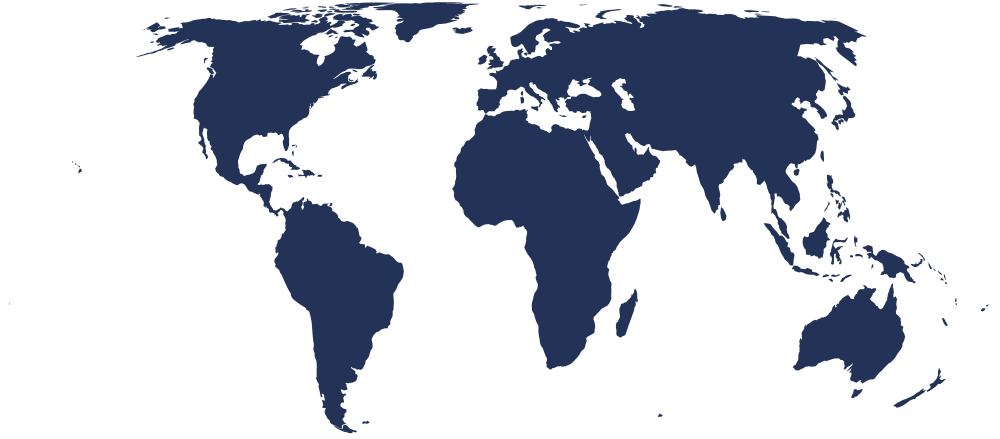
On the world map
Bordering countries
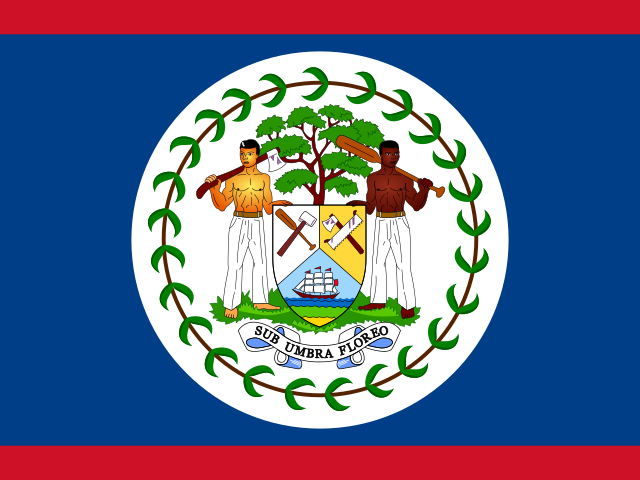 Belize
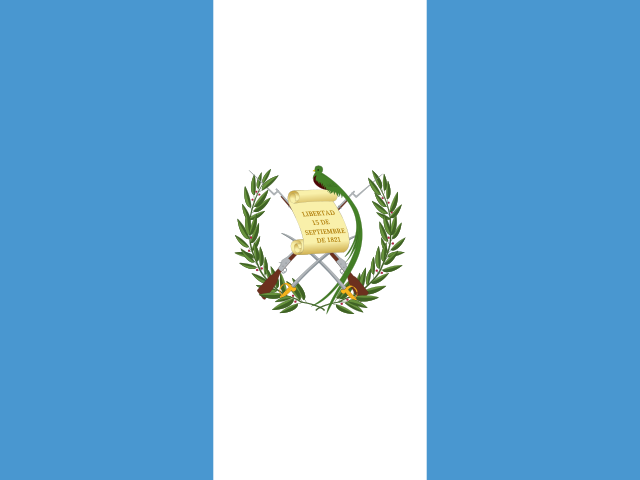 Guatemala
 United States
Country facts
- The Aztec Empire, one of Mesoamerica's most powerful civilizations, flourished in central Mexico before Spanish conquest in the 16th century.
- Mexico is home to the monarch butterfly's famous winter migration, with millions gathering each year in the forests of Michoacán.
- The Mexican flag's central emblem shows an eagle perched on a cactus devouring a serpent, inspired by an ancient Aztec legend.
- Mexico gave the world chocolate, tomatoes, and corn, all of which were first cultivated by indigenous peoples in the region.
- Mexico has 35 UNESCO World Heritage Sites, reflecting both its extraordinary natural environments and its rich cultural history.
Capital facts
- Mexico City was built on the ruins of Tenochtitlán, the grand Aztec capital founded on an island in Lake Texcoco around 1325.
- The city gradually sinks each year because it was built on the soft lakebed sediments of the drained Lake Texcoco.
- The Historic Centre of Mexico City is a UNESCO World Heritage Site and contains the vast Zócalo, one of the largest city squares in the world.
- The National Autonomous University of Mexico, located in the city, has a campus whose central library is covered in a famous mosaic mural by Juan O'Gorman.
- Mexico City's Chapultepec Park, one of the largest urban parks in the Western Hemisphere, is home to a castle that once served as the imperial residence of Maximilian I.