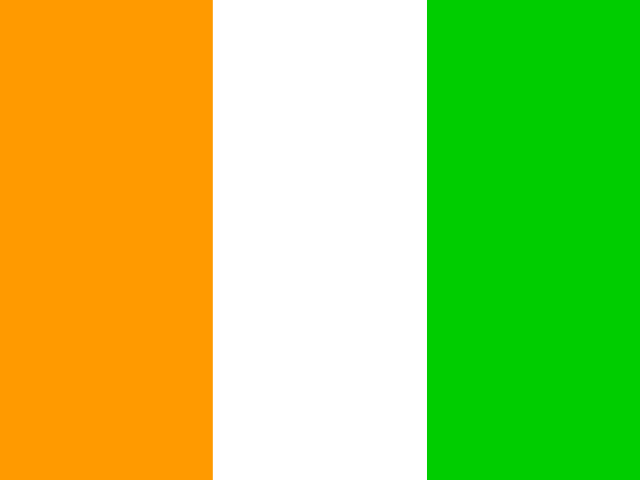
Ivory Coast, officially the Republic of Côte d'Ivoire, is a country on the southern coast of West Africa bordered by Ghana, Burkina Faso, Mali, Guinea, and Liberia. It is one of the world's leading producers of cocoa beans, which form the backbone of its economy. The country is also known for its diverse ethnic groups, vibrant music scene, and the striking Basilica of Our Lady of Peace in its capital.
- Capital
- Yamoussoukro
- Continent
- Africa
- Region
- Western Africa
- Area
- 322,463 km²
- Coordinates
- 8° N, 5° W
- Languages
- French
- Currency
- XOF Fr
- Domain
- .ci
- Calling code
- +225
On the world map
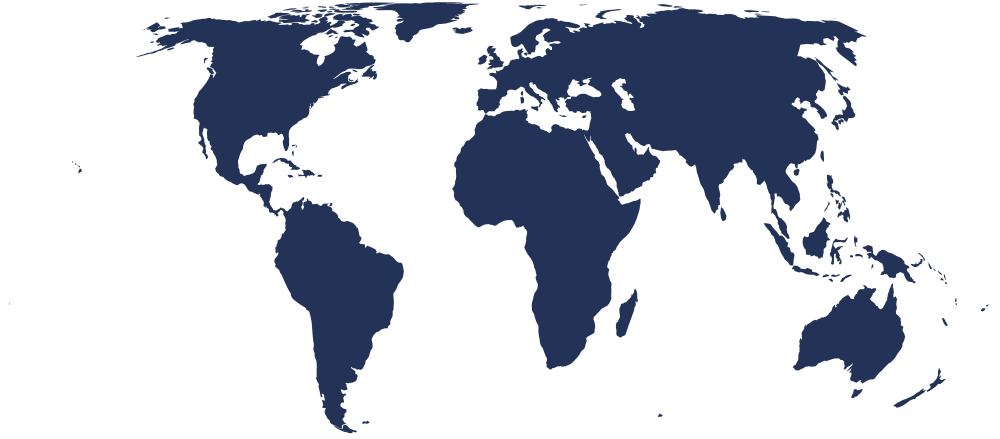
Bordering countries
 Burkina Faso
 Ghana
Ghana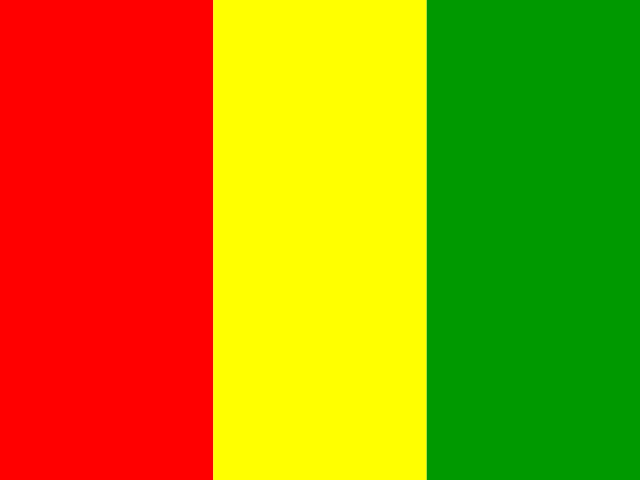 Guinea
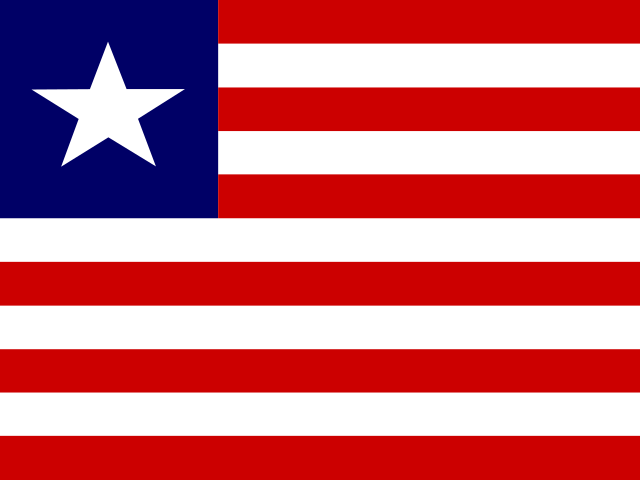 Liberia
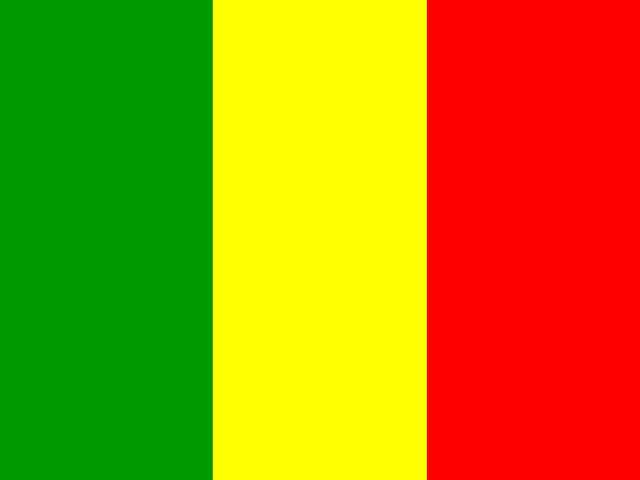 Mali
MaliCountry facts
- Ivory Coast is the world's largest exporter of cocoa beans, supplying roughly 40% of the global harvest.
- The country gained independence from France on August 7, 1960, a date celebrated annually as National Day.
- French is the official language, though over 60 indigenous languages are spoken across the country.
- The national football team, known as the Elephants, has won the Africa Cup of Nations multiple times.
- Taï National Park in the southwest is one of the last remaining areas of primary tropical rainforest in West Africa and is a UNESCO World Heritage Site.
Capital facts
- Yamoussoukro is the birthplace of Félix Houphouët-Boigny, Ivory Coast's first president, who declared it the official capital in 1983.
- The Basilica of Our Lady of Peace, completed in 1989, was modeled on St. Peter's Basilica in Rome and is one of the largest churches in the world.
- Despite being the political capital, Abidjan remains the country's economic and most populous city.
- Yamoussoukro is home to a large artificial lake surrounding the presidential palace, which is famously stocked with sacred crocodiles.
- The city features wide, largely uncrowded boulevards, which were built as part of an ambitious urban development plan in the 1980s.