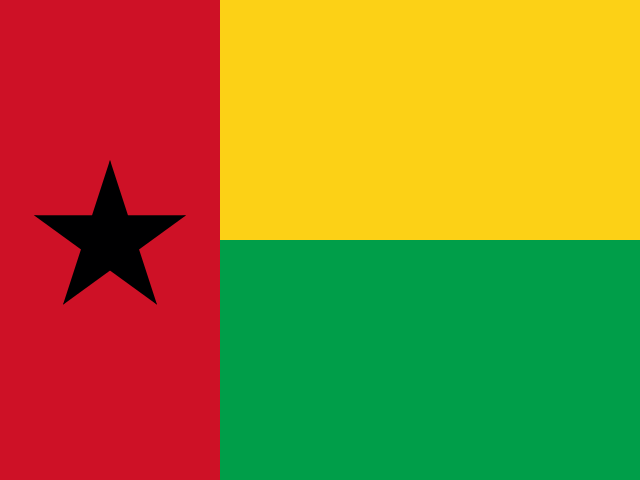
Guinea-Bissau is a small country on the Atlantic coast of West Africa, bordered by Senegal to the north and Guinea to the south and east. It is known for the Bijagós Archipelago, a stunning group of islands off its coast that forms a UNESCO Biosphere Reserve. The country has a rich cultural tapestry shaped by dozens of ethnic groups and a history tied to the Portuguese colonial era.
- Capital
- Bissau
- Continent
- Africa
- Region
- Western Africa
- Area
- 36,125 km²
- Coordinates
- 12° N, 15° W
- Languages
- Portuguese, Upper Guinea Creole
- Currency
- XOF Fr
- Domain
- .gw
- Calling code
- +245
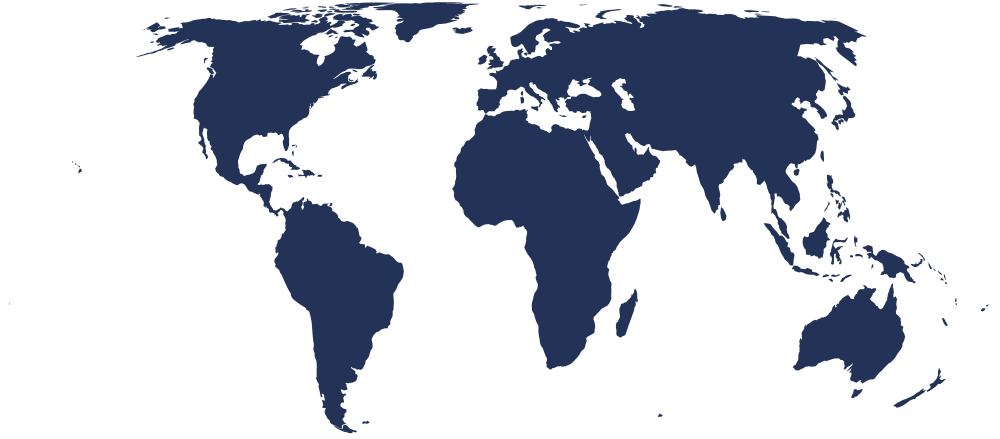
On the world map
Bordering countries
 Guinea
 Senegal
Country facts
- Guinea-Bissau gained independence from Portugal in 1974 after a long liberation struggle led by the PAIGC movement.
- The Bijagós Archipelago consists of around 88 islands and islets, many of which are uninhabited and teeming with wildlife.
- The country is one of the world's leading exporters of cashew nuts, which form the backbone of its agricultural economy.
- Portuguese is the official language, but Crioulo, a Portuguese-based creole, is widely spoken as a common tongue across ethnic groups.
- Guinea-Bissau is home to about 20 distinct ethnic groups, including the Fula, Balanta, and Mandinka peoples.
Capital facts
- Bissau was founded as a Portuguese fortified trading post in 1687 on the Geba River estuary.
- The city served as the colonial capital of Portuguese Guinea and became the national capital upon independence in 1974.
- The Fortaleza d'Amura is a historic Portuguese fort in Bissau that now houses the presidential palace.
- Bissau's Bandim Market is one of the most vibrant trading hubs in the city, reflecting the diversity of local culture and commerce.
- The city's port on the Geba River has historically been central to trade, connecting the interior of the country with the Atlantic coast.