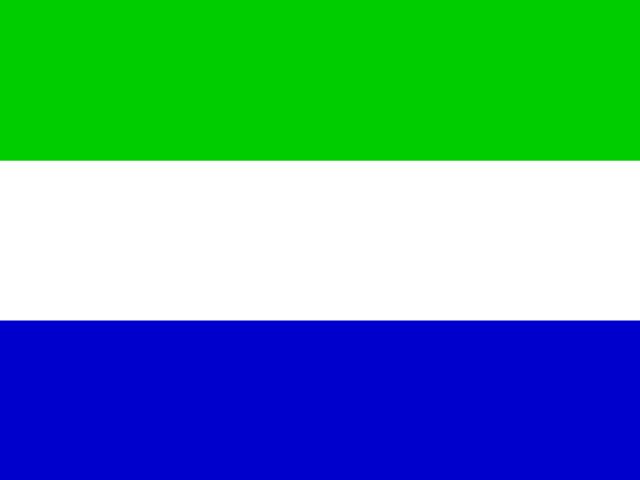
Sierra Leone is a small country on the Atlantic coast of West Africa, bordered by Guinea and Liberia. It is known for its beautiful beaches, rich deposits of diamonds, and a complex history tied to the transatlantic slave trade and British colonialism. The country has shown remarkable resilience, recovering from a devastating civil war that ended in 2002.
- Capital
- Freetown
- Continent
- Africa
- Region
- Western Africa
- Area
- 71,740 km²
- Coordinates
- 9° N, 12° W
- Languages
- English
- Currency
- SLL Le
- Domain
- .sl
- Calling code
- +232
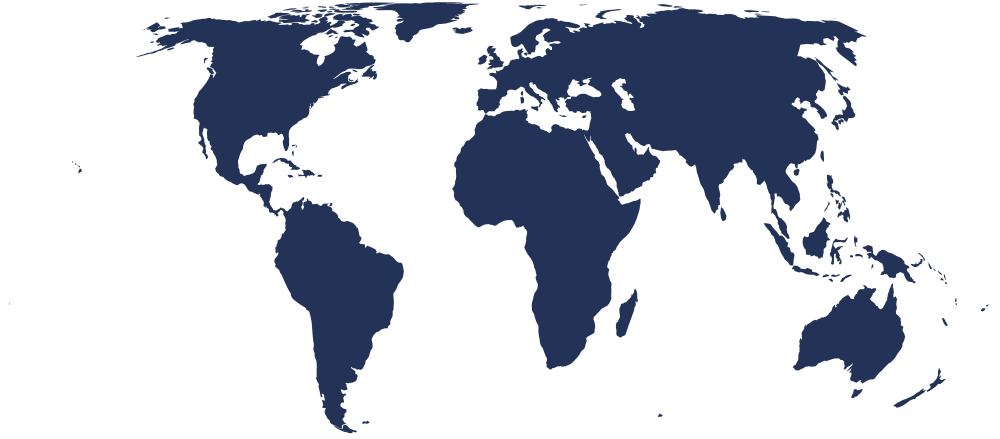
On the world map
Bordering countries
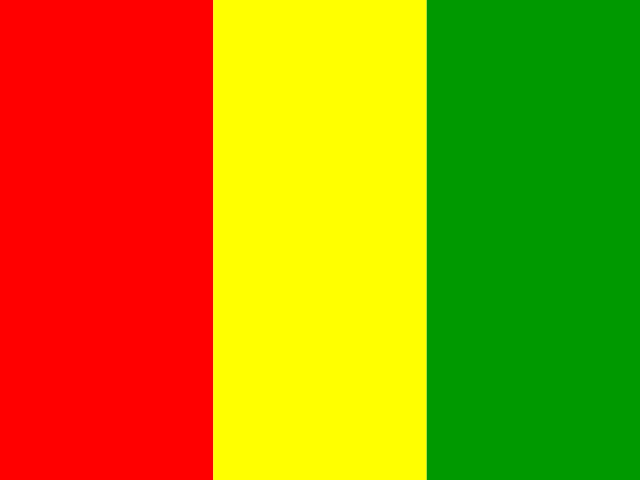 Guinea
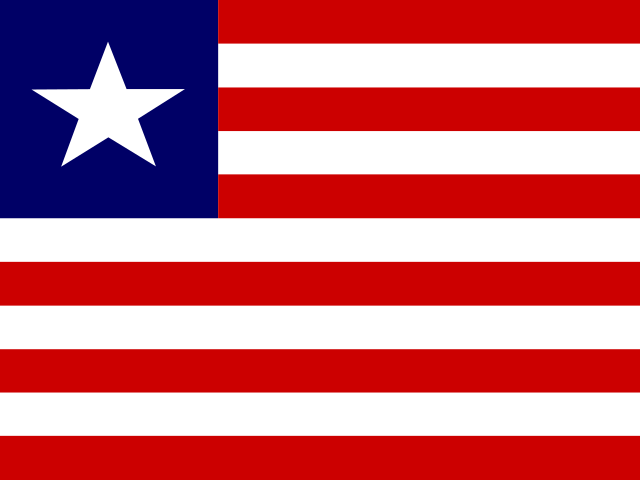 Liberia
Country facts
- Sierra Leone's name comes from the Portuguese 'Serra Leoa,' meaning 'Lion Mountains,' given by Portuguese explorer Pedro de Sintra in the 15th century.
- The country is one of the world's leading producers of diamonds, which unfortunately also fueled its brutal civil war during the 1990s.
- Krio, an English-based creole language, serves as a widely spoken lingua franca among Sierra Leone's many ethnic groups.
- Sierra Leone was founded as a British colony in 1787 partly as a settlement for freed slaves, making Freetown one of the oldest such settlements in Africa.
- The West African chimpanzee is native to Sierra Leone, and the country hosts conservation efforts to protect this endangered species.
Capital facts
- Freetown was founded in 1792 when British abolitionists helped establish it as a home for freed slaves and 'Black Poor' from London.
- The Cotton Tree, a massive centuries-old kapok tree in the city center, is a cherished national symbol and a landmark of Freetown.
- Freetown sits on the Sierra Leone Peninsula and has one of the largest natural harbors in Africa.
- The city is home to Fourah Bay College, founded in 1827, which was the first university in sub-Saharan Africa.
- Freetown's diverse population reflects its origins, with descendants of freed slaves known as Krios forming a historically influential community.