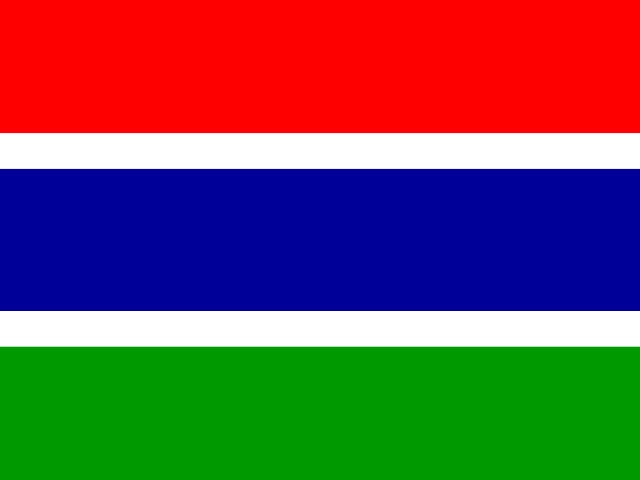
Gambia is a small country in West Africa, almost entirely surrounded by Senegal except for its short Atlantic coastline. It follows the course of the Gambia River, which runs through its entire length. The country is known for its vibrant birdlife, lively music scene, and welcoming tourism culture.
- Capital
- Banjul
- Continent
- Africa
- Region
- Western Africa
- Area
- 10,689 km²
- Coordinates
- 13° N, 17° W
- Languages
- English
- Currency
- GMD D
- Domain
- .gm
- Calling code
- +220
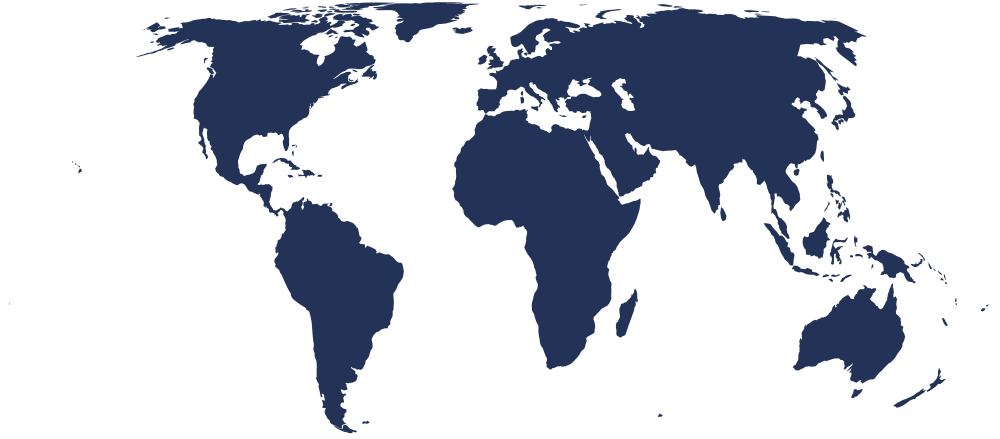
On the world map
Bordering countries
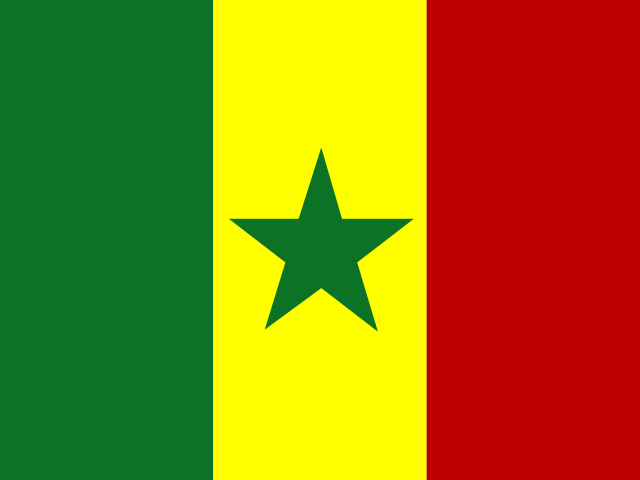 Senegal
Country facts
- Gambia is the smallest country on the African mainland.
- The Mandinka are the largest ethnic group, and their musical tradition, including the kora instrument, is central to the country's culture.
- Gambia gained independence from Britain on February 18, 1965.
- The country is a birdwatcher's paradise, home to over 560 recorded bird species.
- Wolof, Mandinka, and several other languages are widely spoken alongside the official language, English.
Capital facts
- Banjul was founded by the British in 1816 as a trading post and base to suppress the slave trade.
- It was originally called Bathurst after British Colonial Secretary Henry Bathurst, and was renamed Banjul after independence.
- Banjul is located on a small island at the mouth of the Gambia River, making it one of Africa's most compact capitals.
- The Albert Market is a bustling landmark in the city centre, popular with both locals and visitors.
- Arch 22, a large ceremonial gate built to mark the 1994 coup, is one of Banjul's most recognizable modern monuments.