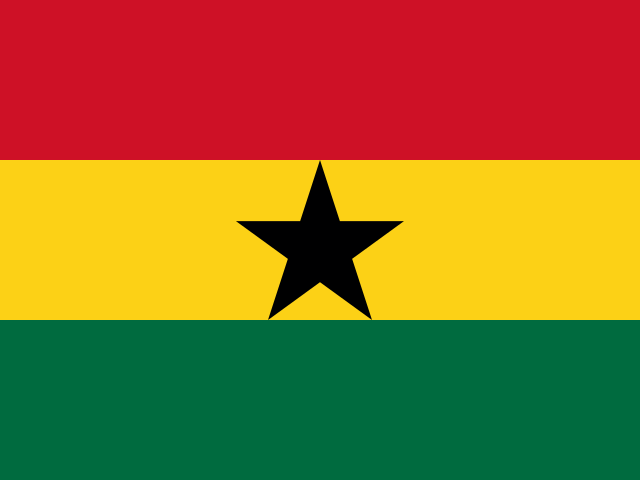
Ghana is a country in West Africa, bordered by the Gulf of Guinea to the south, Côte d'Ivoire to the west, Burkina Faso to the north, and Togo to the east. It is known for being the first sub-Saharan African country to gain independence from colonial rule, which it achieved in 1957. Ghana is also celebrated for its rich cultural heritage, vibrant kente cloth traditions, and its role as one of the world's leading cocoa producers.
- Capital
- Accra
- Continent
- Africa
- Region
- Western Africa
- Area
- 238,533 km²
- Coordinates
- 8° N, 2° W
- Languages
- English
- Currency
- GHS ₵
- Domain
- .gh
- Calling code
- +233
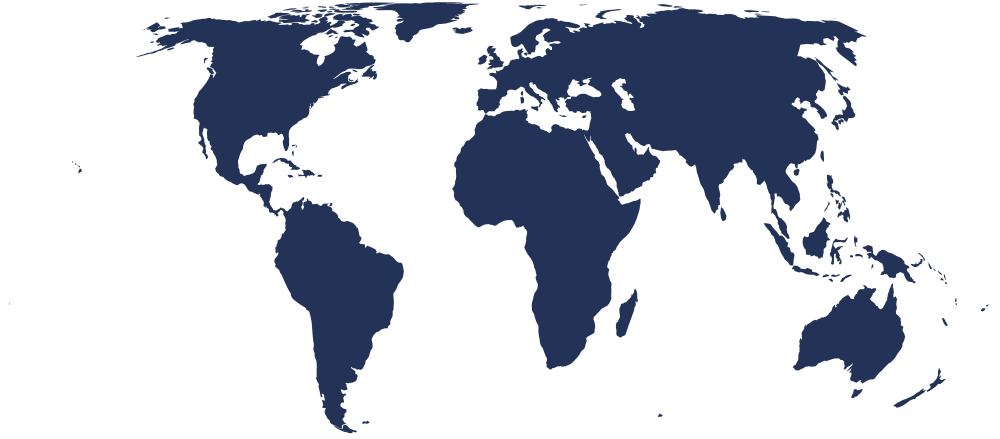
On the world map
Bordering countries
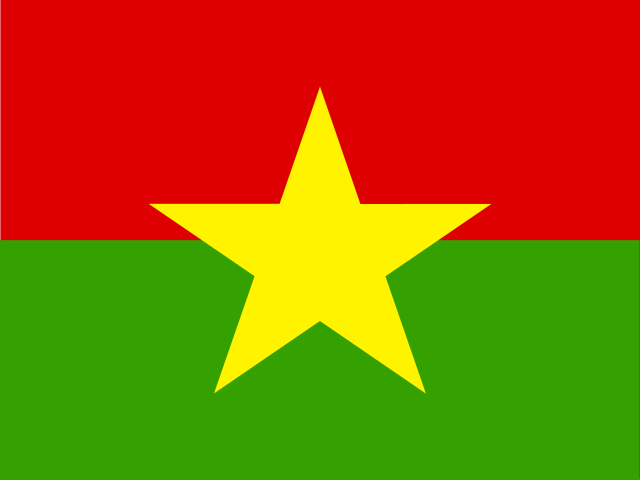 Burkina Faso
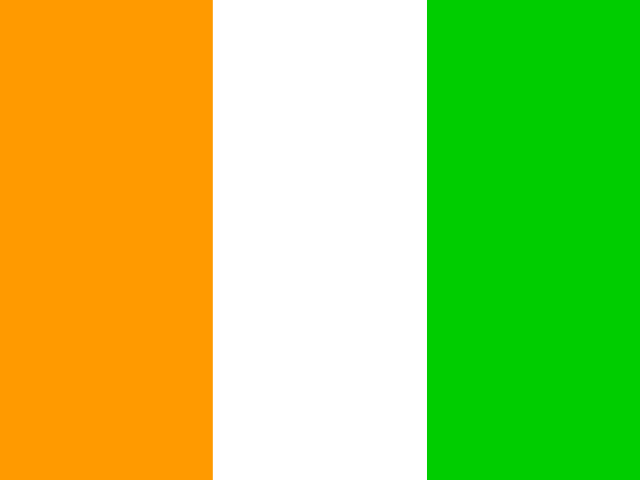 Ivory Coast
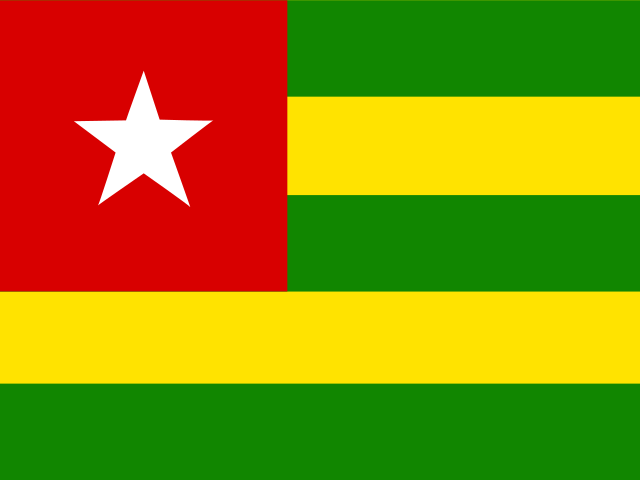 Togo
TogoCountry facts
- Ghana was the first country in sub-Saharan Africa to gain independence, led by Kwame Nkrumah on 6 March 1957.
- The country is one of the world's largest producers of cocoa beans, which are used to make chocolate.
- Kente cloth, woven in bright geometric patterns, is a traditional textile originating from the Ashanti people of Ghana.
- The Volta River, one of West Africa's major rivers, flows through Ghana and feeds Lake Volta, one of the largest artificial lakes in the world by surface area.
- English is the official language of Ghana, though over 80 indigenous languages are also spoken across the country.
Capital facts
- Accra became the capital of the Gold Coast under British colonial rule and retained that status when Ghana gained independence in 1957.
- The city is home to Kwame Nkrumah Memorial Park, a mausoleum and museum honoring Ghana's first president and independence leader.
- Jamestown, one of Accra's oldest neighborhoods, features a historic lighthouse and colonial-era architecture dating to the 17th century.
- Accra serves as Ghana's main economic and financial hub, housing the country's stock exchange and many international businesses.
- The Makola Market in central Accra is one of the busiest and most well-known open-air markets in West Africa.