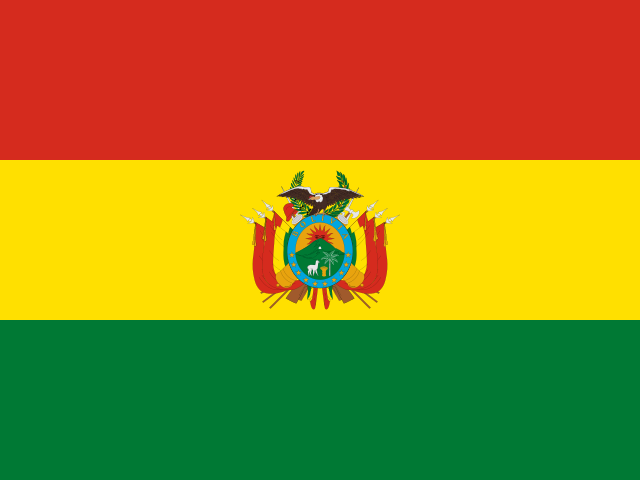
Bolivia is a landlocked country in central South America, bordered by Brazil, Peru, Chile, Argentina, and Paraguay. It is known for its dramatic landscapes, including the vast Salar de Uyuni salt flat and the high-altitude Andean plateau called the Altiplano. Bolivia has two capitals — Sucre, the constitutional capital, and La Paz, the seat of government.
- Capital
- Sucre
- Continent
- Americas
- Region
- South America
- Area
- 1,098,581 km²
- Coordinates
- 17° S, 65° W
- Languages
- Aymara, Guaraní, Quechua, Spanish
- Currency
- BOB Bs.
- Domain
- .bo
- Calling code
- +591
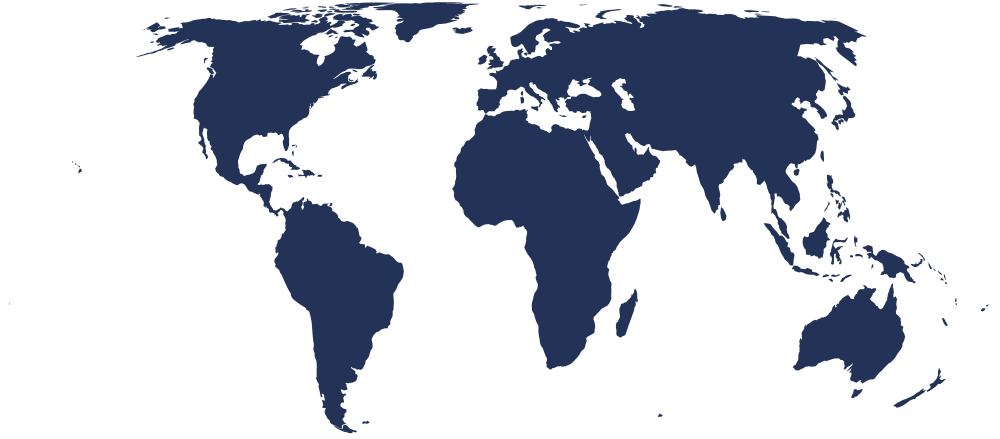
On the world map
Bordering countries
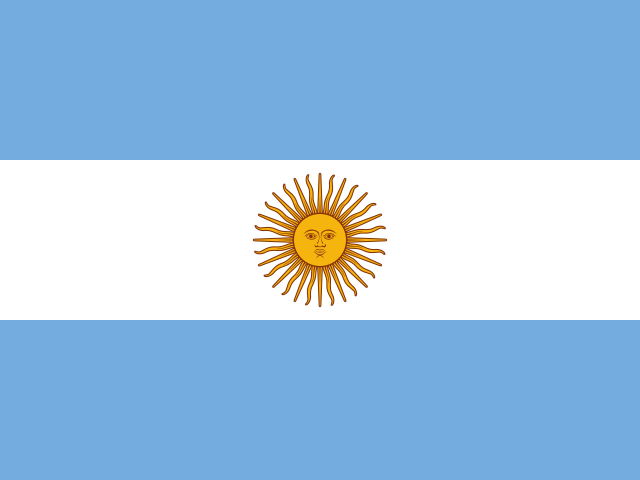 Argentina
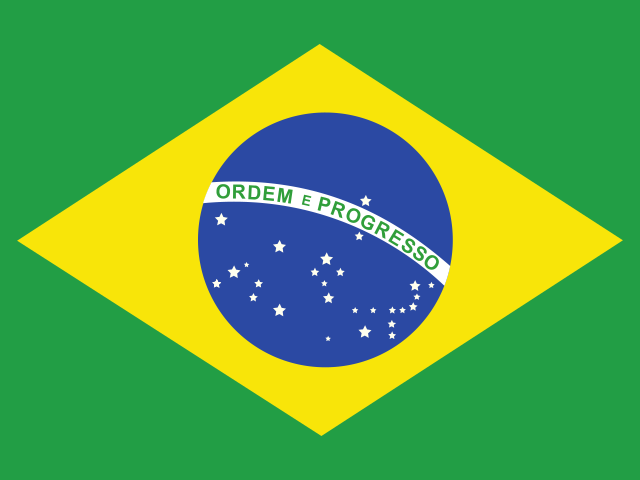 Brazil
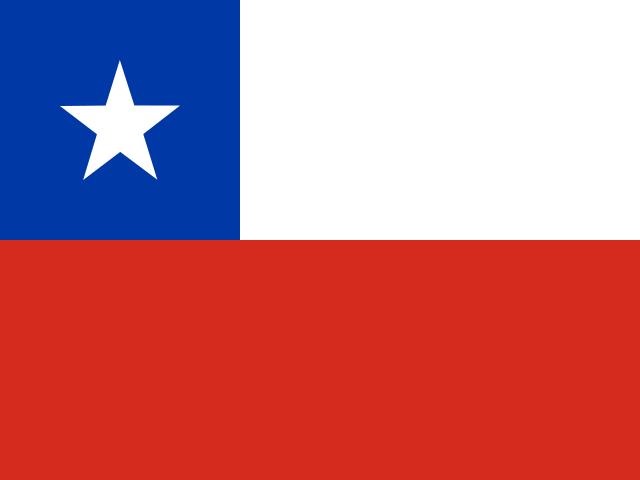 Chile
Chile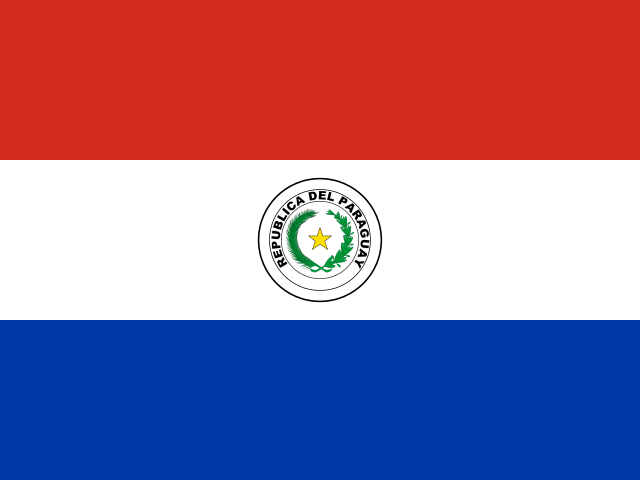 Paraguay
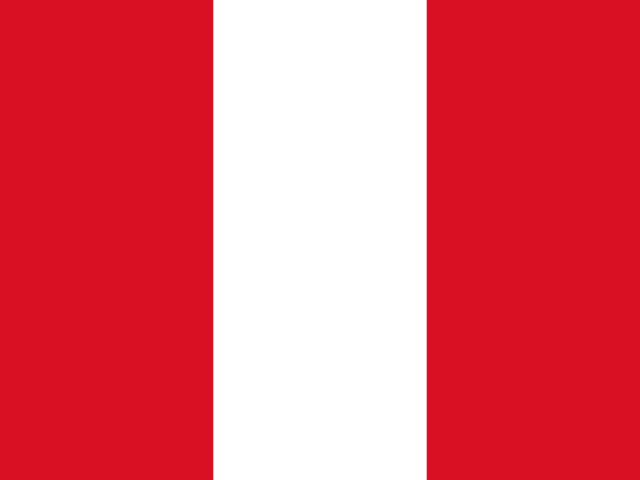 Peru
PeruCountry facts
- Bolivia is one of only two landlocked countries in South America, the other being Paraguay.
- The Salar de Uyuni is the world's largest salt flat, covering over 10,000 square kilometers.
- Bolivia is home to Lake Titicaca, the highest navigable lake in the world, shared with Peru.
- Spanish is the most widely spoken language, but Bolivia officially recognizes 36 indigenous languages, including Quechua and Aymara.
- The country is named after Simón Bolívar, the revolutionary leader who helped liberate much of South America from Spanish rule.
Capital facts
- Sucre was founded by the Spanish in 1538 and is one of the oldest cities in South America.
- It served as the full capital of Bolivia until 1899, when governmental functions were largely moved to La Paz.
- Bolivia's Declaration of Independence was signed in Sucre on August 6, 1825.
- The city's well-preserved colonial architecture earned it UNESCO World Heritage status in 1991.
- Sucre sits at about 2,750 meters above sea level, giving it a mild, spring-like climate year-round.