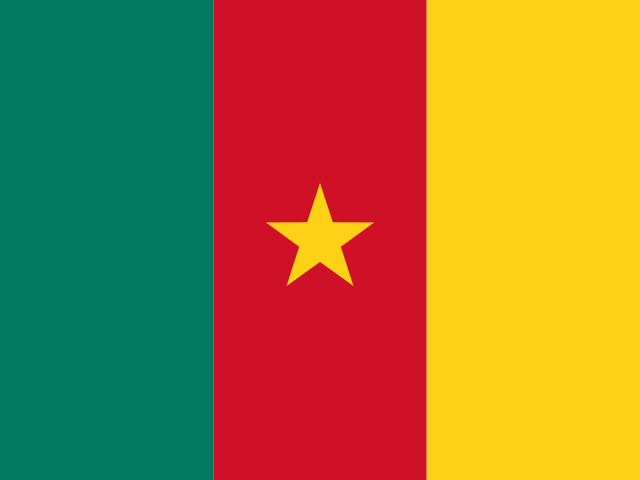
Cameroon is a country in Central Africa, bordered by Nigeria to the west and the Central African Republic to the east. It is often called 'Africa in miniature' because its landscapes range from beaches and rainforests to savanna and mountains. The country is also renowned for its vibrant football culture and diverse wildlife.
- Capital
- Yaoundé
- Continent
- Africa
- Region
- Middle Africa
- Area
- 475,442 km²
- Coordinates
- 6° N, 12° E
- Languages
- English, French
- Currency
- XAF Fr
- Domain
- .cm
- Calling code
- +237
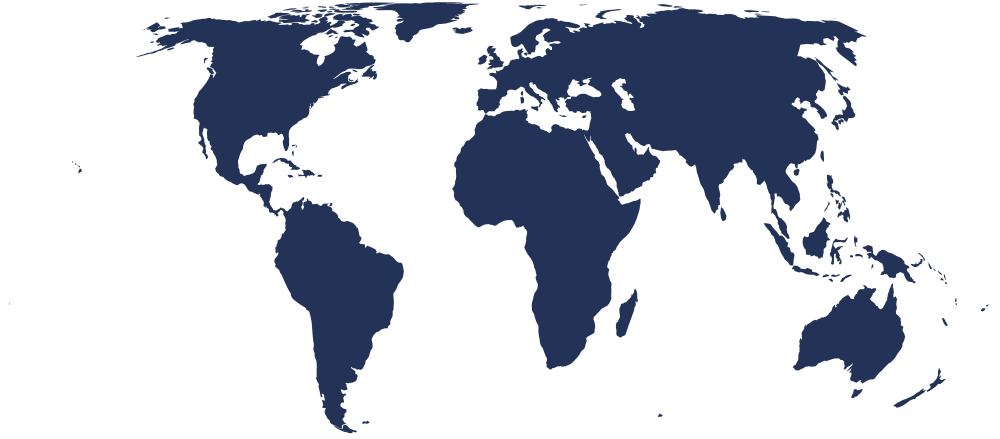
On the world map
Bordering countries
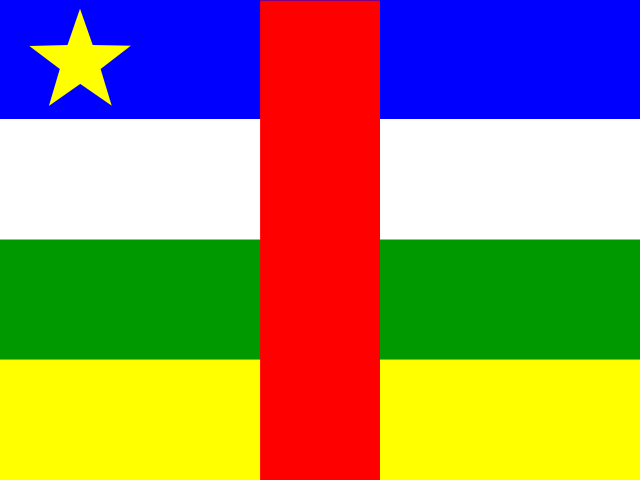 Central African Republic
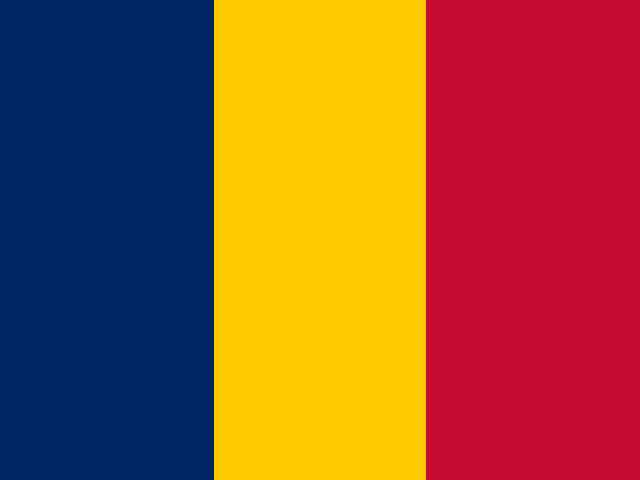 Chad
Chad Equatorial Guinea
 Gabon
Gabon Nigeria
 Republic of the Congo
Country facts
- Cameroon is home to over 250 ethnic groups and nearly 280 local languages, making it one of Africa's most linguistically diverse nations.
- The country is officially bilingual, with both French and English serving as official languages, a legacy of its colonial history under France and Britain.
- Mount Cameroon, an active volcano rising to about 4,040 metres, is the highest peak in West and Central Africa.
- Cameroon gained independence from French administration on 1 January 1960, with the British-administered southern section joining in 1961.
- The country's rainforests in the Congo Basin are among the most biodiverse in Africa, sheltering western lowland gorillas and forest elephants.
Capital facts
- Yaoundé sits on a series of hills in the Centre Region of Cameroon, giving the city a distinctive undulating landscape.
- The city was established as a German military post in 1888 and later grew under French colonial administration.
- Yaoundé is home to the University of Yaoundé I, one of the oldest and largest universities in Central Africa.
- The Reunification Monument in Yaoundé commemorates the 1961 union of French-speaking and English-speaking Cameroon.
- Despite not being the largest city—Douala holds that distinction—Yaoundé serves as Cameroon's political and administrative centre.