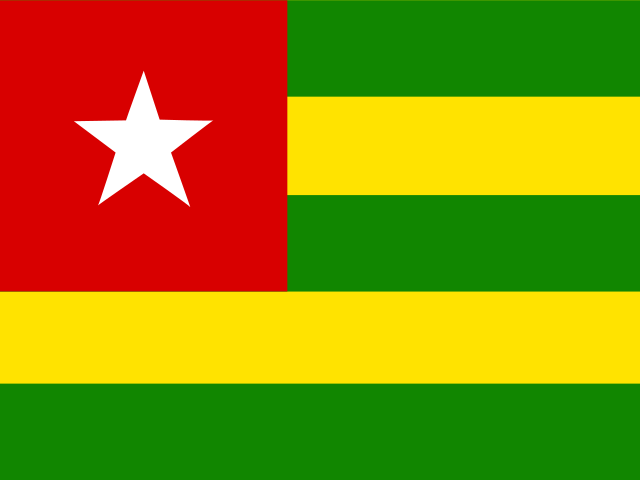
Togo is a narrow country in West Africa, bordered by Ghana to the west, Benin to the east, and Burkina Faso to the north. It is known for its vibrant markets, diverse ethnic groups, and its stretch of Gulf of Guinea coastline in the south. The country's landscape ranges from sandy beaches and lagoons to savanna plains and forested hills in the center.
- Capital
- Lomé
- Continent
- Africa
- Region
- Western Africa
- Area
- 56,785 km²
- Coordinates
- 8° N, 1° E
- Languages
- French
- Currency
- XOF Fr
- Domain
- .tg
- Calling code
- +228
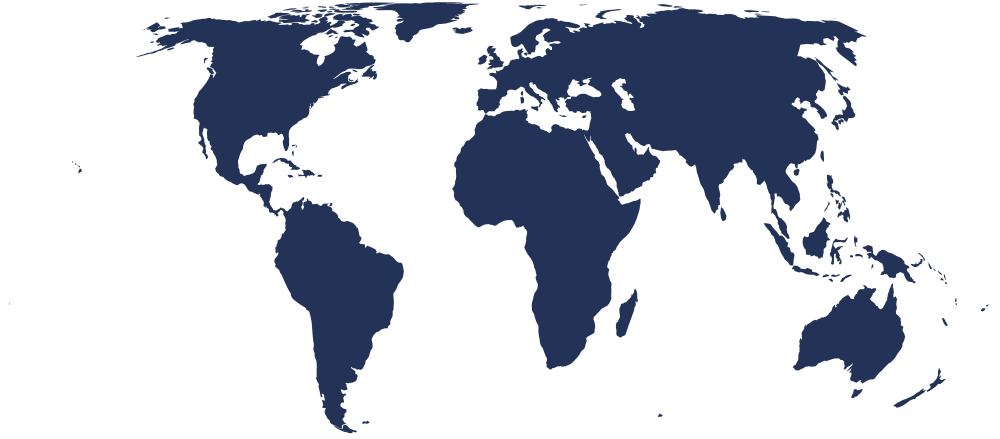
On the world map
Bordering countries
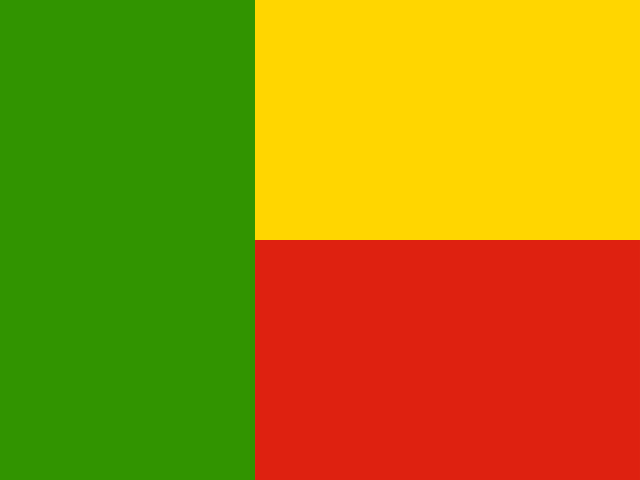 Benin
Benin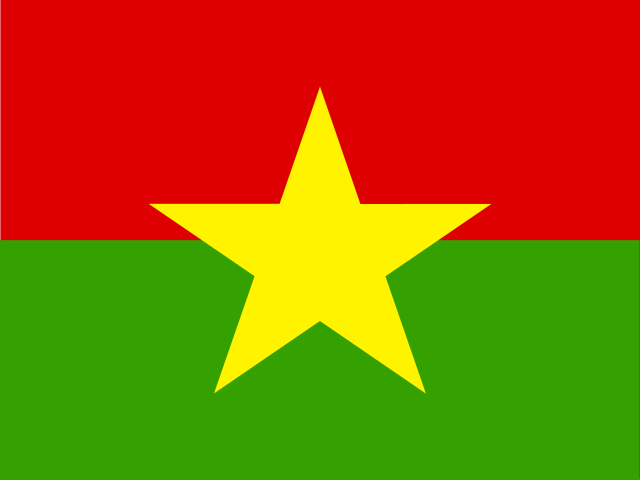 Burkina Faso
 Ghana
GhanaCountry facts
- Togo was a German colony called Togoland before being divided between France and Britain after World War I.
- French is the official language, though Ewe and Kabiyé are widely spoken national languages.
- The Koutammakou landscape in northeastern Togo, home to the Batammariba people and their distinctive mud tower-houses, is a UNESCO World Heritage Site.
- Togo is one of the world's leading producers of phosphate, which is a major export commodity.
- The country has more than 40 distinct ethnic groups, reflecting a rich tapestry of cultural traditions and festivals.
Capital facts
- Lomé sits on the Gulf of Guinea coast and is the southernmost capital city in Africa.
- The Grand Marché, or Great Market, in central Lomé is famous for its rows of 'Nana Benz' — successful female cloth traders who became symbols of economic power.
- Lomé served as the site of the 1975 Lomé Convention, a landmark trade and aid agreement between the European Community and African, Caribbean, and Pacific nations.
- The city's Independence Monument, a prominent roundabout landmark, commemorates Togo's independence from France on April 27, 1960.
- Lomé has one of the few ports in West Africa where ships can dock directly at the city's urban waterfront without an offshore anchorage.