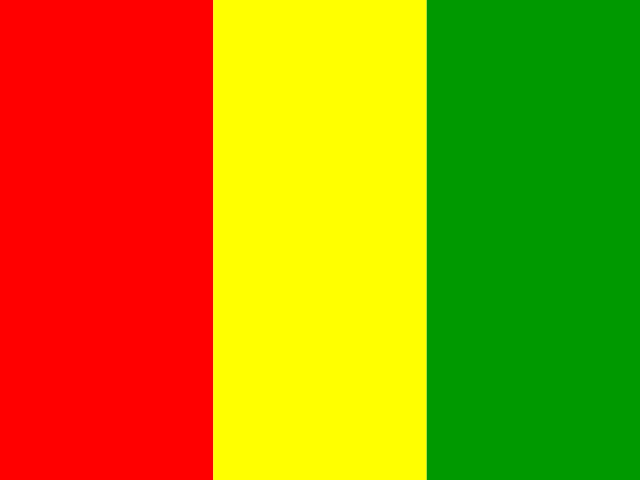
Guinea is a coastal country in West Africa, bordered by Guinea-Bissau, Senegal, Mali, Côte d'Ivoire, Liberia, and Sierra Leone. It is known for its vast reserves of bauxite, the ore used to produce aluminum, making it one of the world's leading exporters of the mineral. The country is also home to the Fouta Djallon highlands, which give rise to several major West African rivers.
- Capital
- Conakry
- Continent
- Africa
- Region
- Western Africa
- Area
- 245,857 km²
- Coordinates
- 11° N, 10° W
- Languages
- French
- Currency
- GNF Fr
- Domain
- .gn
- Calling code
- +224
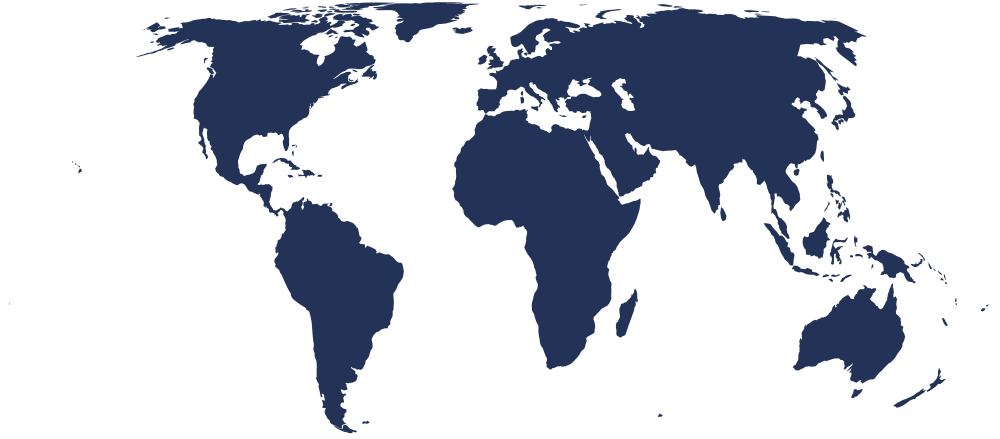
On the world map
Bordering countries
 Guinea-Bissau
 Ivory Coast
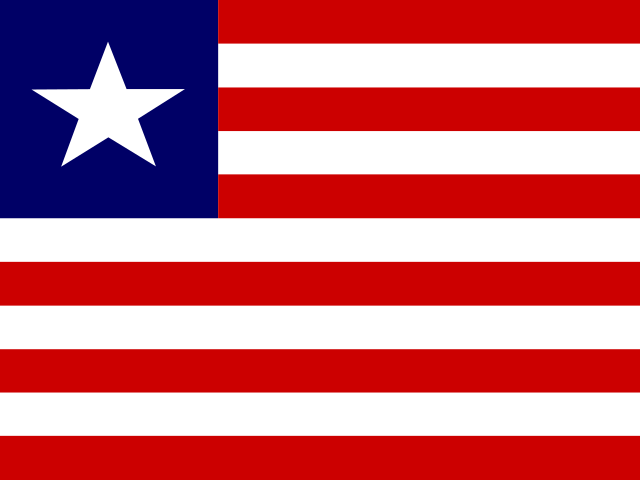 Liberia
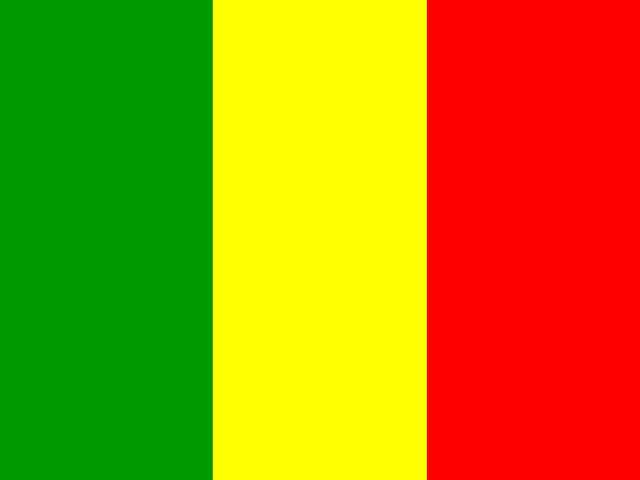 Mali
Mali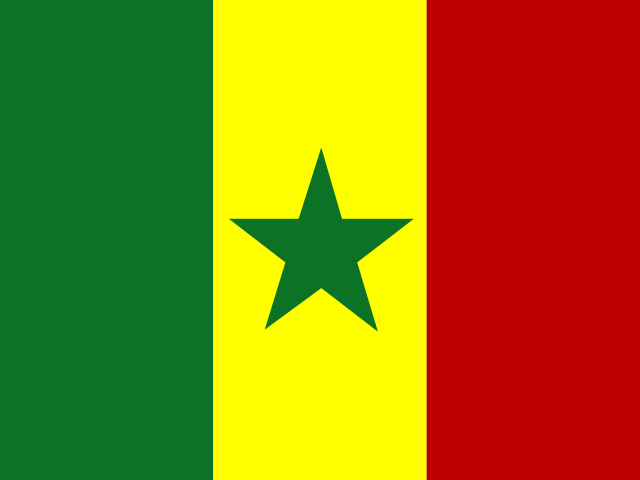 Senegal
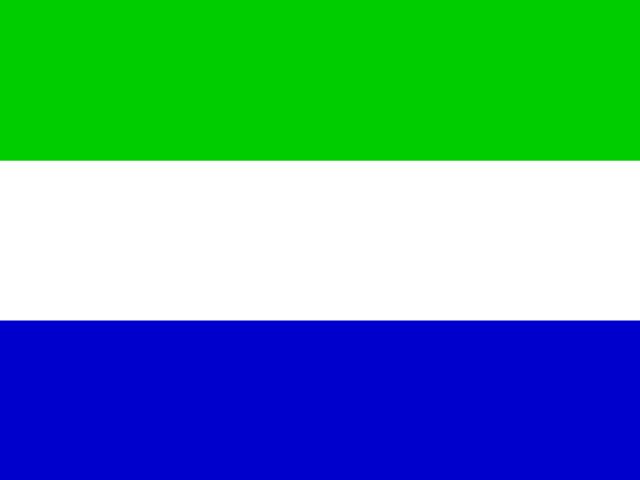 Sierra Leone
Country facts
- Guinea gained independence from France on October 2, 1958, becoming the first French colony in sub-Saharan Africa to do so.
- The country holds some of the largest bauxite reserves on Earth, which form the backbone of its export economy.
- The Fouta Djallon plateau in central Guinea is often called the 'water tower of West Africa' because it is the source of the Niger, Senegal, and Gambia rivers.
- French is the official language of Guinea, though Pular, Mandinka, and Susu are widely spoken among the population.
- Traditional Guinean music, particularly the kora and balafon, has had a significant influence on West African and global music culture.
Capital facts
- Conakry is situated on the Kaloum Peninsula, which juts into the Atlantic Ocean, giving the city a distinctive geographic shape.
- The city served as the administrative capital of French Guinea during the colonial period before independence in 1958.
- Conakry's port is one of the busiest in West Africa and plays a central role in the export of bauxite and other natural resources.
- The Botanical Garden of Conakry, established in the colonial era, is one of the oldest botanical gardens in West Africa.
- Conakry is home to the Palais du Peuple, a large convention center that serves as a major venue for national events and cultural gatherings.