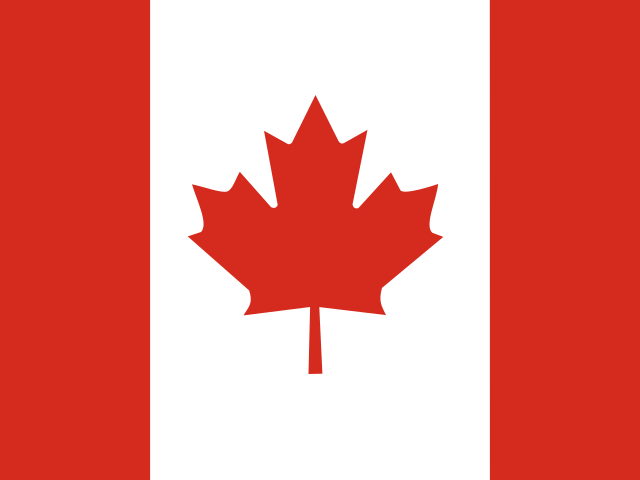
Canada is a vast country in northern North America, stretching from the Atlantic to the Pacific and up to the Arctic Ocean. It is known for its stunning natural landscapes, including boreal forests, the Rocky Mountains, and the Great Lakes. Canada is a bilingual nation with English and French as official languages, reflecting its diverse cultural heritage.
- Capital
- Ottawa
- Continent
- Americas
- Region
- North America
- Area
- 9,984,670 km²
- Coordinates
- 60° N, 95° W
- Languages
- English, French
- Currency
- CAD $
- Domain
- .ca
- Calling code
- +1
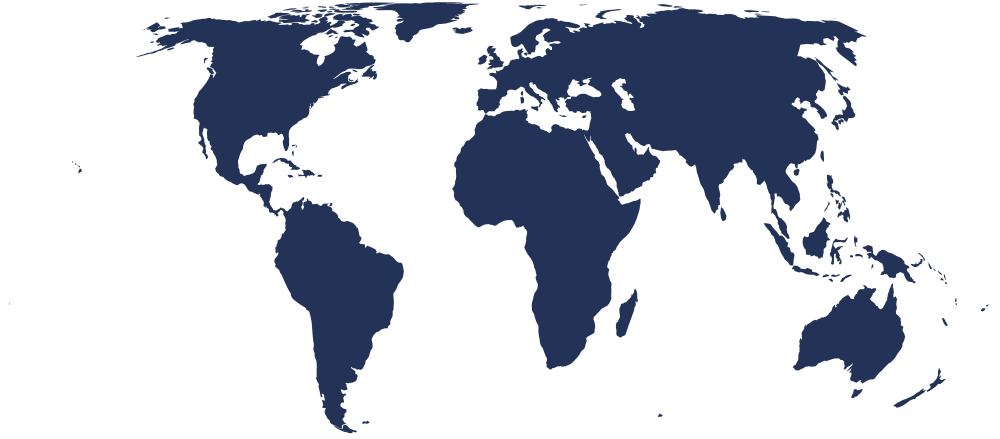
On the world map
Bordering countries
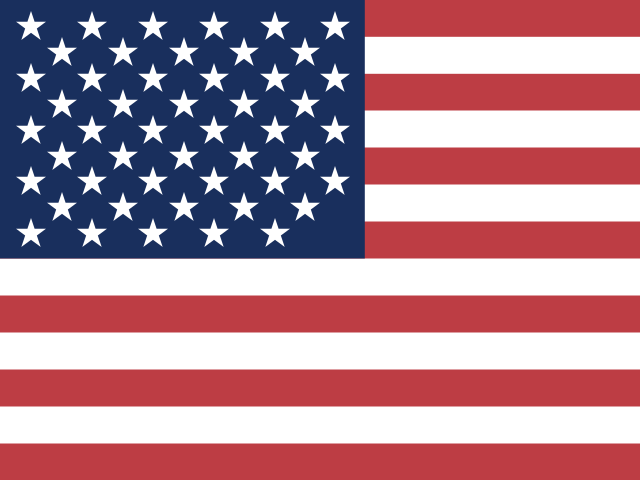 United States
Country facts
- Canada has the longest coastline of any country in the world, bordering three oceans.
- The maple leaf on the Canadian flag is a longstanding national symbol, representing the country's forests and natural beauty.
- Canada and the United States share the longest international border in the world, stretching about 8,891 kilometres.
- Hockey is considered Canada's national winter sport and is deeply embedded in the country's cultural identity.
- The beaver is Canada's official national animal, honored for its role in the historic fur trade that shaped the nation's early economy.
Capital facts
- Ottawa is located in the province of Ontario, right on the border with Quebec, making it a symbolic bridge between English and French Canada.
- The city was chosen as the capital by Queen Victoria in 1857, partly because its inland location made it less vulnerable to American attack.
- The Rideau Canal, which runs through Ottawa, becomes one of the world's largest naturally frozen skating rinks every winter.
- Parliament Hill, the seat of Canada's federal government, features distinctive Gothic Revival architecture overlooking the Ottawa River.
- The Canadian Museum of History, located just across the river in Gatineau, Quebec, is one of Canada's most visited museums.