Latvia is a small Baltic country in Northern Europe, bordered by Estonia, Lithuania, Russia, and Belarus, with a long coastline along the Baltic Sea. It is known for its vast forests, Art Nouveau architecture, and a rich tradition of song and dance. Latvia regained its independence from the Soviet Union in 1991 and is today a member of both the European Union and NATO.
- Capital
- Riga
- Continent
- Europe
- Region
- Northern Europe
- Area
- 64,559 km²
- Coordinates
- 57° N, 25° E
- Languages
- Latvian
- Currency
- EUR €
- Domain
- .lv
- Calling code
- +371
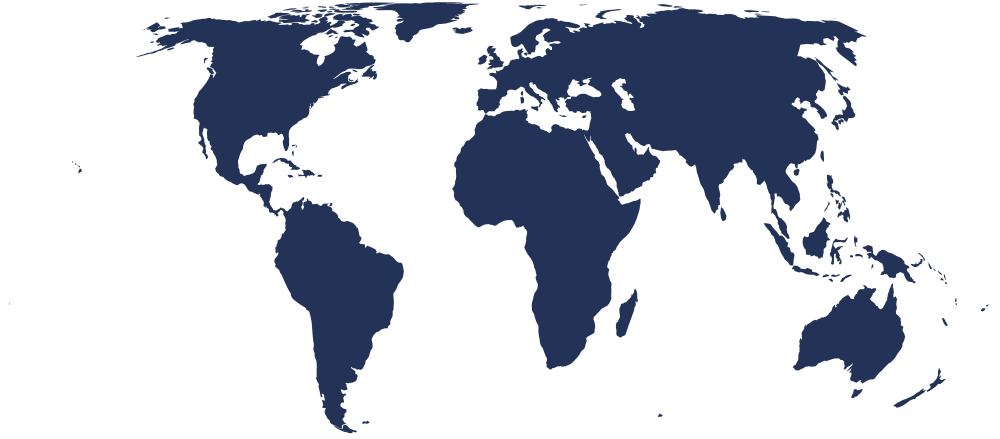
On the world map
Bordering countries
 Belarus
 Estonia
 Lithuania
 Russia
Country facts
- About half of Latvia's total land area is covered by forests, making it one of the most forested countries in Europe.
- The Latvian language is one of only two surviving Baltic languages, the other being Lithuanian.
- Latvia's nationwide Song and Dance Festival, held every five years, is recognized by UNESCO as an Intangible Cultural Heritage of Humanity.
- The amber washed up on Latvia's Baltic coastline has been traded across Europe since ancient times.
- Latvia declared independence from the Soviet Union on May 4, 1990, with full restoration recognized internationally in 1991.
Capital facts
- Riga was founded in 1201 by Bishop Albert of Bremen and is one of the oldest cities in the Baltic region.
- The city has the largest collection of Art Nouveau buildings in the world, concentrated especially in the city centre.
- Riga's Old Town, known as Vecrīga, is a UNESCO World Heritage Site celebrated for its medieval architecture.
- The Daugava River flows through Riga and has historically made the city an important trading hub.
- Riga served as the capital of the short-lived but influential Hanseatic League member city and grew wealthy through Baltic Sea trade.