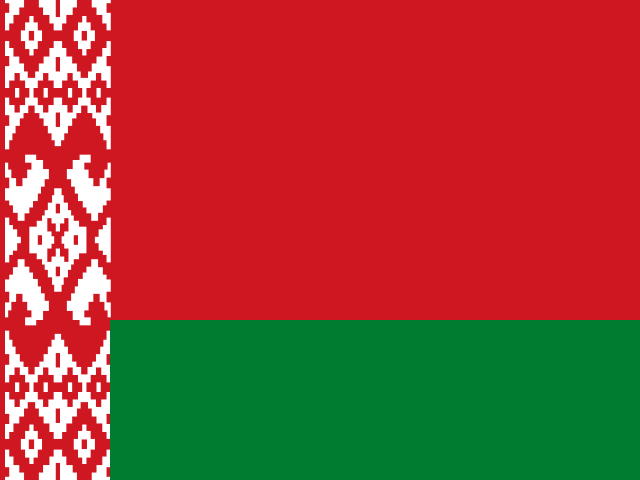
Belarus is a landlocked country in Eastern Europe, bordered by Russia, Ukraine, Poland, Lithuania, and Latvia. It is known for its dense forests, vast wetlands, and Soviet-era architecture. The country preserves one of Europe's last primeval forests and maintains a unique cultural identity shaped by centuries of shifting borders and rulers.
- Capital
- Minsk
- Continent
- Europe
- Region
- Eastern Europe
- Area
- 207,600 km²
- Coordinates
- 53° N, 28° E
- Languages
- Belarusian, Russian
- Currency
- BYN Br
- Domain
- .by
- Calling code
- +375
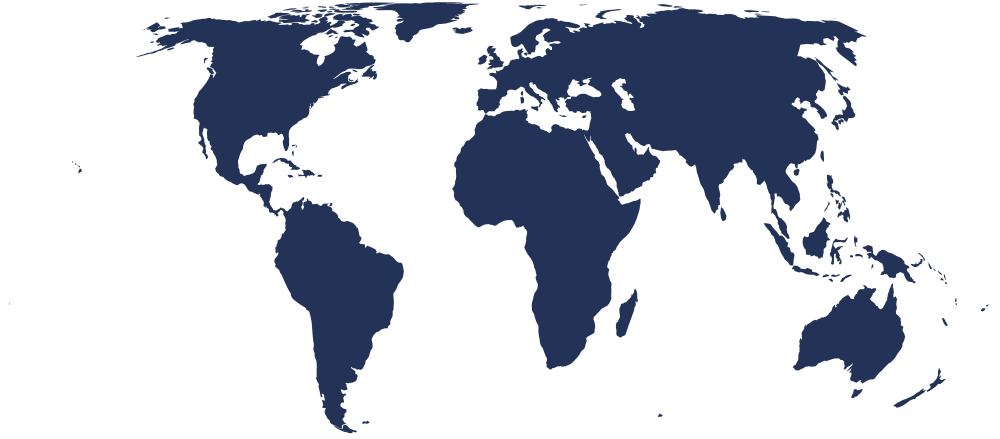
On the world map
Bordering countries
 Latvia
 Lithuania
 Poland
 Russia
 Ukraine
Country facts
- Belovezhskaya Pushcha, shared with Poland, is one of the last and largest remnants of the primeval forest that once covered much of Europe.
- Belarusian and Russian are both official languages of the country.
- Belarus declared independence from the Soviet Union on August 25, 1991.
- The country is home to the European bison, or wisent, which was reintroduced to the wild after becoming extinct in nature in the early 20th century.
- Traditional Belarusian folk craft includes intricate straw weaving, which has been recognized by UNESCO as an intangible cultural heritage.
Capital facts
- Minsk is one of the oldest cities in Eastern Europe, with its founding traditionally dated to 1067.
- Much of Minsk was destroyed during World War II and was rebuilt in a grand Stalinist architectural style, giving its city center a distinctive monumental appearance.
- The city is home to the National Library of Belarus, a striking modern building shaped like a large diamond or rhombicuboctahedron.
- Minsk serves as the headquarters of the Commonwealth of Independent States, an intergovernmental organization of former Soviet republics.
- Victory Square in the heart of Minsk features a tall obelisk commemorating Soviet soldiers who died in World War II.