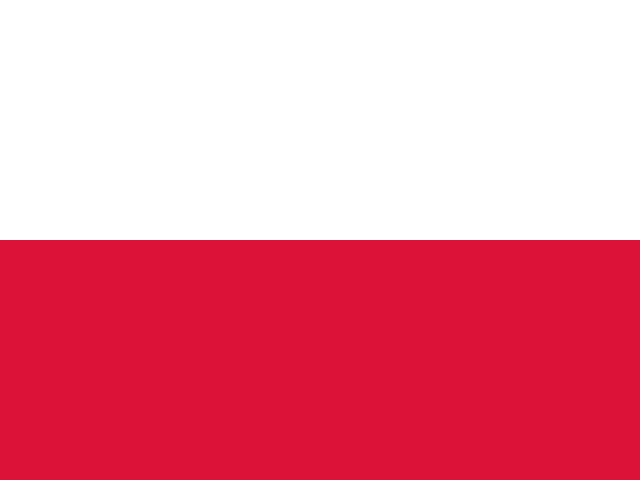
Poland is a country in Central Europe bordered by Germany to the west, Ukraine and Belarus to the east, and the Baltic Sea to the north. It is known for its rich medieval history, resilient culture, and vibrant cities. The country's landscape ranges from sandy Baltic beaches in the north to the dramatic Tatra Mountains in the south.
- Capital
- Warsaw
- Continent
- Europe
- Region
- Central Europe
- Area
- 312,679 km²
- Coordinates
- 52° N, 20° E
- Languages
- Polish
- Currency
- PLN zł
- Domain
- .pl
- Calling code
- +48
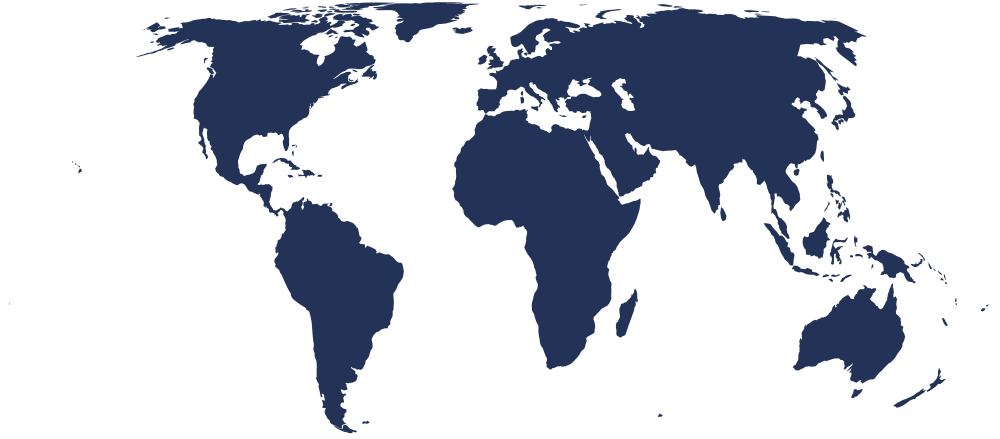
On the world map
Bordering countries
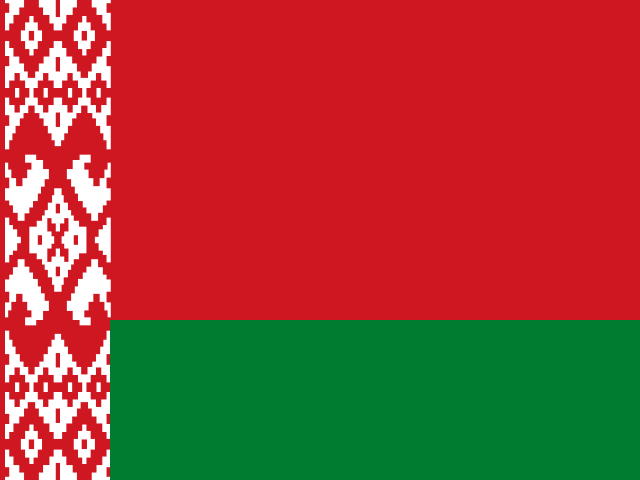 Belarus
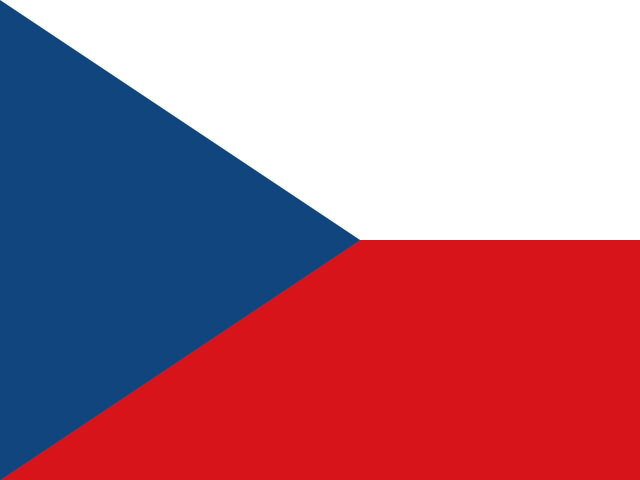 Czechia
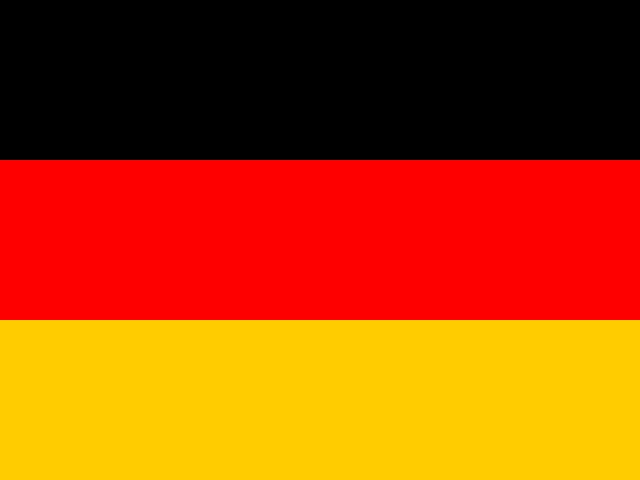 Germany
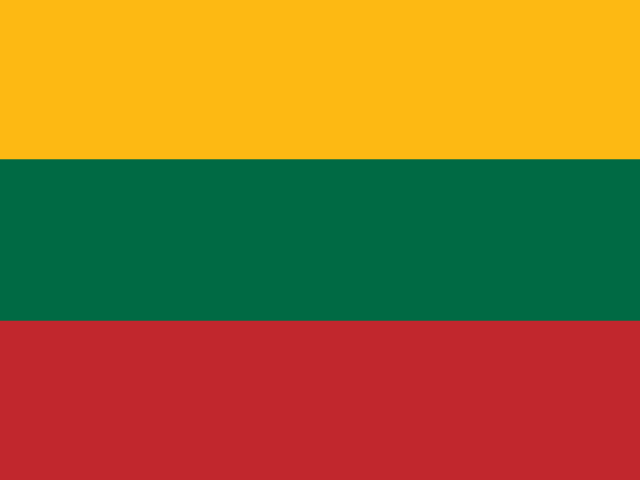 Lithuania
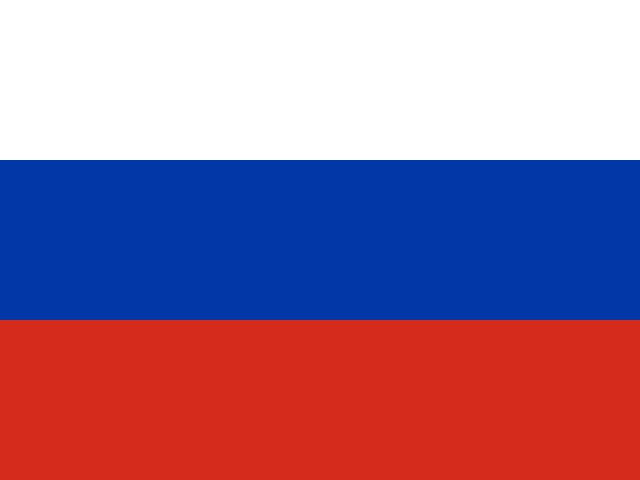 Russia
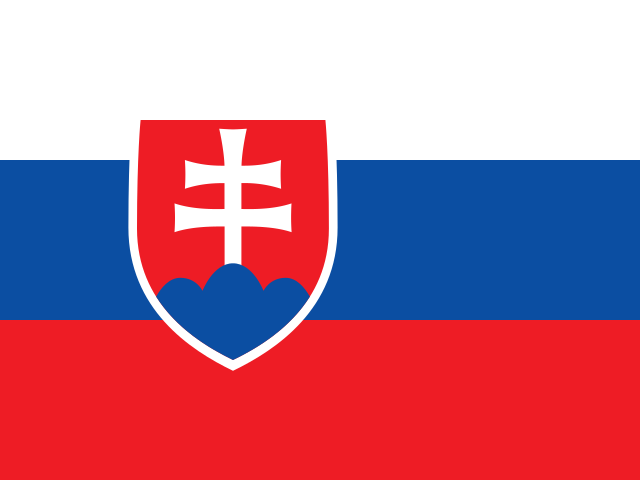 Slovakia
 Ukraine
Country facts
- Poland is home to the Białowieża Forest, one of the last and largest primeval forests in Europe, shared with Belarus.
- The Polish language uses the Latin alphabet but includes unique characters such as ą, ę, and ź.
- Poland has produced many celebrated scientists and artists, including astronomer Nicolaus Copernicus and composer Frédéric Chopin.
- The white-tailed eagle, known locally as the bielik, is the national symbol of Poland and appears on its coat of arms.
- Poland joined the European Union in 2004 as part of the largest single expansion in the EU's history.
Capital facts
- Warsaw has been the capital of Poland since 1596, when the royal court moved there from Kraków.
- During World War II, the city was almost entirely destroyed, but it was meticulously rebuilt after the war from historic paintings and old photographs.
- Warsaw's reconstructed Old Town was added to the UNESCO World Heritage List in 1980 in recognition of its remarkable restoration.
- The Palace of Culture and Science, a gift from the Soviet Union in 1955, remains the tallest building in Warsaw and a striking landmark of its skyline.
- The city sits on the Vistula River, which has shaped its history, trade, and culture for centuries.