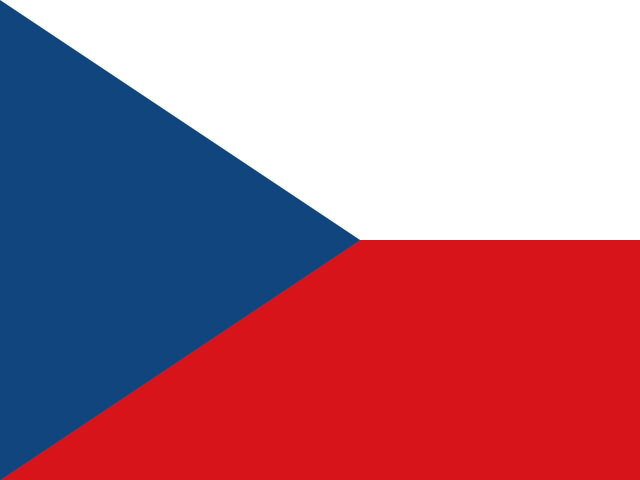
Czechia is a landlocked country in the heart of Central Europe, bordered by Germany, Poland, Slovakia, and Austria. It is renowned for its medieval architecture, rich brewing tradition, and vibrant cultural heritage. The country is divided into the historic regions of Bohemia, Moravia, and Czech Silesia.
- Capital
- Prague
- Continent
- Europe
- Region
- Central Europe
- Area
- 78,865 km²
- Coordinates
- 50° N, 16° E
- Languages
- Czech, Slovak
- Currency
- CZK Kč
- Domain
- .cz
- Calling code
- +420
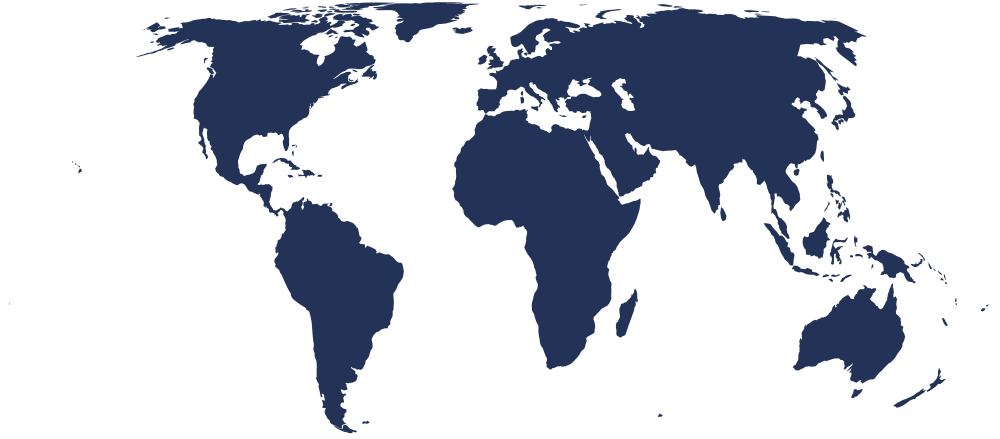
On the world map
Bordering countries
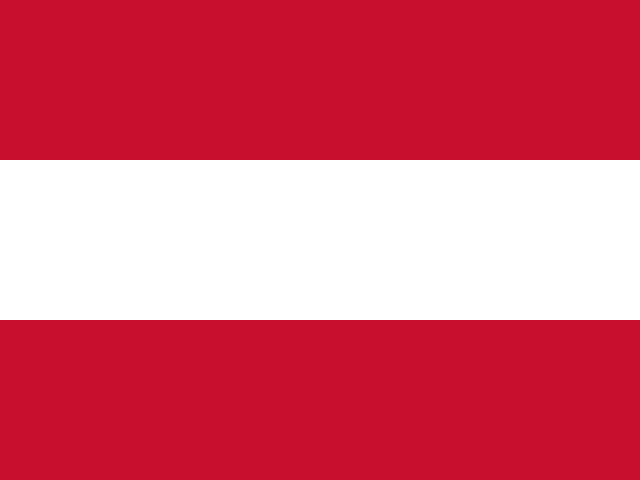 Austria
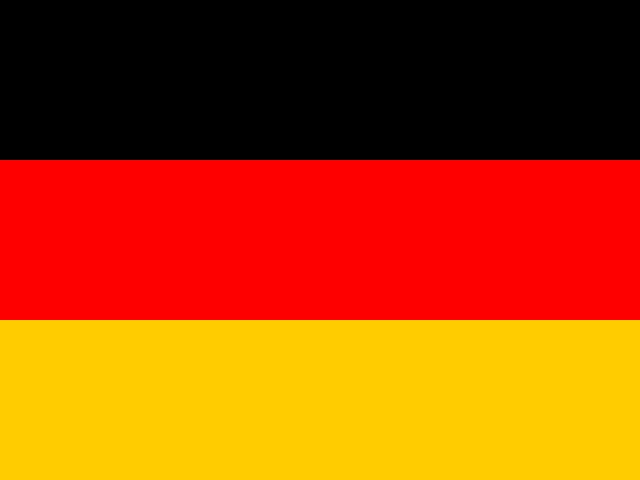 Germany
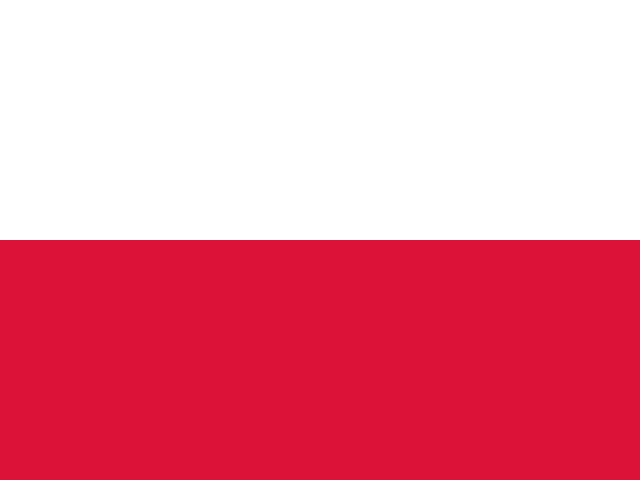 Poland
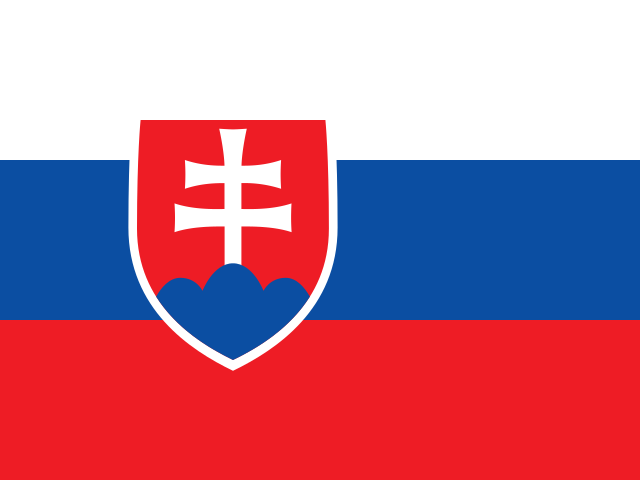 Slovakia
Country facts
- Czechia has the highest beer consumption per capita in the world, with Pilsner-style lager originating in the Bohemian city of Plzeň in 1842.
- The word 'robot' was coined by Czech writer Karel Čapek in his 1920 play R.U.R.
- Czechia became an independent country in 1993 following the peaceful dissolution of Czechoslovakia, known as the Velvet Divorce.
- The Bohemian Forest along the German border is one of Central Europe's largest contiguous forested areas.
- Czech is a Slavic language that uses the Latin alphabet with diacritical marks, including the distinctive háček (ˇ) accent.
Capital facts
- Prague has been continuously inhabited for over a thousand years, with Prague Castle first founded around the 9th century.
- The Charles Bridge, built in 1357 under King Charles IV, is decorated with 30 Baroque statues of saints.
- Prague's historic centre is a UNESCO World Heritage Site, recognized for its exceptional blend of architectural styles.
- The city straddles the Vltava River, which winds through the centre of the capital.
- Prague's Astronomical Clock, installed in 1410, is one of the oldest functioning astronomical clocks in the world.