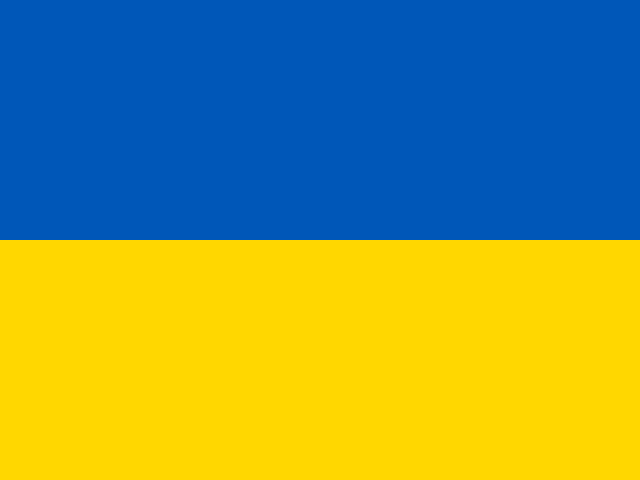
Ukraine is the largest country located entirely within Europe, bordered by Russia to the east, Poland to the west, and the Black Sea to the south. It is known for its vast fertile plains, called steppes, which have made it one of the world's leading grain producers. Ukraine has a rich cultural heritage spanning over a thousand years, with deep roots in Slavic history, folk art, and Orthodox Christianity.
- Capital
- Kyiv
- Continent
- Europe
- Region
- Eastern Europe
- Area
- 603,500 km²
- Coordinates
- 49° N, 32° E
- Languages
- Ukrainian
- Currency
- UAH ₴
- Domain
- .ua .укр
- Calling code
- +380
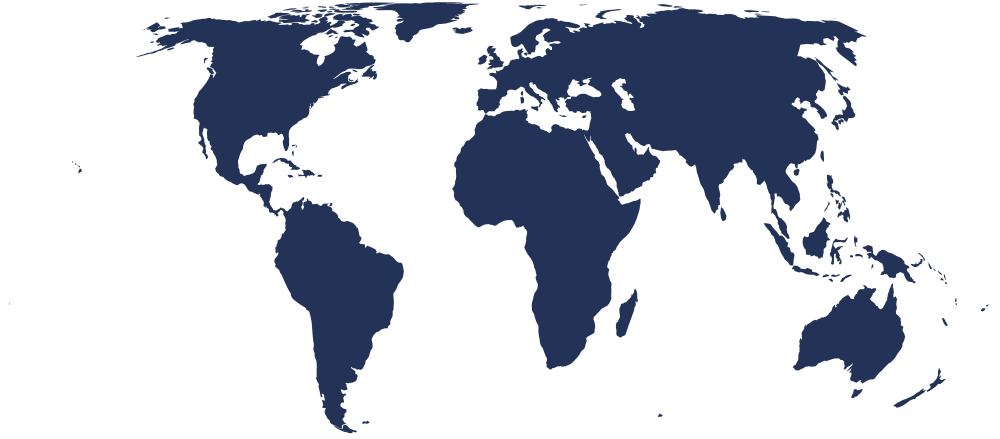
On the world map
Bordering countries
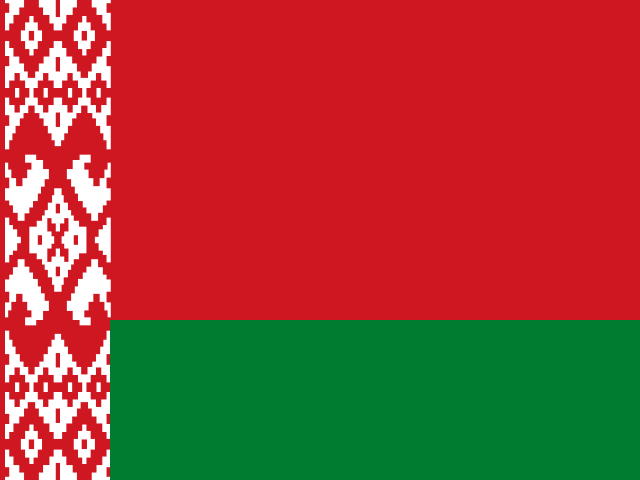 Belarus
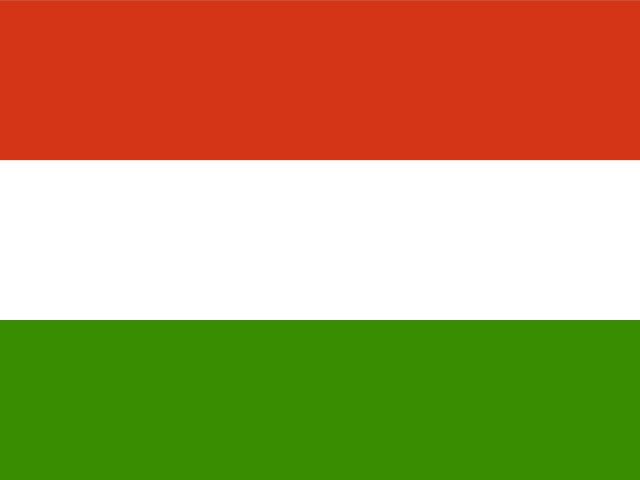 Hungary
 Moldova
 Poland
 Romania
 Russia
 Slovakia
Country facts
- Ukraine's black soil, known as chornozem, is among the most fertile in the world and covers much of the country's agricultural heartland.
- The Ukrainian language uses the Cyrillic alphabet and is the official state language, closely related to but distinct from Russian and Belarusian.
- Ukraine was home to the Cossacks, a renowned warrior society that played a major role in shaping Ukrainian national identity from the 15th century onward.
- The Carpathian Mountains in western Ukraine are home to ancient beech forests that are part of a UNESCO World Heritage Site.
- Ukraine's national symbol, the tryzub or trident, dates back to the era of the medieval Kyivan Rus state and appears on the country's coat of arms.
Capital facts
- Kyiv is one of the oldest cities in Eastern Europe, with its founding traditionally dated to the 5th or 6th century.
- The city served as the capital of Kyivan Rus, a powerful medieval state that was a cradle of Eastern Slavic civilization.
- Saint Sophia's Cathedral in Kyiv, built in the 11th century, is a UNESCO World Heritage Site celebrated for its original Byzantine mosaics and frescoes.
- The Kyiv Pechersk Lavra, also known as the Monastery of the Caves, is a historic Orthodox Christian monastery famous for its underground cave network.
- The Dnipro River, one of Europe's major rivers, flows through the heart of Kyiv and has shaped the city's geography and development for centuries.