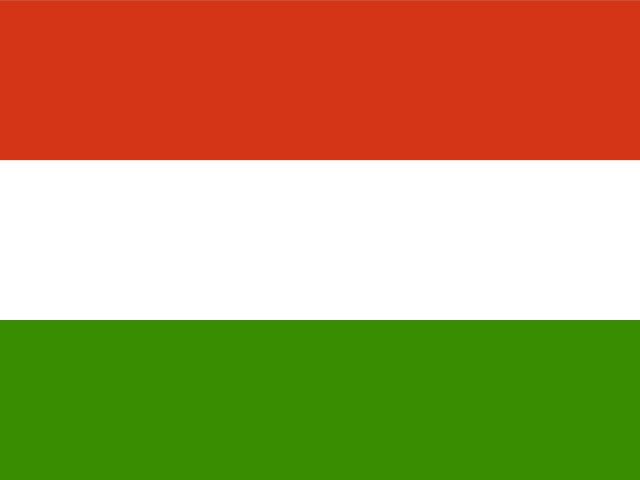
Hungary is a landlocked country in Central Europe, bordered by Austria, Slovakia, Ukraine, Romania, Serbia, Croatia, and Slovenia. It is known for its rich thermal spring culture, stunning architecture, and vibrant folk traditions. The Danube River flows through the heart of the country, dividing its capital into two historic halves.
- Capital
- Budapest
- Continent
- Europe
- Region
- Central Europe
- Area
- 93,028 km²
- Coordinates
- 47° N, 20° E
- Languages
- Hungarian
- Currency
- HUF Ft
- Domain
- .hu
- Calling code
- +36
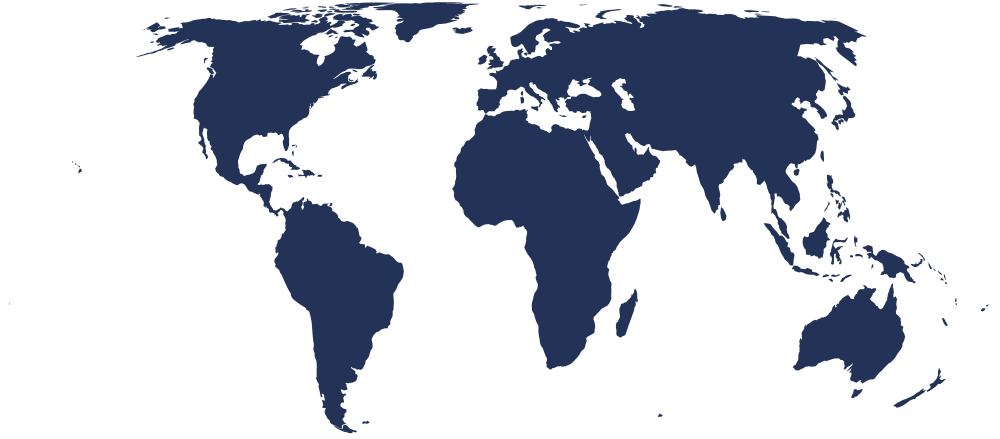
On the world map
Bordering countries
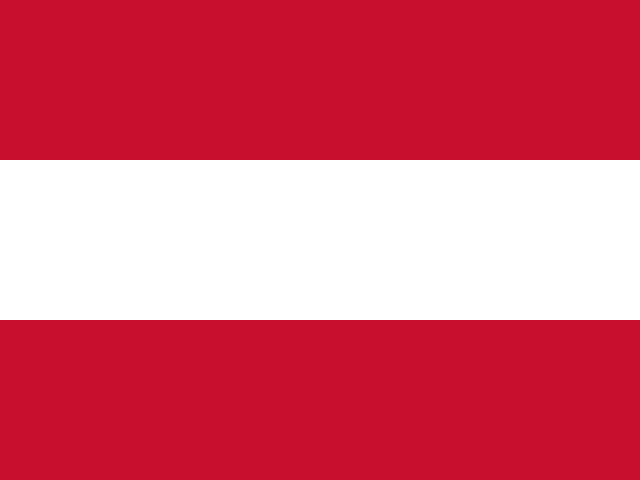 Austria
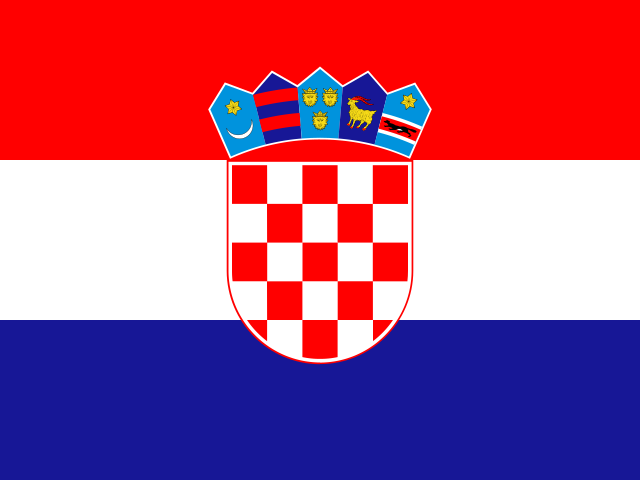 Croatia
 Romania
 Serbia
 Slovakia
 Slovenia
 Ukraine
Country facts
- Hungarian, known as Magyar, is a Finno-Ugric language unrelated to most of its European neighbors.
- Hungary has one of the highest concentrations of natural thermal springs in the world, feeding hundreds of public baths.
- The country was once the eastern half of the powerful Austro-Hungarian Empire, which dissolved after World War I.
- Lake Balaton, in western Hungary, is the largest freshwater lake in Central Europe.
- The Hungarian national dish, goulash, is a hearty beef and paprika stew that has spread across the globe.
Capital facts
- Budapest was formed in 1873 by the unification of three separate cities: Buda, Óbuda, and Pest.
- The Hungarian Parliament Building, completed in 1904, is one of the largest parliament buildings in the world.
- Buda Castle, perched on Castle Hill, has been a royal residence since the 13th century.
- The Széchenyi Thermal Bath, opened in 1913, is one of the largest thermal bath complexes in Europe.
- Budapest's historic metro line, opened in 1896, was the first underground railway on the European continent.