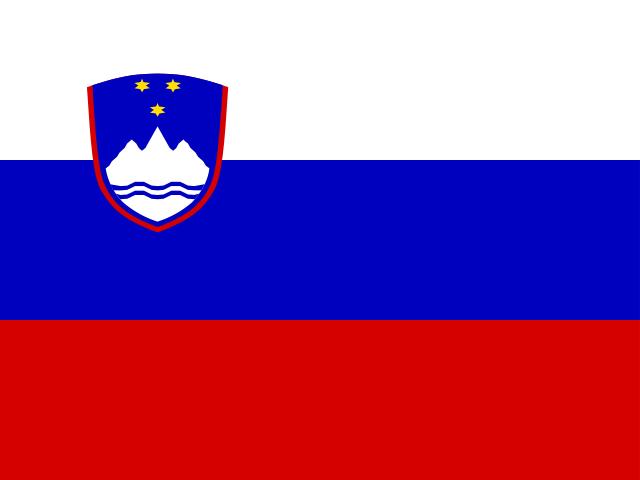
Slovenia is a small country in Central Europe, bordered by Austria, Hungary, Croatia, and Italy. It is known for its stunning alpine scenery, pristine lakes, and dense forests that cover more than half the country. Despite its compact size, Slovenia boasts remarkable natural and cultural diversity, from the Julian Alps in the northwest to the Adriatic coastline in the southwest.
- Capital
- Ljubljana
- Continent
- Europe
- Region
- Central Europe
- Area
- 20,273 km²
- Coordinates
- 46° N, 15° E
- Languages
- Slovene
- Currency
- EUR €
- Domain
- .si
- Calling code
- +386
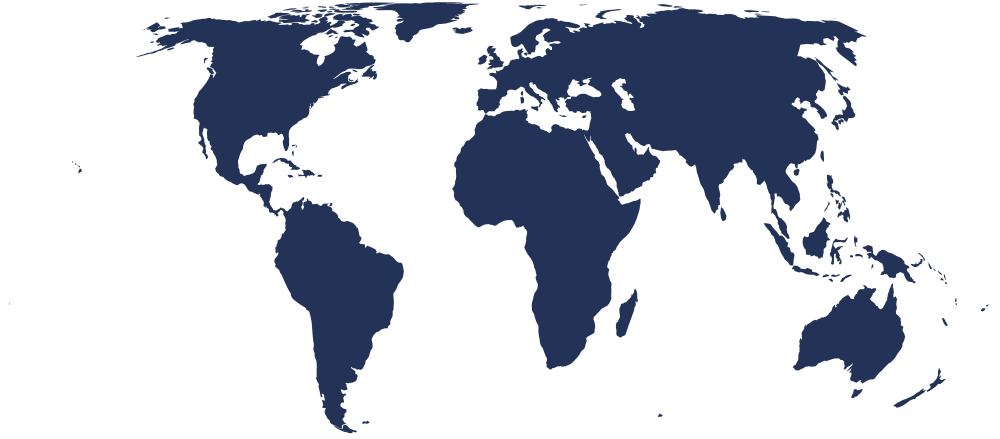
On the world map
Bordering countries
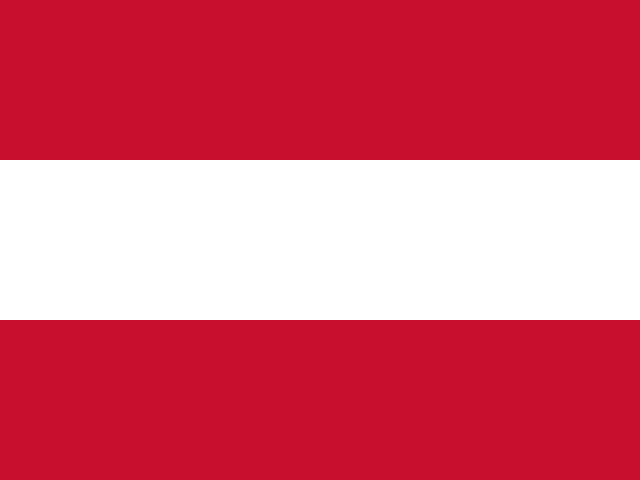 Austria
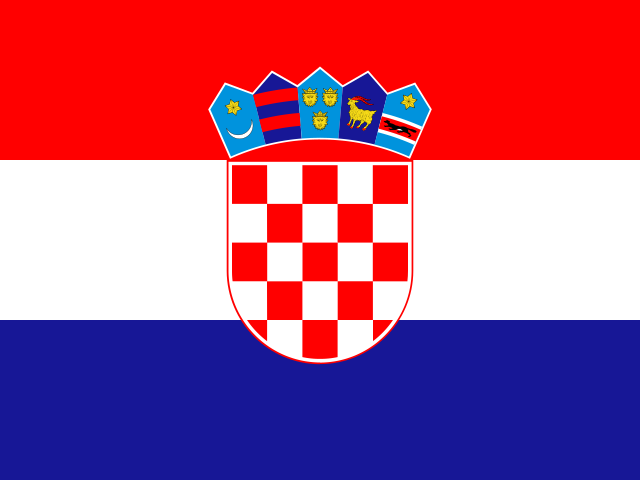 Croatia
 Hungary
 Italy
ItalyCountry facts
- Slovenia declared independence from Yugoslavia in 1991 after a brief ten-day war.
- The Postojna Cave system is one of the largest cave networks in Europe, stretching over 24 kilometres.
- Slovenian belongs to the South Slavic branch of the Indo-European language family.
- The national symbol of Slovenia is the three-peaked Mount Triglav, which appears on the country's flag and coat of arms.
- Slovenia was the first former Yugoslav republic to join both NATO and the European Union, in 2004.
Capital facts
- Ljubljana sits at the site of an ancient Roman settlement called Emona, founded around 15 AD.
- The city is dominated by Ljubljana Castle, a hilltop fortress with origins in the twelfth century.
- Ljubljana became the capital of the independent Republic of Slovenia in 1991.
- The Triple Bridge, designed by architect Jože Plečnik, is one of the most recognisable landmarks in the city centre.
- Ljubljana has a largely car-free historic centre, making it one of the more pedestrian-friendly capitals in Europe.