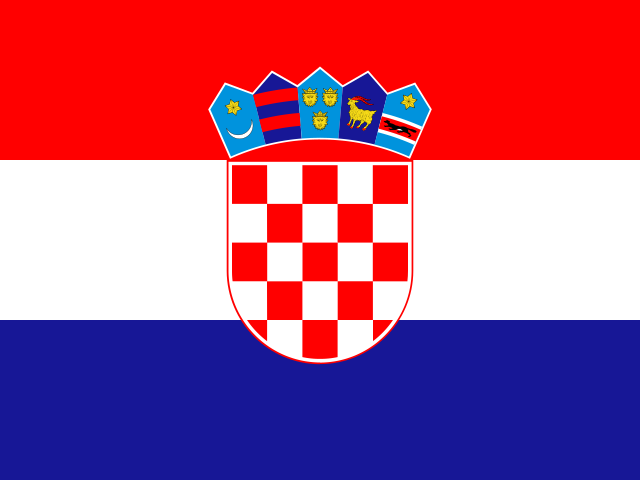
Croatia is a country in southeastern Europe, situated along the eastern Adriatic coast and bordering Slovenia, Hungary, Serbia, Bosnia and Herzegovina, and Montenegro. It is renowned for its stunning Dalmatian coastline, hundreds of islands, and crystal-clear Adriatic waters. Croatia is also home to remarkable natural parks and a wealth of well-preserved medieval towns and UNESCO World Heritage Sites.
- Capital
- Zagreb
- Continent
- Europe
- Region
- Southeast Europe
- Area
- 56,594 km²
- Coordinates
- 45° N, 16° E
- Languages
- Croatian
- Currency
- EUR €
- Domain
- .hr
- Calling code
- +385
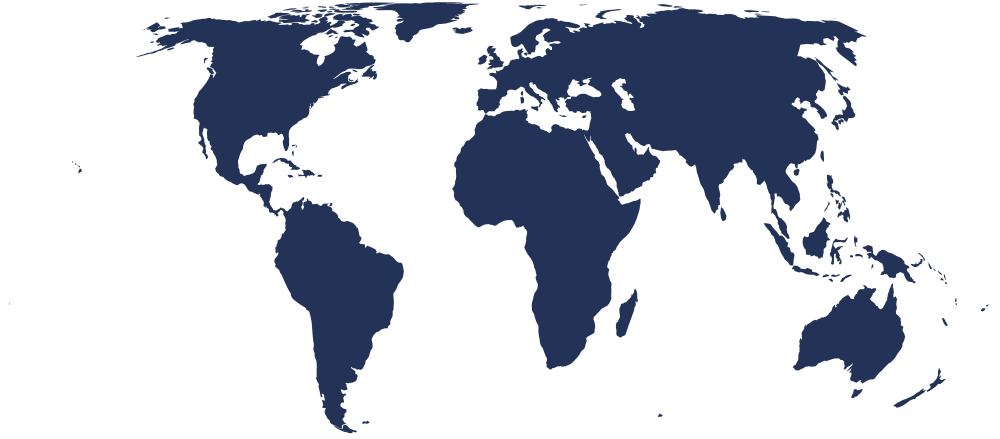
On the world map
Bordering countries
 Bosnia and Herzegovina
 Hungary
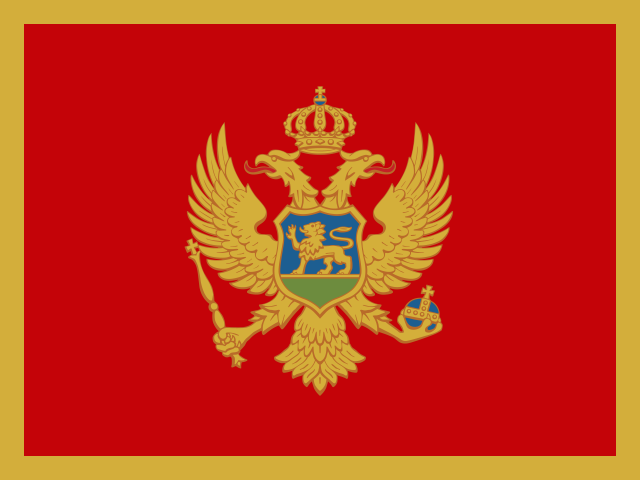 Montenegro
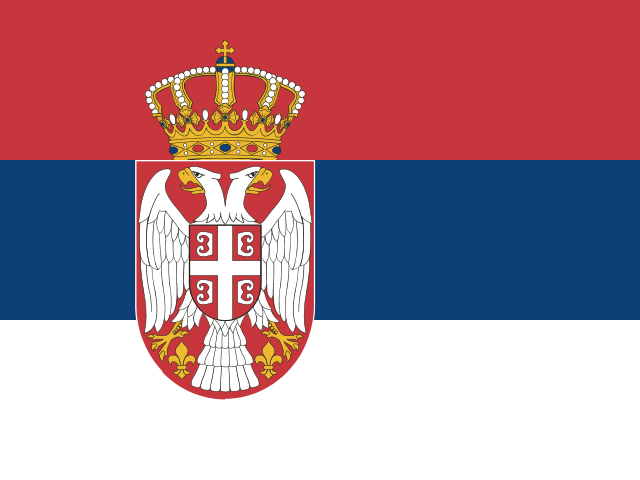 Serbia
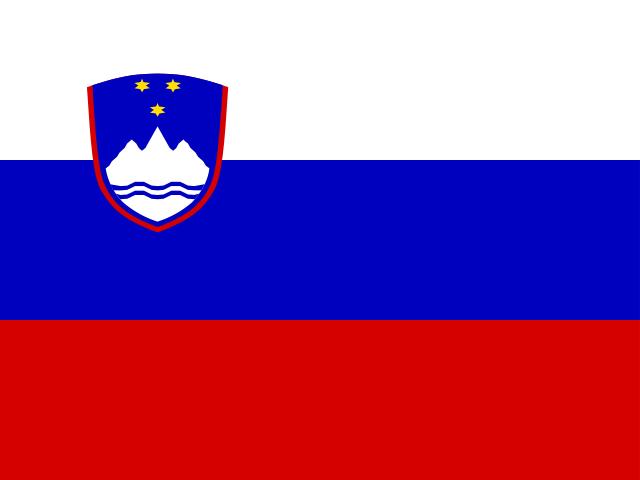 Slovenia
Country facts
- Croatia declared independence from Yugoslavia in 1991 and joined the European Union in 2013.
- The necktie, now worn worldwide, is believed to have originated from Croatian soldiers in the 17th century.
- Plitvice Lakes National Park, a UNESCO World Heritage Site, features a series of terraced lakes connected by stunning waterfalls.
- The Croatian language uses the Latin alphabet and is closely related to Serbian and Bosnian.
- Croatia has over a thousand islands along its Adriatic coast, though only a few dozen are permanently inhabited.
Capital facts
- Zagreb has been the capital of Croatia since the country's independence in 1991.
- The city developed from two medieval hilltop towns, Gradec and Kaptol, which merged over the centuries.
- Zagreb Cathedral, dedicated to the Assumption of Mary, is the tallest building in Croatia and a prominent city landmark.
- The Dolac open-air market, held daily near the city center, has been the heart of Zagreb's food trade since the 1930s.
- Zagreb hosted the 1987 Summer Universiade, an international multi-sport event for university athletes.