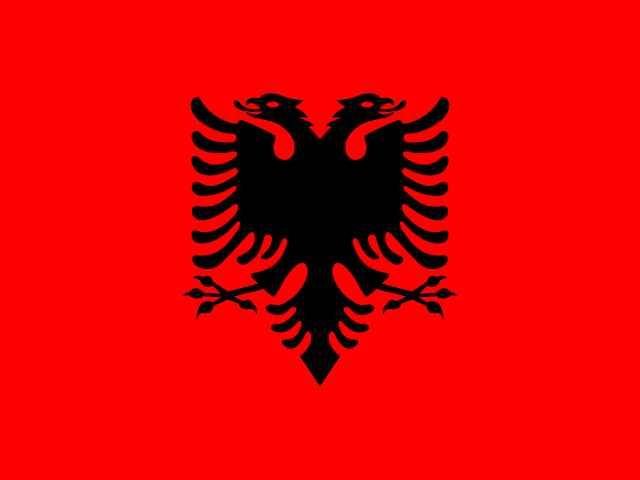
Albania is a small country on the western Balkan Peninsula, bordered by the Adriatic and Ionian Seas, Montenegro, Kosovo, North Macedonia, and Greece. It is known for its rugged mountain landscapes, ancient history, and a long coastline dotted with beaches and historic towns. Albania has undergone a remarkable transformation since emerging from decades of communist isolation in the early 1990s.
- Capital
- Tirana
- Continent
- Europe
- Region
- Southeast Europe
- Area
- 28,748 km²
- Coordinates
- 41° N, 20° E
- Languages
- Albanian
- Currency
- ALL L
- Domain
- .al
- Calling code
- +355
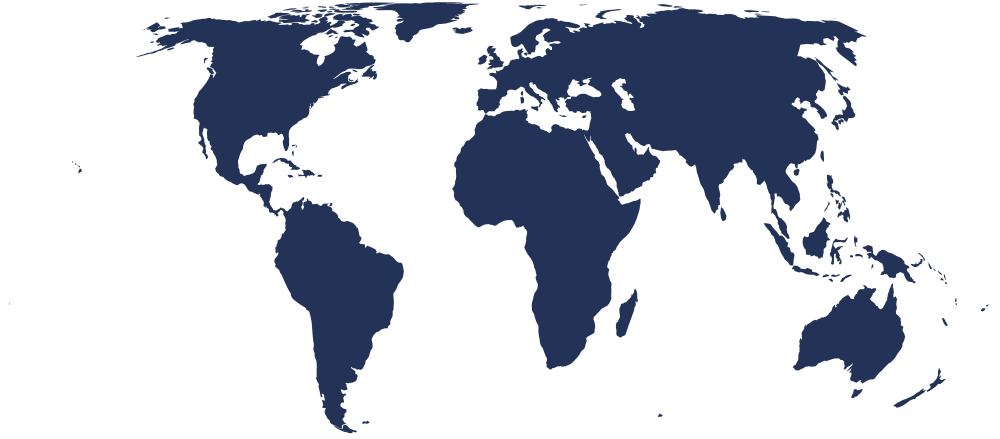
On the world map
Bordering countries
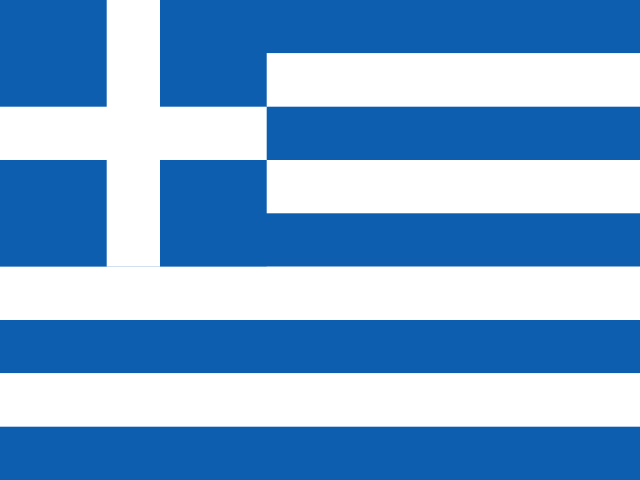 Greece
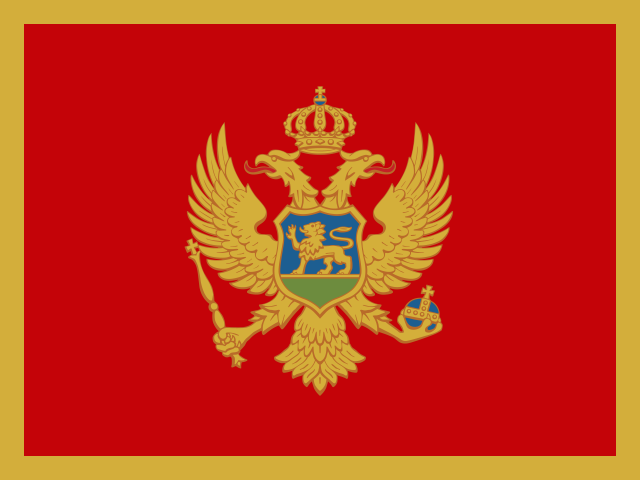 Montenegro
 North Macedonia
Country facts
- Albania was one of the most isolated countries in the world under Enver Hoxha's communist regime, which lasted from 1944 to 1991.
- The Albanian language, called Shqip, is one of the oldest and most distinct branches of the Indo-European language family.
- Albania is home to over 170,000 concrete bunkers built during the communist era, which can still be found across the countryside.
- The national symbol is the double-headed eagle, which appears on Albania's red flag and dates back to the medieval hero Gjergj Kastrioti, known as Skanderbeg.
- Lake Ohrid, shared with North Macedonia, is one of Europe's deepest and oldest lakes and is a UNESCO World Heritage Site.
Capital facts
- Tirana was founded in the early 17th century and became Albania's capital in 1920.
- Skanderbeg Square is the heart of the city, featuring a prominent statue of Albania's national hero and several key government buildings.
- The colorful facades of Tirana's buildings were introduced in the early 2000s by then-mayor Edi Rama as part of an urban renewal initiative.
- The Bunk'Art museums are housed inside massive communist-era bunkers and offer a unique look at Albania's recent history.
- Tirana sits in a valley surrounded by hills and mountains, with Mount Dajti easily accessible by cable car offering panoramic views of the city.