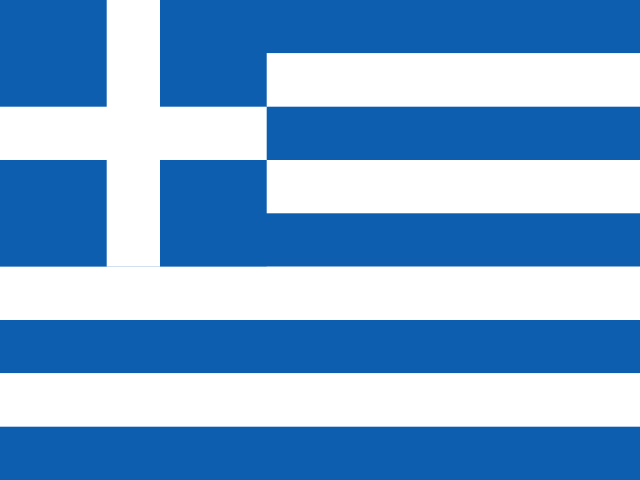
Greece is a country in southeastern Europe, situated at the southern tip of the Balkan Peninsula and surrounded by the Aegean, Ionian, and Mediterranean seas. It is renowned as the birthplace of Western civilization, democracy, and the ancient Olympic Games. Greece is also famous for its thousands of islands, whitewashed villages, and iconic ancient ruins.
- Capital
- Athens
- Continent
- Europe
- Region
- Southern Europe
- Area
- 131,990 km²
- Coordinates
- 39° N, 22° E
- Languages
- Greek
- Currency
- EUR €
- Domain
- .gr
- Calling code
- +30
On the world map
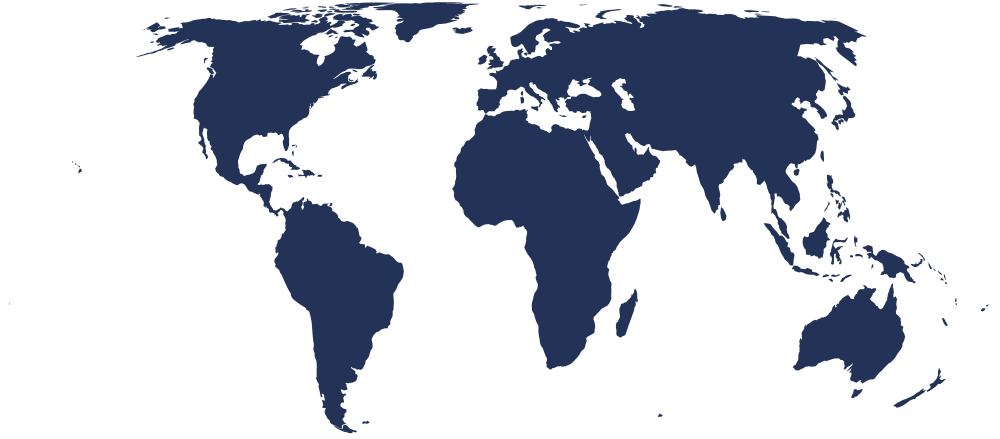
Bordering countries
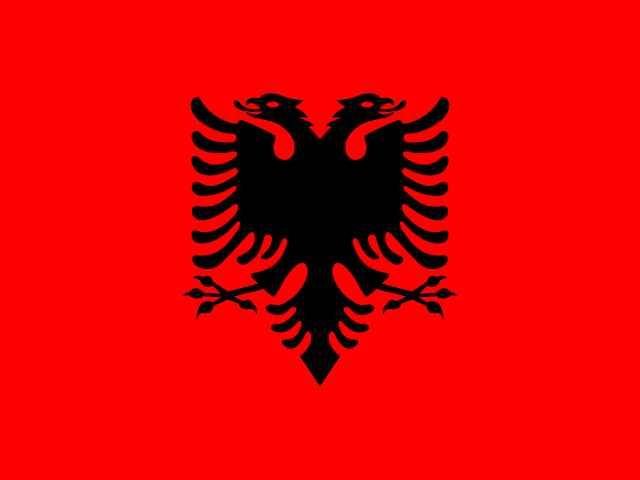 Albania
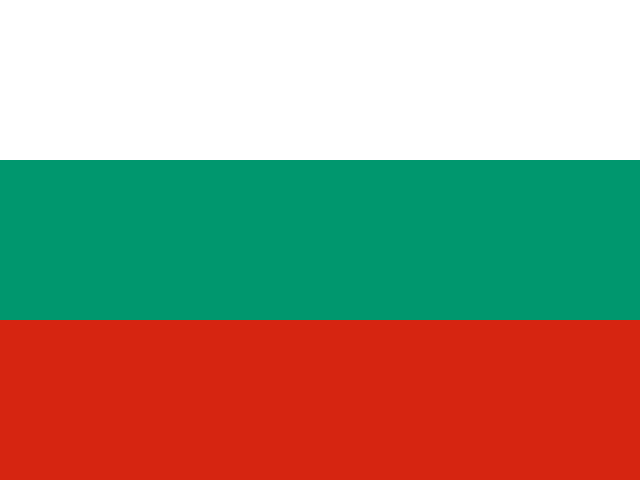 Bulgaria
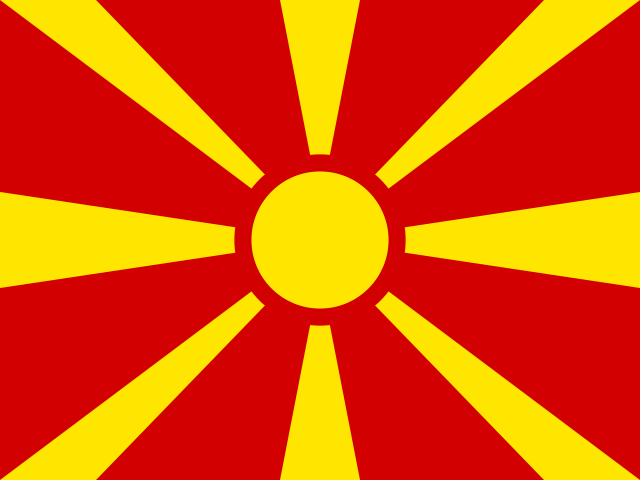 North Macedonia
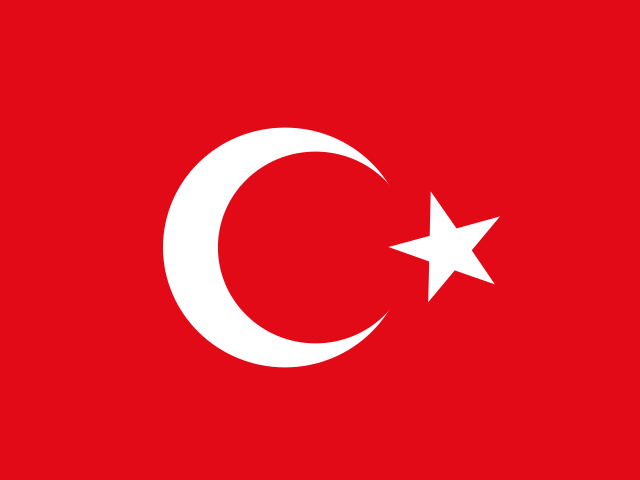 Türkiye
Country facts
- Greece has more than 6,000 islands, of which around 230 are inhabited.
- The Greek alphabet, developed around 800 BCE, is the ancestor of the Latin and Cyrillic scripts used across the world today.
- Olive cultivation has been central to Greek culture for over 5,000 years, and Greece remains one of the world's leading producers of olive oil.
- The first modern Olympic Games were held in Athens in 1896, reviving a tradition from ancient Olympia.
- Greece is home to 18 UNESCO World Heritage Sites, including the Acropolis of Athens and the medieval city of Rhodes.
Capital facts
- Athens is one of the world's oldest cities, with a recorded history spanning over 3,400 years.
- The Parthenon, a temple dedicated to the goddess Athena, was built on the Acropolis between 447 and 432 BCE.
- Athens is widely regarded as the birthplace of democracy, which was introduced by the statesman Cleisthenes around 507 BCE.
- The National Archaeological Museum in Athens holds one of the most important collections of ancient Greek artifacts in the world.
- Athens hosted the first modern Olympic Games in 1896 and again welcomed the Summer Olympics in 2004.