Malta is a small archipelago in the central Mediterranean Sea, located south of Sicily and north of Libya. It is known for its rich history shaped by the Phoenicians, Romans, Knights of St John, and British Empire. The islands are celebrated for their stunning limestone architecture, crystal-clear waters, and some of the oldest freestanding structures in the world.
- Capital
- Valletta
- Continent
- Europe
- Region
- Southern Europe
- Area
- 316 km²
- Coordinates
- 36° N, 15° E
- Languages
- English, Maltese
- Currency
- EUR €
- Domain
- .mt
- Calling code
- +356
On the world map
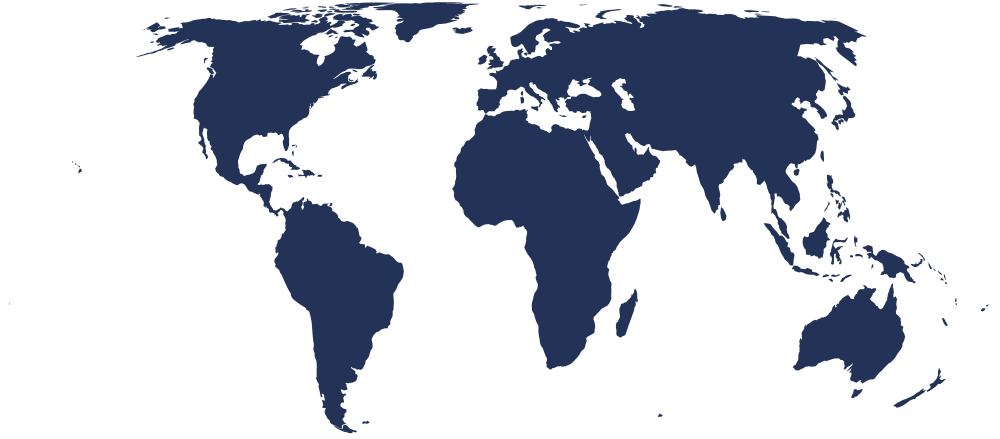
Bordering countries
No land borders — this is an island nation.
Country facts
- Malta's Ġgantija temples on the island of Gozo date back to around 3600 BCE, making them among the oldest freestanding stone structures on Earth.
- Maltese is the only Semitic language written in the Latin alphabet and is an official language of the European Union.
- Malta gained independence from British rule in 1964 after being a British colony for over 150 years.
- The Knights of St John, also known as the Knights Hospitaller, ruled Malta from 1530 to 1798 and left a lasting mark on its architecture and culture.
- Malta has no rivers or lakes, and the islands rely on desalination plants and groundwater to meet their freshwater needs.
Capital facts
- Valletta was founded in 1566 by Jean de Valette, Grand Master of the Knights of St John, after the Great Siege of Malta in 1565.
- With an area of about 0.8 square kilometres, Valletta is one of the smallest capital cities in the European Union.
- The city was designated a UNESCO World Heritage Site in 1980 in recognition of its outstanding Baroque architecture and historical significance.
- St John's Co-Cathedral, built by the Knights of St John, houses Caravaggio's largest known painting, 'The Beheading of Saint John the Baptist'.
- Valletta served as the European Capital of Culture in 2018, hosting hundreds of arts and cultural events throughout the year.