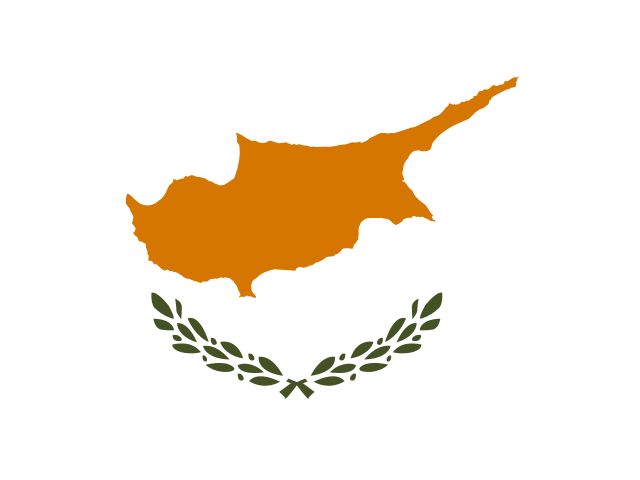
Cyprus is an island nation in the eastern Mediterranean Sea, lying south of Turkey and west of Lebanon. It is known for its warm climate, ancient ruins, and beautiful beaches. The island has a rich history shaped by Greek, Roman, Byzantine, and Ottoman influences.
- Capital
- Nicosia
- Continent
- Europe
- Region
- Southern Europe
- Area
- 9,251 km²
- Coordinates
- 35° N, 33° E
- Languages
- Greek, Turkish
- Currency
- EUR €
- Domain
- .cy
- Calling code
- +357
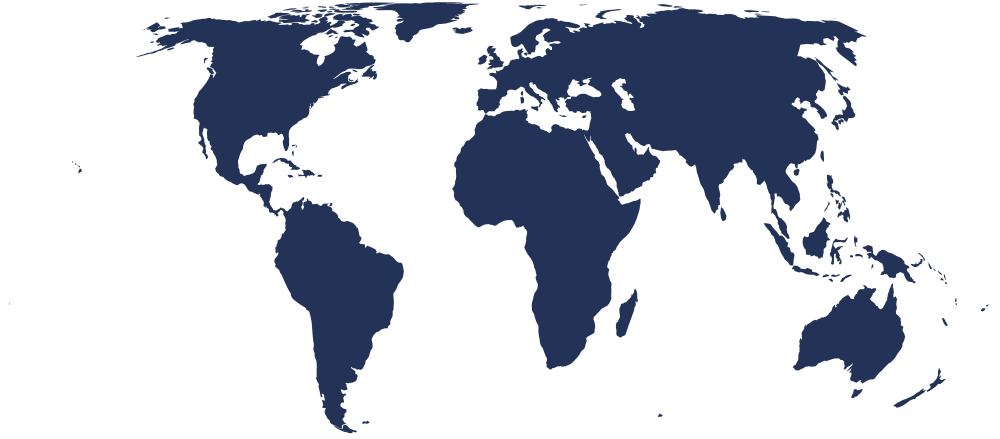
On the world map
Bordering countries
No land borders — this is an island nation.
Country facts
- Cyprus is the third-largest island in the Mediterranean Sea.
- The island is traditionally associated with Aphrodite, the ancient Greek goddess of love, who was said to have been born from its sea foam.
- Cyprus joined the European Union in 2004 and adopted the euro as its currency in 2008.
- The Cyprus mouflon, a rare wild sheep, is an endemic species found only on the island and is a national symbol.
- Cyprus has been divided since 1974, with the northern part administered by Turkish Cypriots and the south by the Republic of Cyprus.
Capital facts
- Nicosia, known in Greek as Lefkosia, has been the capital of Cyprus since the 10th century.
- It is the last divided capital city in the world, split between the Republic of Cyprus in the south and the Turkish Cypriot administration in the north.
- The city is encircled by impressive Venetian walls built in the 16th century to defend against Ottoman attack.
- The Cyprus Museum in Nicosia houses one of the finest collections of ancient Cypriot art and archaeology.
- The Green Line, a UN-monitored buffer zone, runs directly through the heart of the city.