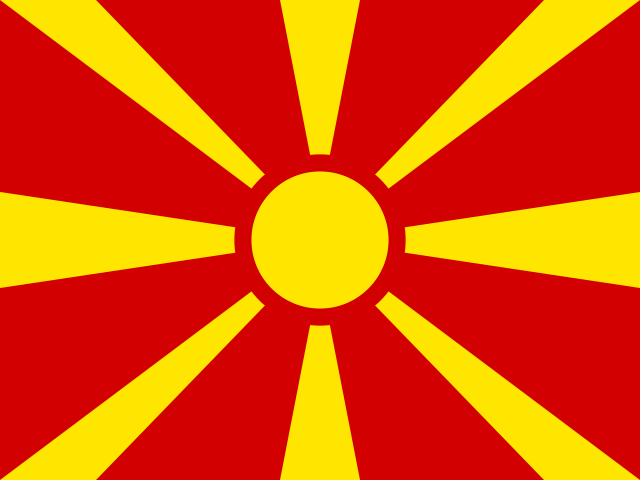
North Macedonia is a landlocked country in the southern Balkans, bordered by Serbia, Bulgaria, Greece, and Albania. It is known for its ancient history, including connections to Alexander the Great and the Byzantine era. Lake Ohrid, one of Europe's oldest and deepest lakes, is one of its most celebrated natural and cultural treasures.
- Capital
- Skopje
- Continent
- Europe
- Region
- Southeast Europe
- Area
- 25,713 km²
- Coordinates
- 42° N, 22° E
- Languages
- Macedonian
- Currency
- MKD den
- Domain
- .mk
- Calling code
- +389
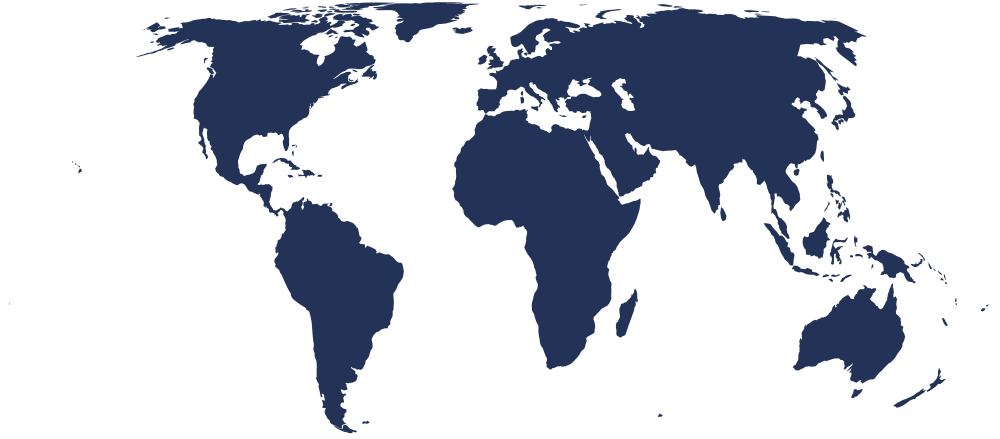
On the world map
Bordering countries
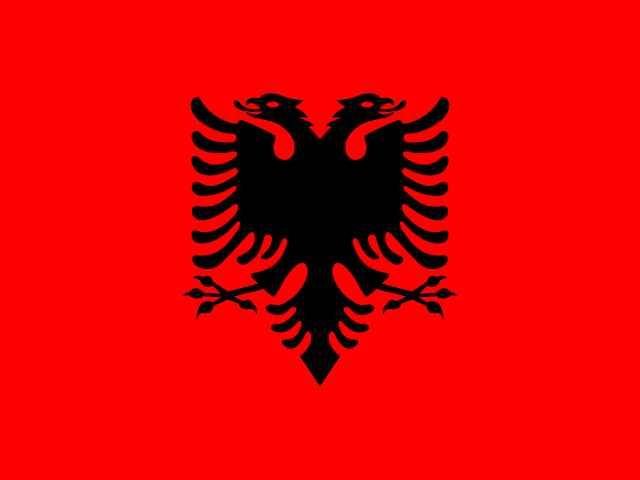 Albania
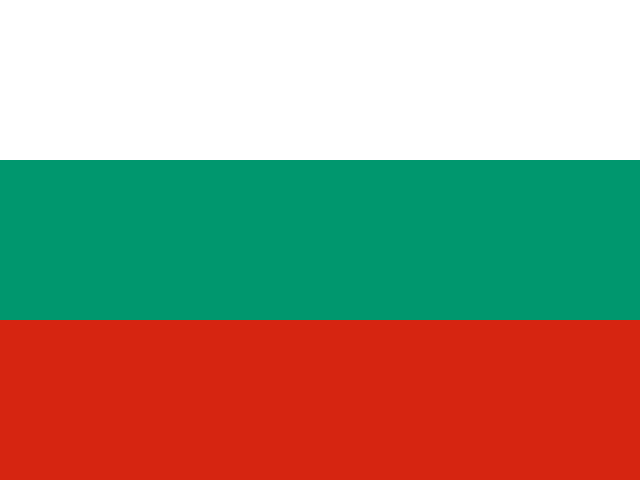 Bulgaria
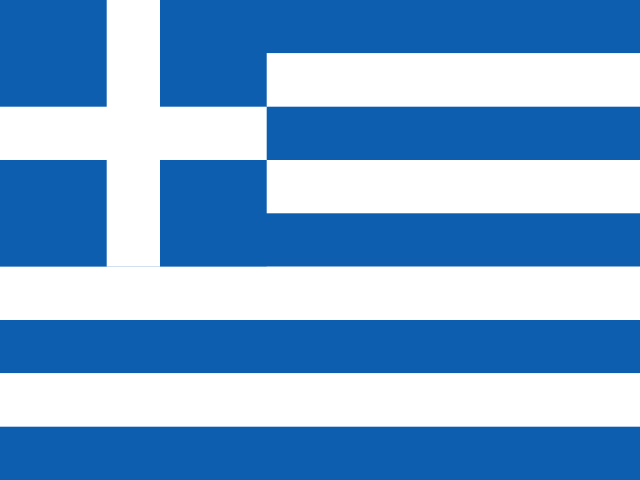 Greece
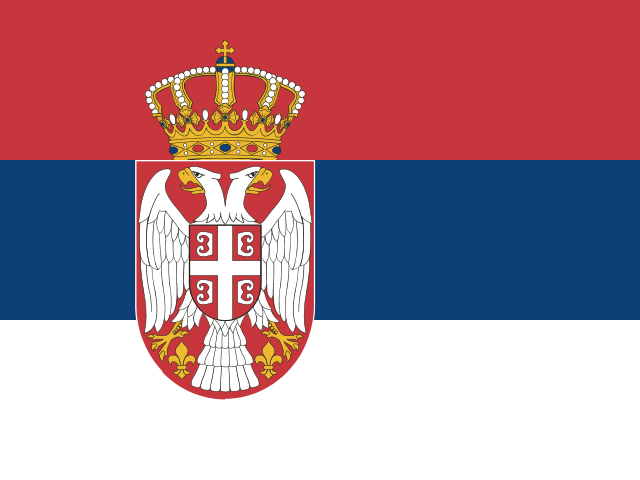 Serbia
Country facts
- North Macedonia declared independence from Yugoslavia in 1991 without armed conflict, making its separation one of the most peaceful in the region.
- The Macedonian language is a South Slavic language written in the Cyrillic alphabet.
- Saint Cyril, co-creator of the Cyrillic alphabet, was born in the region in the 9th century.
- The country is home to over 50 lakes and 16 mountain ranges, giving it a remarkably diverse landscape for its size.
- The Ohrid region is one of the rare UNESCO sites recognized for both its natural and cultural heritage.
Capital facts
- Skopje is one of the oldest continuously inhabited cities in the Balkans, with settlements dating back thousands of years.
- A devastating earthquake in 1963 destroyed much of the city, prompting an international rebuilding effort.
- The Stone Bridge, a 15th-century Ottoman structure spanning the Vardar River, is one of Skopje's most iconic landmarks.
- Skopje's Old Bazaar, known as Čaršija, is among the largest and best-preserved Ottoman-era bazaars in the Balkans.
- The city sits along the Vardar River, which flows through North Macedonia before emptying into the Aegean Sea in Greece.