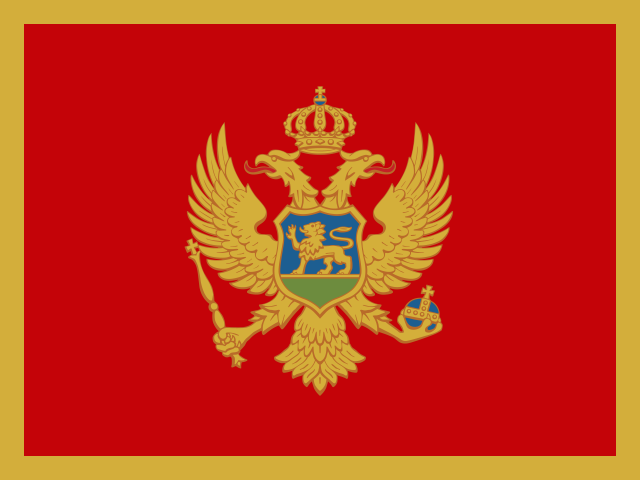
Montenegro is a small country on the Adriatic coast of the western Balkans, bordered by Croatia, Bosnia and Herzegovina, Serbia, Kosovo, and Albania. It is known for its dramatic landscapes, including rugged mountains, deep canyons, and a stunning coastline along the Adriatic Sea. The country became independent in 2006 after a referendum to dissolve its union with Serbia.
- Capital
- Podgorica
- Continent
- Europe
- Region
- Southeast Europe
- Area
- 13,812 km²
- Coordinates
- 43° N, 19° E
- Languages
- Montenegrin
- Currency
- EUR €
- Domain
- .me
- Calling code
- +382
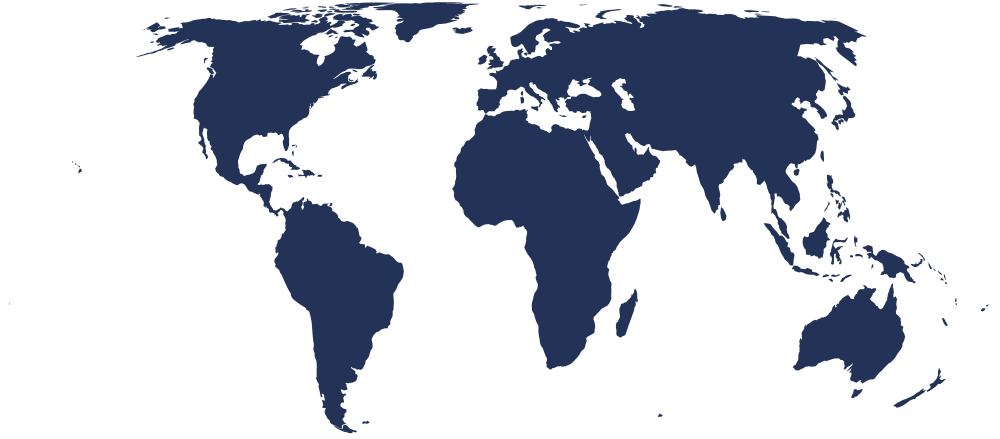
On the world map
Bordering countries
 Albania
 Bosnia and Herzegovina
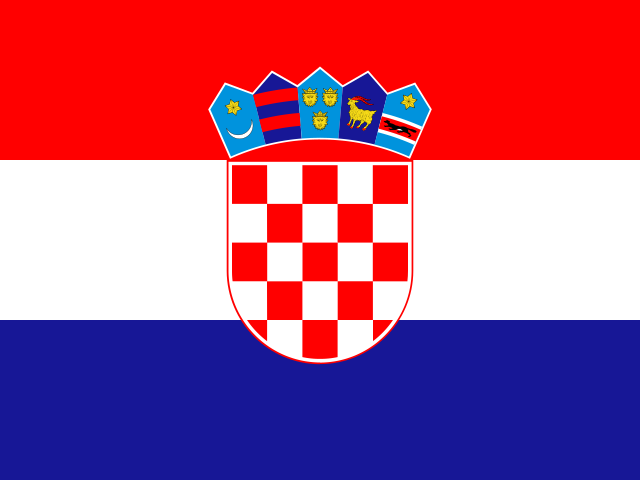 Croatia
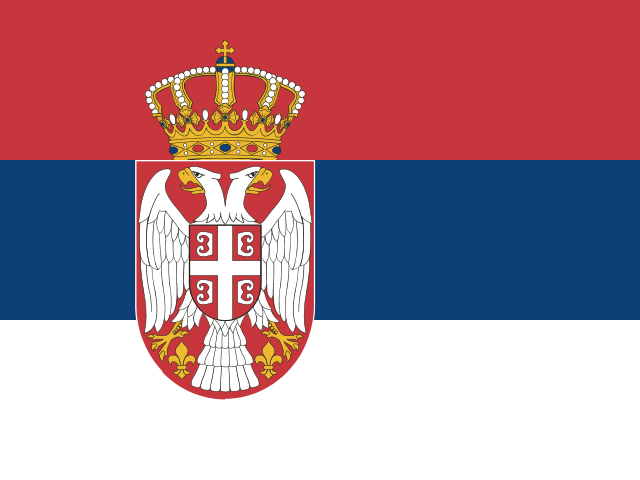 Serbia
Country facts
- Montenegro's name means 'Black Mountain' in both Montenegrin and Italian, referring to the dark appearance of Mount Lovćen.
- The Tara River Canyon is one of the deepest river canyons in Europe, reaching depths of over 1,300 metres.
- Montenegro joined NATO in 2017, making it one of the alliance's newest members.
- The country is home to Lake Skadar, the largest lake in the Balkans, which it shares with Albania.
- Montenegrin, the official language, is closely related to Serbian, Croatian, and Bosnian and uses both the Latin and Cyrillic alphabets.
Capital facts
- Podgorica sits at the confluence of the Ribnica and Morača rivers in a broad valley in central Montenegro.
- The city was known as Titograd from 1946 to 1992, named in honour of Yugoslav leader Josip Broz Tito.
- The Millennium Bridge, a striking cable-stayed bridge over the Morača River, has become a modern symbol of the city.
- Podgorica is home to the ruins of Doclea, an ancient Roman city dating back to the first century AD.
- The city serves as both the political capital and the main economic and cultural hub of Montenegro.