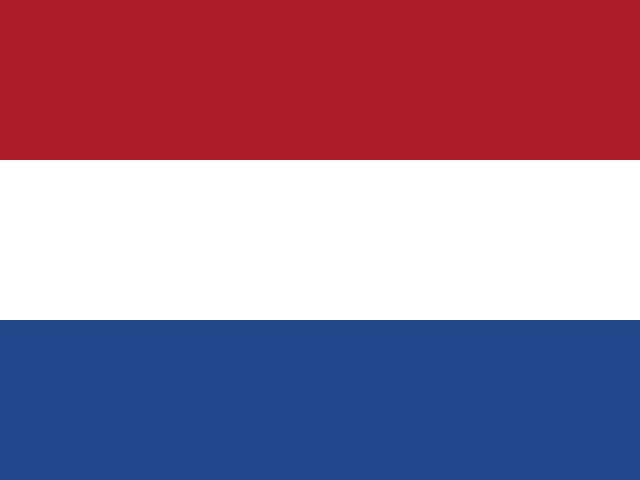
The Netherlands is a low-lying country in northwestern Europe, bordered by Germany, Belgium, and the North Sea. It is famous for its tulip fields, windmills, and an extensive network of canals. Much of the country sits below sea level, and the Dutch have engineered remarkable systems of dikes and pumping stations to keep the land dry.
- Capital
- Amsterdam
- Continent
- Europe
- Region
- Western Europe
- Area
- 41,850 km²
- Coordinates
- 53° N, 6° E
- Languages
- Dutch
- Currency
- EUR €
- Domain
- .nl
- Calling code
- +31
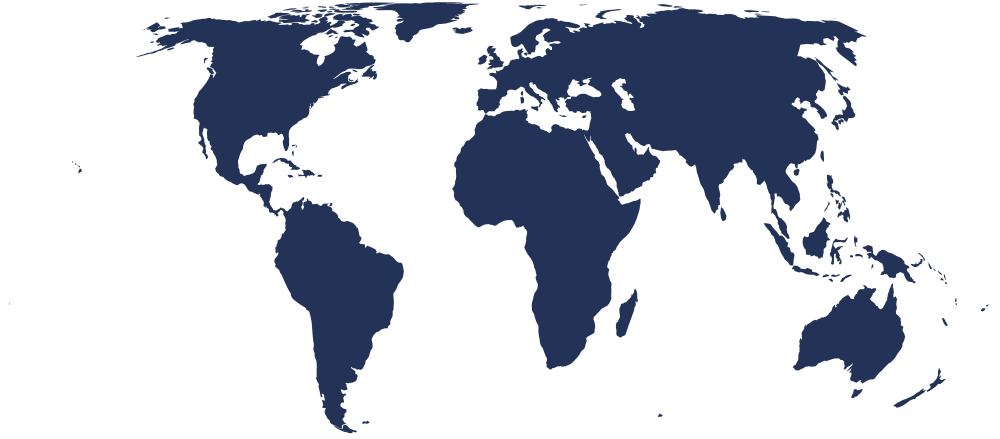
On the world map
Bordering countries
 Belgium
 Germany
Country facts
- About a quarter of the Netherlands lies below sea level, making water management central to Dutch life for centuries.
- The Netherlands is the world's second-largest exporter of food and agricultural products after the United States.
- Orange is the national color, derived from the House of Orange-Nassau, the Dutch royal family.
- The Dutch Golden Age in the 17th century produced celebrated painters such as Rembrandt van Rijn and Johannes Vermeer.
- The Netherlands has more bicycles than people, and cycling is a primary mode of everyday transport.
Capital facts
- Amsterdam began as a small fishing settlement on the Amstel River in the late 12th century, with a dam giving the city its name.
- The city's historic canal ring, known as the Grachtengordel, was added to the UNESCO World Heritage List in 2010.
- The Rijksmuseum in Amsterdam houses an outstanding collection of Dutch Golden Age art, including works by Rembrandt and Vermeer.
- Amsterdam's Anne Frank House, where Anne Frank hid during World War II, is one of the most visited museums in Europe.
- Although Amsterdam is the constitutional capital, the Dutch government and parliament are based in The Hague.