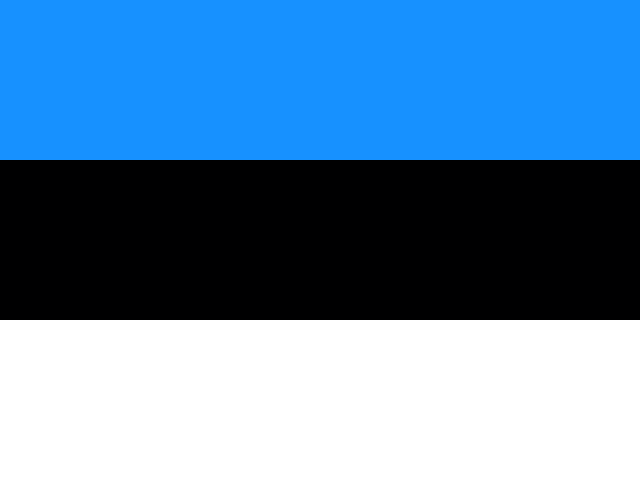
Estonia is a small country in northern Europe, situated on the eastern coast of the Baltic Sea and bordered by Latvia to the south and Russia to the east. It is well known for its beautifully preserved medieval old town in Tallinn, its vast forests and thousands of islands, and its reputation as one of the most digitally advanced societies in the world. Estonia regained independence from the Soviet Union in 1991 and has since become a member of both the European Union and NATO.
- Capital
- Tallinn
- Continent
- Europe
- Region
- Northern Europe
- Area
- 45,227 km²
- Coordinates
- 59° N, 26° E
- Languages
- Estonian
- Currency
- EUR €
- Domain
- .ee
- Calling code
- +372
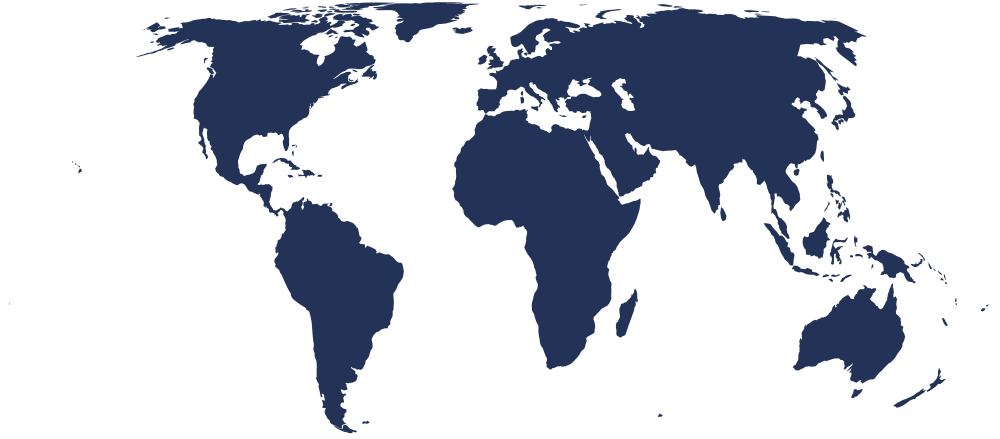
On the world map
Bordering countries
 Latvia
 Russia
Country facts
- Estonia has over 2,000 islands, the largest of which is Saaremaa.
- The Estonian language belongs to the Finno-Ugric family, making it closely related to Finnish and distantly related to Hungarian.
- Estonia was the first country in the world to use internet voting in a national election, doing so in 2005.
- Forests cover more than half of Estonia's total land area.
- The national symbol of Estonia is the barn swallow, and the national flower is the cornflower.
Capital facts
- Tallinn's Old Town is a UNESCO World Heritage Site, recognized for its remarkably well-preserved medieval architecture.
- The city was first mentioned in written records in 1154 by Arab geographer Muhammad al-Idrisi.
- Tallinn's iconic Toompea Castle has served as a seat of power for rulers of Estonia for centuries.
- The name Tallinn is believed to derive from the Estonian words meaning 'Danish fortress,' reflecting the city's 13th-century Danish founding.
- Tallinn served as a European Capital of Culture in 2011, drawing international attention to its arts and heritage scene.