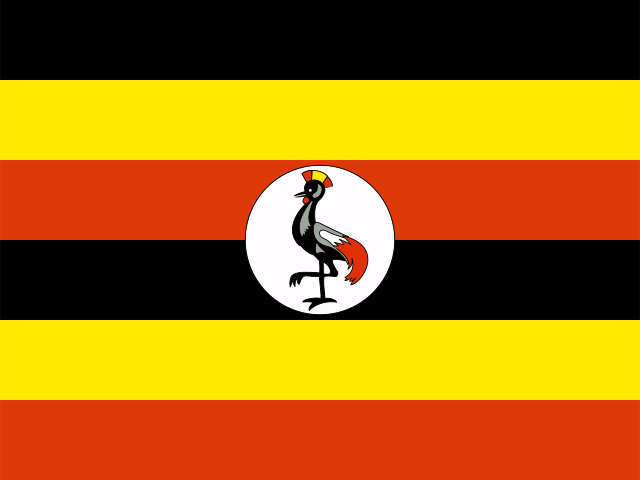
Uganda is a landlocked country in East Africa, bordered by Kenya, Tanzania, Rwanda, the Democratic Republic of the Congo, and South Sudan. It is known for being home to a significant portion of the world's remaining mountain gorillas and for the northern shores of Lake Victoria, Africa's largest lake. The country has a lush, green landscape fed by abundant rainfall and is often called the Pearl of Africa.
- Capital
- Kampala
- Continent
- Africa
- Region
- Eastern Africa
- Area
- 241,550 km²
- Coordinates
- 1° N, 32° E
- Languages
- English, Swahili
- Currency
- UGX Sh
- Domain
- .ug
- Calling code
- +256
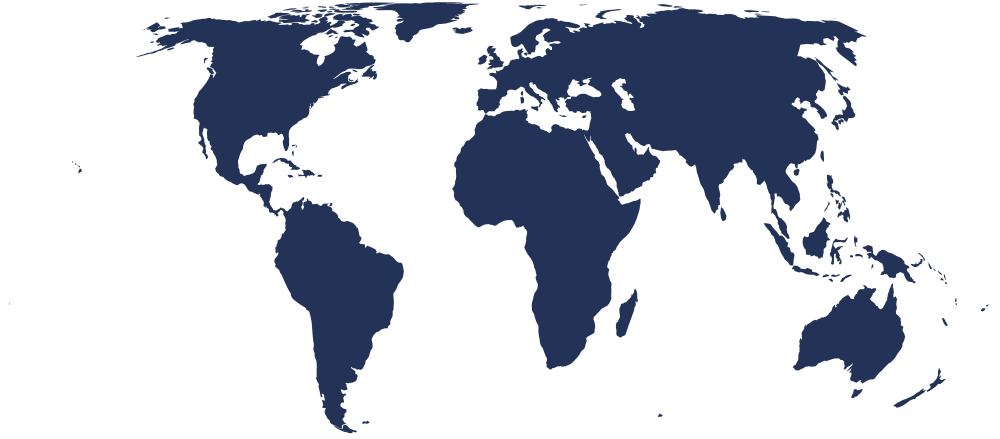
On the world map
Bordering countries
 DR Congo
 Kenya
Kenya Rwanda
 South Sudan
 Tanzania
Country facts
- Uganda gained independence from British colonial rule on October 9, 1962.
- The country is home to over 1,000 bird species, making it one of Africa's top birdwatching destinations.
- Luganda is the most widely spoken local language, though English is an official language used in government and education.
- Bwindi Impenetrable Forest in southwestern Uganda shelters roughly half of all remaining mountain gorillas.
- The source of the White Nile, one of the main tributaries of the Nile River, is located at Jinja on the shores of Lake Victoria.
Capital facts
- Kampala is built across a series of hills, and the city is often described as the city of seven hills.
- The city served as the capital of the Kingdom of Buganda before becoming the capital of modern Uganda.
- Kasubi Tombs, a UNESCO World Heritage Site, is located in Kampala and serves as the burial ground of Buganda kings.
- Kampala is the largest city in Uganda and serves as the country's main commercial and economic hub.
- The National Mosque, also known as the Gaddafi National Mosque, is one of the largest mosques in sub-Saharan Africa and a prominent Kampala landmark.