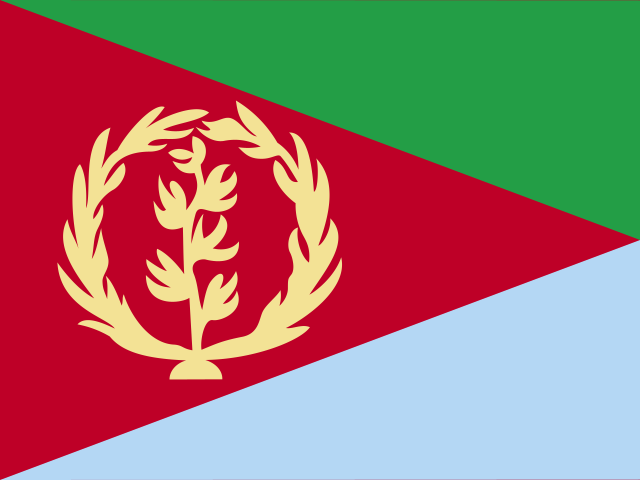
Eritrea is a country in the Horn of Africa, bordering the Red Sea, Sudan, Ethiopia, and Djibouti. It is known for its long coastline dotted with coral reefs and islands, as well as its hard-won independence from Ethiopia in 1993 after a decades-long struggle. The country has a rich mix of ethnic groups and traditions, and its capital, Asmara, is celebrated for its remarkable collection of Italian Modernist architecture.
- Capital
- Asmara
- Continent
- Africa
- Region
- Eastern Africa
- Area
- 117,600 km²
- Coordinates
- 15° N, 39° E
- Languages
- Arabic, English, Tigrinya
- Currency
- ERN Nfk
- Domain
- .er
- Calling code
- +291
On the world map
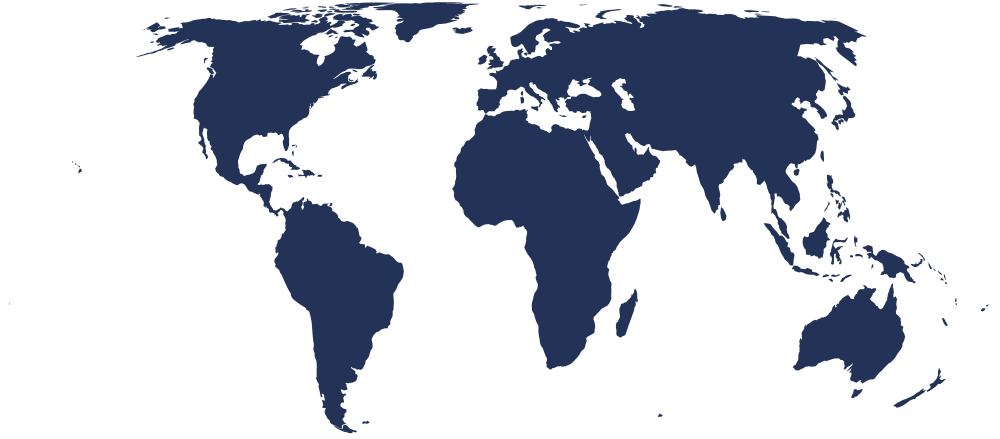
Bordering countries
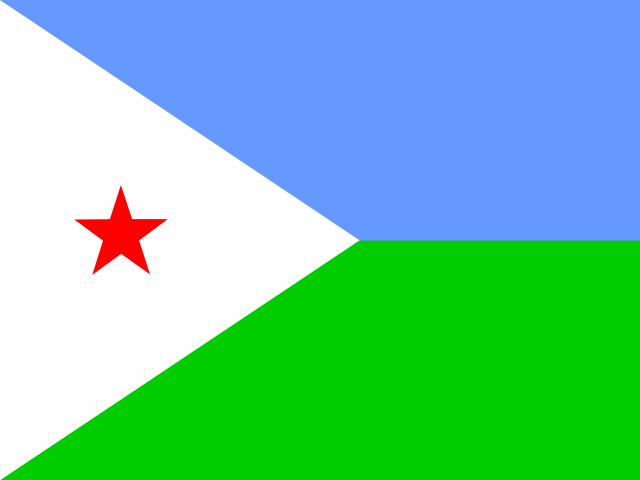 Djibouti
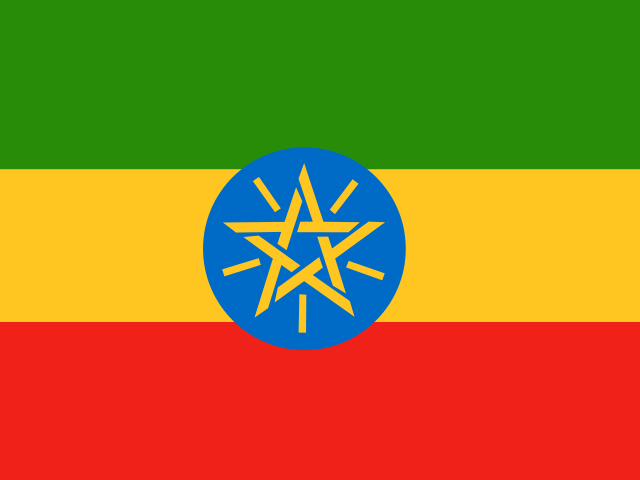 Ethiopia
 Sudan
SudanCountry facts
- Eritrea officially became independent in 1993 after a 30-year war of independence, one of Africa's longest liberation struggles.
- The country has nine recognized ethnic groups, with Tigrinya and Arabic among the most widely spoken languages.
- The Dahlak Archipelago, off Eritrea's Red Sea coast, consists of over 200 islands rich in marine life.
- Eritrea is home to part of the Danakil Depression, one of the hottest and most geologically active places on Earth.
- Coffee has deep cultural significance in Eritrea, where a traditional coffee ceremony is an important social ritual.
Capital facts
- Asmara served as the capital of Italian Eritrea from the late 19th century, which shaped much of its distinctive urban character.
- The city contains an extraordinary concentration of Art Deco, Futurist, and Rationalist buildings from the Italian colonial era.
- UNESCO inscribed Asmara as a World Heritage Site in 2017, recognizing it as a 'Modernist City of Africa.'
- The Fiat Tagliero Building, shaped like an airplane with cantilevered wings, is one of Asmara's most iconic Futurist landmarks.
- Asmara sits on a highland plateau at about 2,300 metres above sea level, giving it a mild climate year-round.