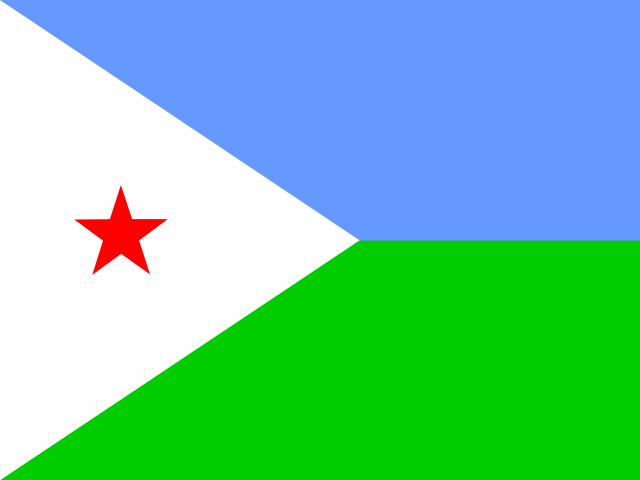
Djibouti is a small country in the Horn of Africa, strategically located where the Red Sea meets the Gulf of Aden. It is known for its dramatic landscapes, including salt lakes, volcanic formations, and one of the lowest points on Earth. Its deep natural harbor and position along major shipping lanes make it one of the region's most important maritime hubs.
- Capital
- Djibouti
- Continent
- Africa
- Region
- Eastern Africa
- Area
- 23,200 km²
- Coordinates
- 12° N, 43° E
- Languages
- Arabic, French
- Currency
- DJF Fr
- Domain
- .dj
- Calling code
- +253
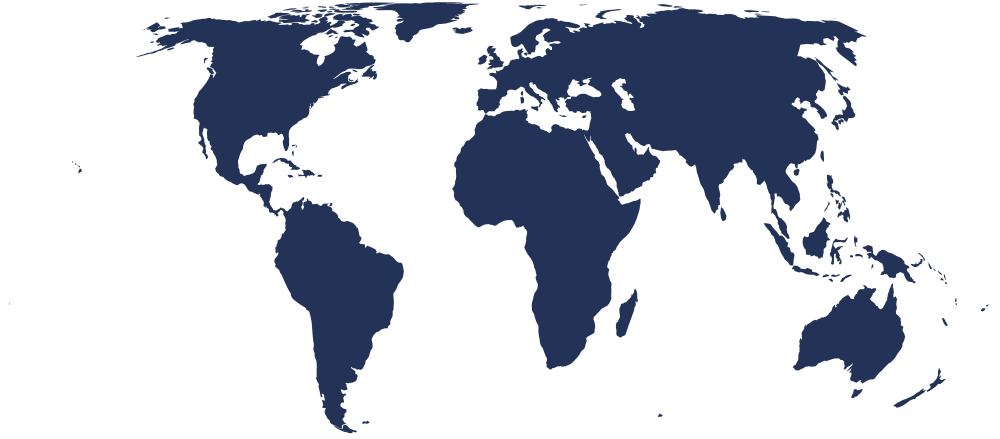
On the world map
Bordering countries
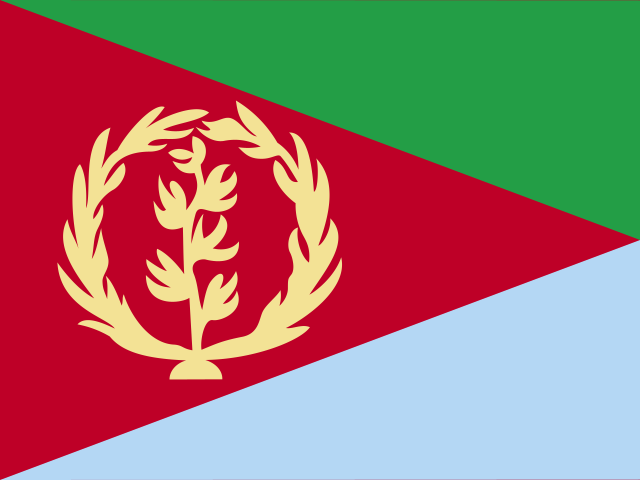 Eritrea
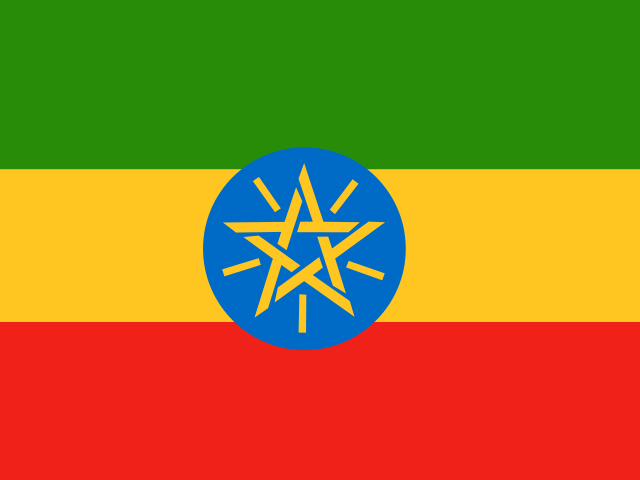 Ethiopia
 Somalia
Country facts
- Lake Assal, a crater lake in Djibouti, sits about 155 meters below sea level, making it the lowest point in Africa.
- Djibouti gained independence from France on June 27, 1977, after nearly a century of French colonial rule.
- The country is home to two main ethnic groups, the Afar and the Issa Somali, each with distinct cultural traditions.
- Arabic and French are both official languages, reflecting the country's Islamic heritage and colonial history.
- Djibouti hosts several foreign military bases, including those of the United States and France, due to its strategic location.
Capital facts
- The city of Djibouti was founded by the French in 1888 as a colonial port and administrative center.
- The Central Market, known as the African Market, is a vibrant bazaar where locals trade spices, textiles, and fresh produce.
- The city's port is one of the busiest in East Africa, handling a large share of landlocked Ethiopia's imports and exports.
- The Hamoudi Mosque, built in the early twentieth century, is one of the most recognizable landmarks in the capital.
- Djibouti city sits on a peninsula jutting into the Gulf of Tadjoura, giving it a dramatic coastal setting.