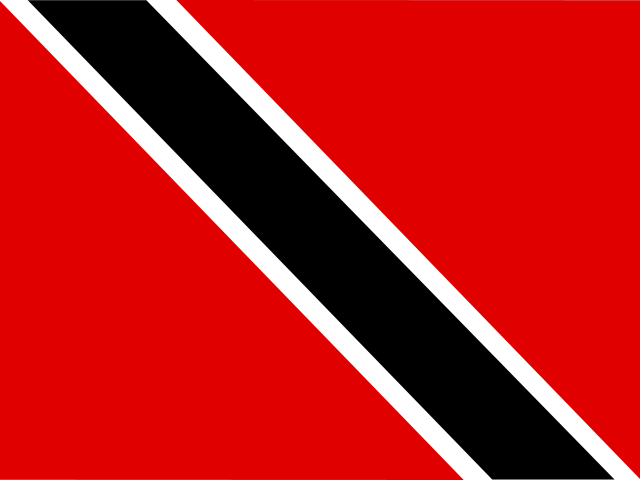
Trinidad and Tobago is a twin-island nation located in the southern Caribbean, just off the northeastern coast of Venezuela. It is world-famous for inventing the steel pan, the only acoustic musical instrument created in the twentieth century. The country is also celebrated for its vibrant Carnival festival and its rich biodiversity, including tropical rainforests and coral reefs.
- Capital
- Port of Spain
- Continent
- Americas
- Region
- Caribbean
- Area
- 5,130 km²
- Coordinates
- 11° N, 61° W
- Languages
- English
- Currency
- TTD $
- Domain
- .tt
- Calling code
- +1868
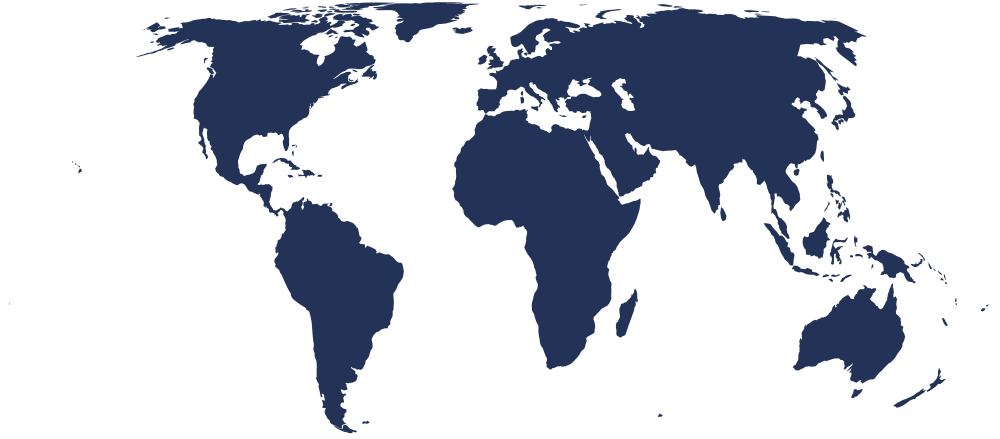
On the world map
Bordering countries
No land borders — this is an island nation.
Country facts
- Trinidad and Tobago gained independence from Britain on August 31, 1962.
- The country is one of the most industrialized economies in the Caribbean, largely due to its oil and natural gas reserves.
- Trinidad is home to the Pitch Lake, one of the world's largest natural deposits of asphalt.
- The leatherback sea turtle nests on the beaches of Trinidad, making it one of the most important nesting sites in the Western Hemisphere.
- Calypso and soca music both have their roots in Trinidad and Tobago's rich Afro-Caribbean cultural traditions.
Capital facts
- Port of Spain has served as the capital of Trinidad and Tobago since the country's independence in 1962.
- The city's Queen's Park Savannah is one of the largest roundabouts in the world and a beloved green space for residents.
- Port of Spain is home to the National Museum and Art Gallery, which showcases the country's history and cultural heritage.
- The city hosts the Trinidad Carnival, held annually before Lent and considered one of the most spectacular carnivals in the Caribbean.
- The Red House, a striking Renaissance-style parliament building completed in 1907, is one of Port of Spain's most recognizable landmarks.