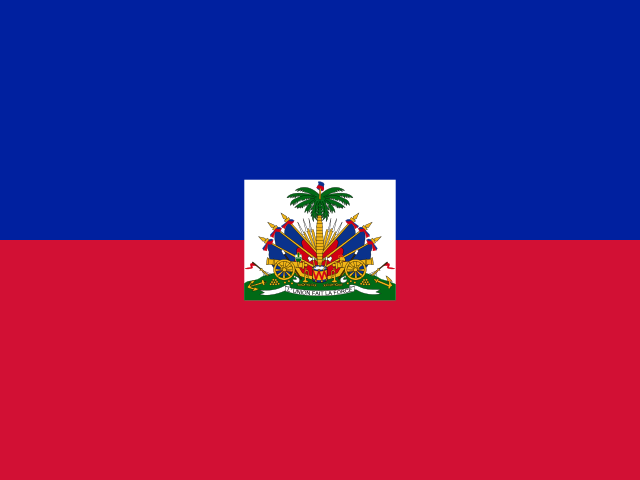
Haiti occupies the western third of the island of Hispaniola in the Caribbean Sea, sharing the island with the Dominican Republic. It is renowned for being the first Black republic in the world and the first Caribbean nation to gain independence. Haiti's culture is a vibrant blend of African, French, and indigenous Taino influences, reflected in its music, art, and traditions.
- Capital
- Port-au-Prince
- Continent
- Americas
- Region
- Caribbean
- Area
- 27,750 km²
- Coordinates
- 19° N, 72° W
- Languages
- French, Haitian Creole
- Currency
- HTG G
- Domain
- .ht
- Calling code
- +509
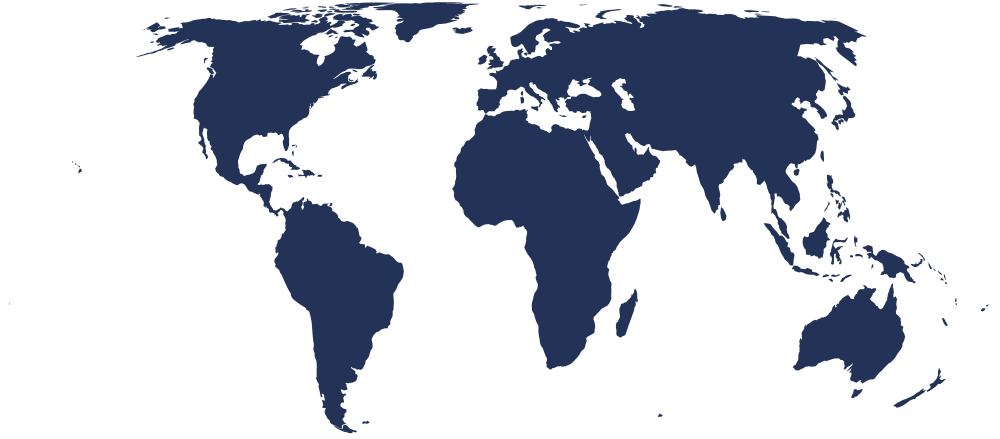
On the world map
Bordering countries
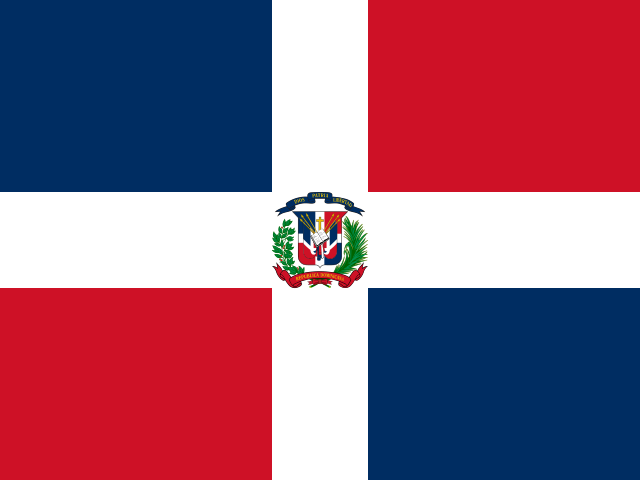 Dominican Republic
Country facts
- Haiti declared independence from France on January 1, 1804, following a successful slave revolution.
- Haitian Creole, known as Kreyòl, is spoken by virtually the entire population alongside French as an official language.
- The Citadelle Laferrière is a massive mountaintop fortress built after independence and is now a UNESCO World Heritage Site.
- Voodoo, known locally as Vodou, is an officially recognized religion in Haiti with deep roots in West African spiritual traditions.
- Haiti is home to Pic la Selle, the highest peak in the country, rising to about 2,680 meters above sea level.
Capital facts
- Port-au-Prince was founded by French colonists in 1749 and became the capital of the colony of Saint-Domingue.
- The city sits on the shore of the Gulf of Gonâve, giving it a natural harbor that has long supported trade.
- The Iron Market, known as Marché en Fer, is a historic landmark and one of the city's most recognizable public spaces.
- Port-au-Prince is the cultural and economic heart of Haiti, home to the country's main universities and museums.
- A devastating earthquake struck the city in January 2010, causing widespread destruction and triggering a major international relief effort.