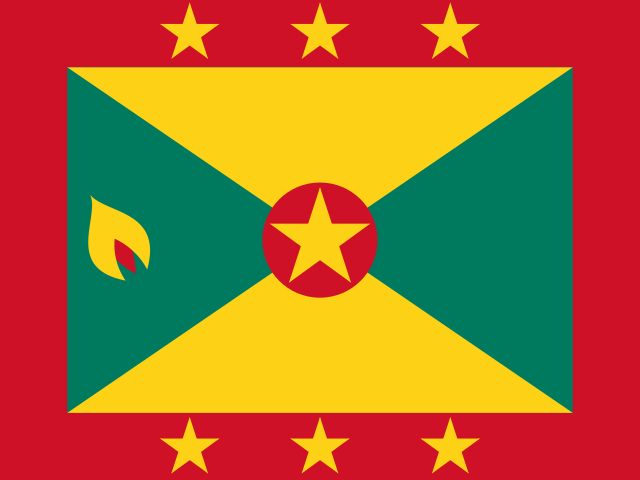
Grenada is a small island nation in the southeastern Caribbean Sea, north of Trinidad and Tobago. It is famously known as the 'Spice Isle' for its production of nutmeg, mace, and other spices. The country comprises the main island of Grenada along with the smaller islands of Carriacou and Petite Martinique.
- Capital
- St. George's
- Continent
- Americas
- Region
- Caribbean
- Area
- 344 km²
- Coordinates
- 12° N, 62° W
- Languages
- English
- Currency
- XCD $
- Domain
- .gd
- Calling code
- +1473
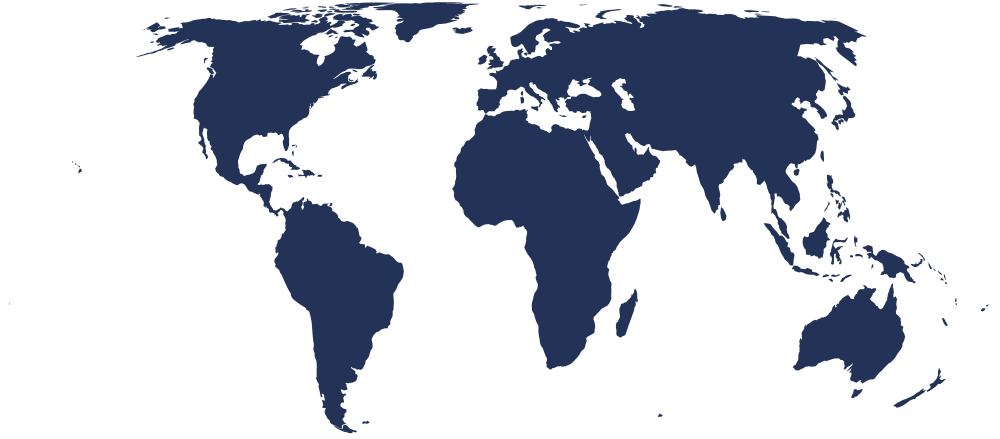
On the world map
Bordering countries
No land borders — this is an island nation.
Country facts
- Grenada is one of the world's leading producers of nutmeg, and a nutmeg pod even appears on the national flag.
- The country gained independence from Britain on February 7, 1974.
- Grenada has an underwater sculpture park off the coast of Molinière Bay, one of the first of its kind in the world.
- English is the official language, though many Grenadians also speak a French-based Creole.
- The island was originally inhabited by the Caribs before European colonization, and was settled by the French in the 17th century before passing to British control.
Capital facts
- St. George's is widely regarded as one of the most picturesque capitals in the Caribbean, built around a natural horseshoe-shaped harbour.
- The town features a historic tunnel, known as the Sendall Tunnel, bored through the hillside in the 1890s to connect two parts of the city.
- Fort George, a colonial-era fortification overlooking the harbour, was built by the French in the early 18th century.
- The Carenage, a sheltered inner harbour lined with Georgian warehouses, is the lively heart of the city.
- St. George's colourful buildings climb steeply up surrounding hillsides, giving the town a distinctive and memorable skyline.