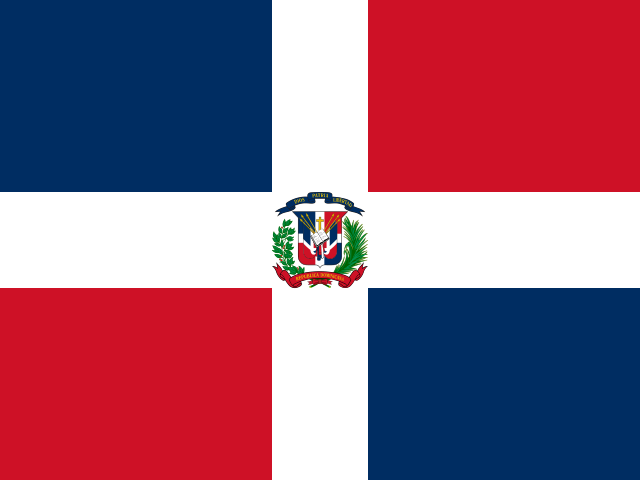
The Dominican Republic occupies the eastern two-thirds of the Caribbean island of Hispaniola, which it shares with Haiti. The country is celebrated for its white-sand beaches, vibrant merengue music, and rich colonial heritage. It is one of the most visited destinations in the Caribbean.
- Capital
- Santo Domingo
- Continent
- Americas
- Region
- Caribbean
- Area
- 48,671 km²
- Coordinates
- 19° N, 71° W
- Languages
- Spanish
- Currency
- DOP $
- Domain
- .do
- Calling code
- +1
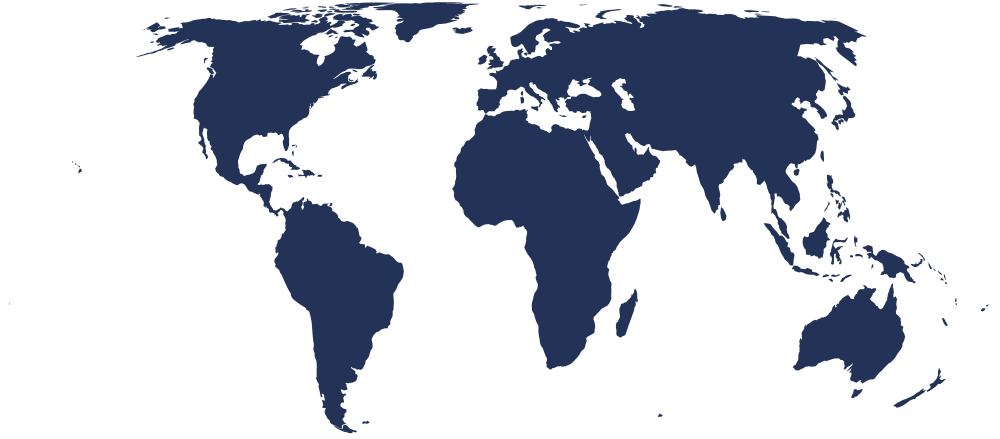
On the world map
Bordering countries
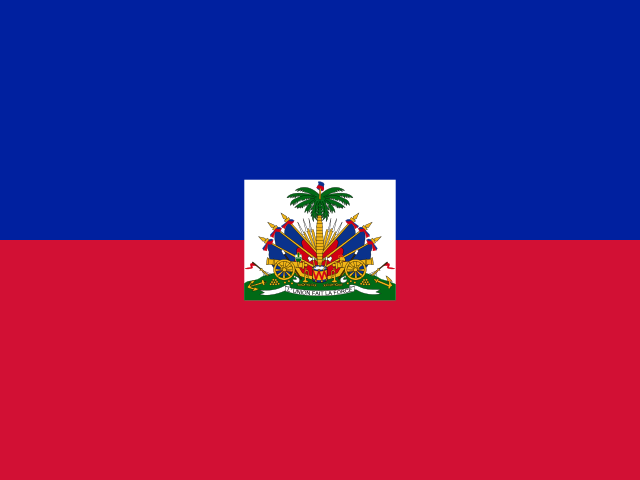 Haiti
HaitiCountry facts
- Hispaniola was the site of the first permanent European settlement in the Americas, established by Spanish colonizers in 1496.
- Merengue is the national dance and music of the Dominican Republic, recognized by UNESCO as part of the world's intangible cultural heritage.
- The country is home to Pico Duarte, the highest mountain peak in the entire Caribbean.
- Spanish is the official language, and the country has one of the oldest universities in the Americas, the Universidad Autónoma de Santo Domingo, founded in 1538.
- The Dominican Republic shares the island of Hispaniola with Haiti, making it one of only a few Caribbean nations to share a land border.
Capital facts
- Santo Domingo was founded in 1496 by Bartholomew Columbus, brother of Christopher Columbus, making it one of the oldest continuously inhabited European-founded cities in the Americas.
- The city's Colonial Zone, known as the Zona Colonial, is a UNESCO World Heritage Site filled with 16th-century architecture.
- The Alcázar de Colón, a palace built for Diego Columbus, son of Christopher Columbus, stands in the Colonial Zone and is a major landmark.
- Santo Domingo is situated on the southern coast of the island, at the mouth of the Ozama River.
- The city is home to the Cathedral of Santa María la Menor, the oldest cathedral in the Americas, completed in 1541.