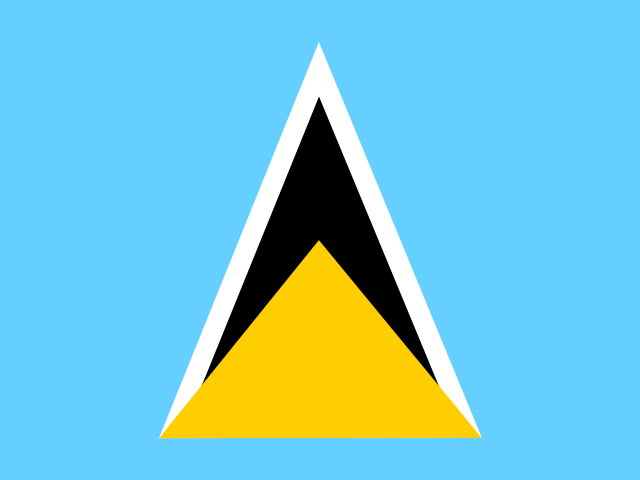
Saint Lucia is a small island nation in the eastern Caribbean Sea, part of the Lesser Antilles. It is renowned for the dramatic twin volcanic peaks known as the Pitons, which rise steeply from the southwestern coast. The island is also celebrated for its lush rainforests, beautiful beaches, and rich Creole culture shaped by both French and British colonial histories.
- Capital
- Castries
- Continent
- Americas
- Region
- Caribbean
- Area
- 616 km²
- Coordinates
- 14° N, 61° W
- Languages
- English
- Currency
- XCD $
- Domain
- .lc
- Calling code
- +1758
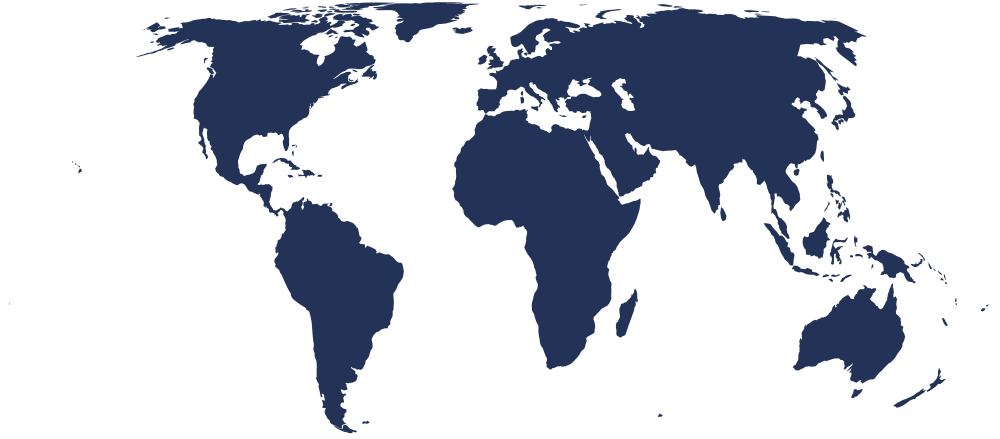
On the world map
Bordering countries
No land borders — this is an island nation.
Country facts
- Saint Lucia is one of the few countries in the world named after a woman, the Christian martyr Saint Lucy of Syracuse.
- The island has produced two Nobel Prize winners, economist Sir Arthur Lewis and poet Derek Walcott, an extraordinary achievement for such a small nation.
- Saint Lucia's Pitons — Gros Piton and Petit Piton — are UNESCO World Heritage Sites and iconic symbols of the island.
- English is the official language, but many Saint Lucians also speak Antillean Creole, a French-based creole language reflecting the island's colonial past.
- Saint Lucia switched between British and French control at least fourteen times before becoming permanently British in 1814 under the Treaty of Paris.
Capital facts
- Castries sits on a natural harbour on the northwestern coast of Saint Lucia, which has made it a strategically important port for centuries.
- Much of the city was rebuilt after a devastating fire in 1948 that destroyed a large portion of its historic wooden structures.
- The Central Market in Castries is a vibrant hub where locals sell fresh produce, spices, and handmade crafts.
- Derek Walcott Square, located in the heart of Castries, is named after the Saint Lucian Nobel Prize-winning poet and features a giant old saman tree.
- The Cathedral of the Immaculate Conception in Castries, built in 1897, is one of the largest churches in the Caribbean.