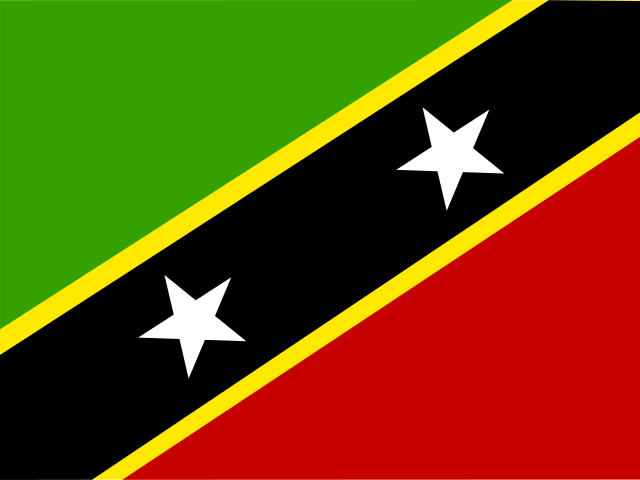
Saint Kitts and Nevis is a small two-island nation in the eastern Caribbean Sea, part of the Lesser Antilles. It is known for its volcanic peaks, lush rainforests, and well-preserved colonial sugar plantations. The country gained independence from Britain in 1983, making it one of the newest nations in the Americas.
- Capital
- Basseterre
- Continent
- Americas
- Region
- Caribbean
- Area
- 261 km²
- Coordinates
- 17° N, 63° W
- Languages
- English
- Currency
- XCD $
- Domain
- .kn
- Calling code
- +1869
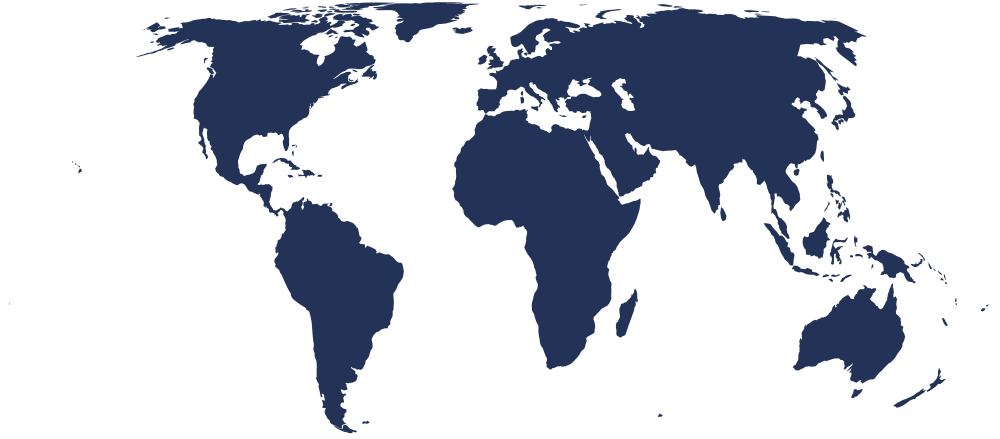
On the world map
Bordering countries
No land borders — this is an island nation.
Country facts
- Saint Kitts and Nevis is the smallest sovereign state in the Western Hemisphere by both area and population.
- Sugar cane was the backbone of the economy for nearly 400 years, though commercial sugar production ended in 2005.
- The islands are dominated by the volcanic peak of Mount Liamuiga on Saint Kitts, which rises to about 1,156 metres.
- The national bird is the brown pelican, a familiar sight along the coastlines of both islands.
- Nevis has a constitutional right to secede from Saint Kitts, a unique arrangement that was established at independence.
Capital facts
- Basseterre is one of the oldest continuously inhabited European settlements in the Caribbean, founded by the French in 1627.
- The Circus, a Victorian-style roundabout at the city centre, was modelled on Piccadilly Circus in London.
- Berkeley Memorial Clock stands at the centre of the Circus and is a prominent landmark commemorating a former planter and politician.
- Basseterre serves as the main port of entry for the country, with its deep-water cruise ship pier welcoming many visitors each year.
- The city's Roman Catholic Co-Cathedral of the Immaculate Conception is one of the most prominent religious buildings on the island.