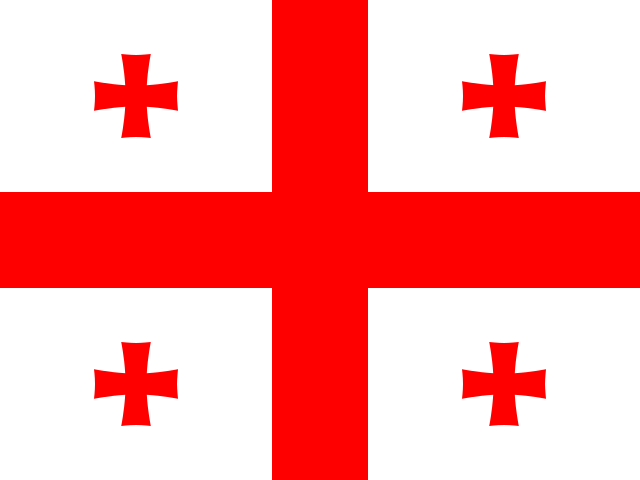
Georgia is a country in the South Caucasus, sitting at the crossroads of Europe and Asia, bordered by Russia, Turkey, Armenia, and Azerbaijan. It is known for its ancient winemaking tradition, dramatic mountain landscapes, and rich Orthodox Christian heritage. The country's diverse terrain ranges from the peaks of the Greater Caucasus in the north to subtropical coastline along the Black Sea.
- Capital
- Tbilisi
- Continent
- Asia
- Region
- Western Asia
- Area
- 69,700 km²
- Coordinates
- 42° N, 44° E
- Languages
- Georgian
- Currency
- GEL ₾
- Domain
- .ge
- Calling code
- +995
On the world map
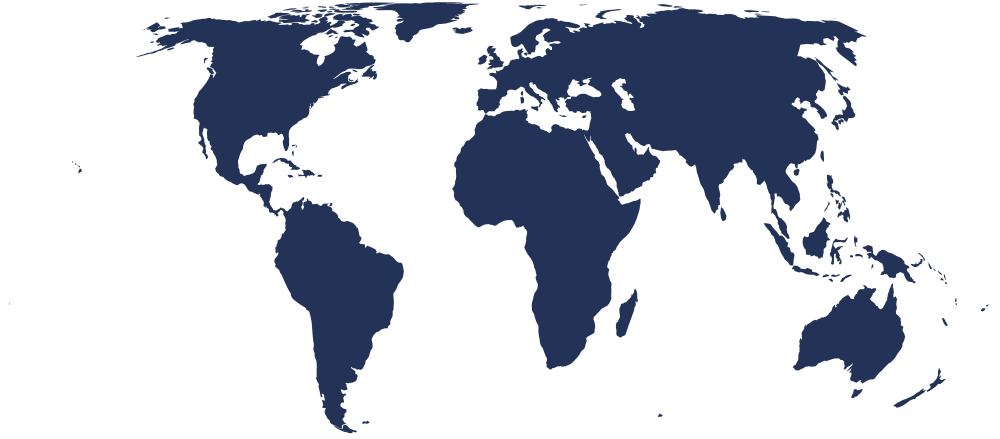
Bordering countries
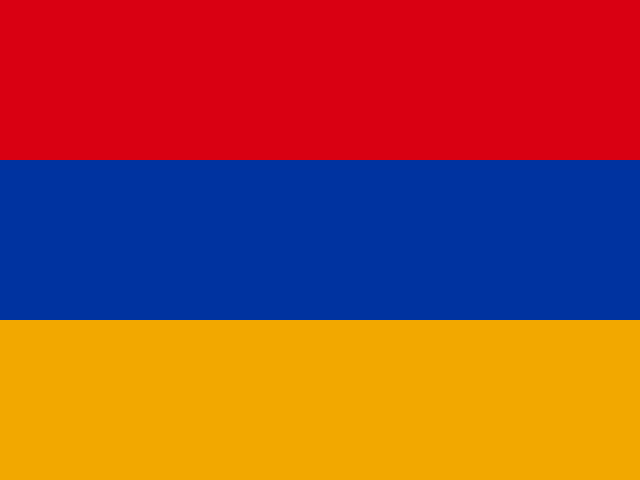 Armenia
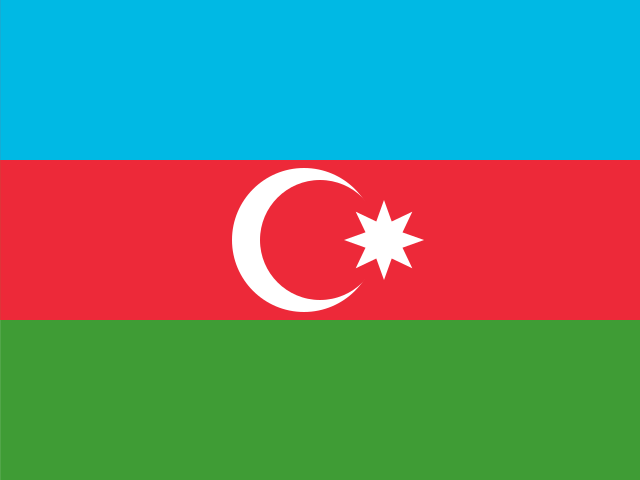 Azerbaijan
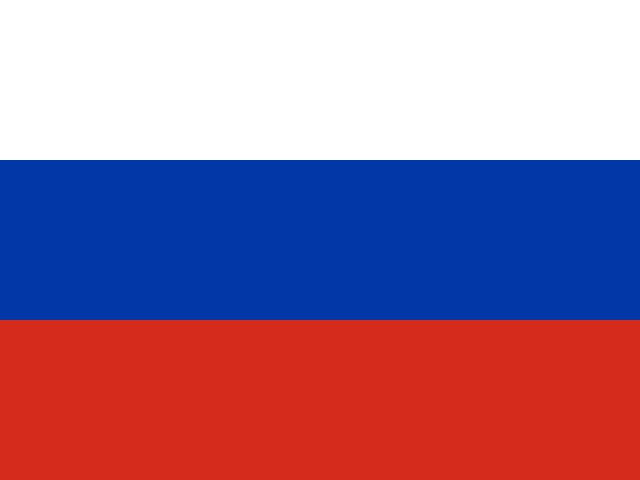 Russia
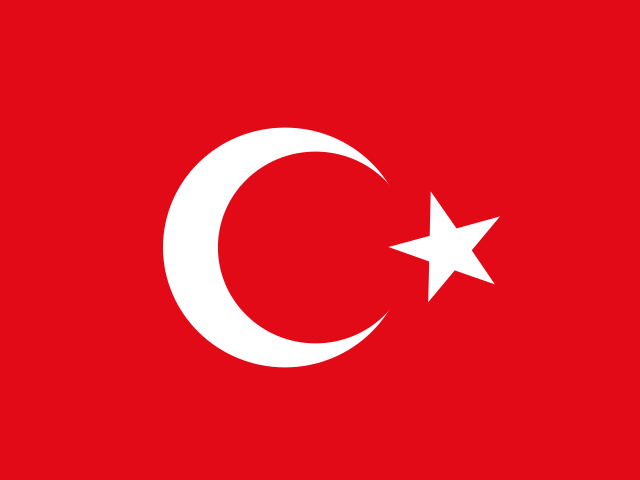 Türkiye
Country facts
- Georgia is considered one of the oldest wine-producing regions in the world, with evidence of winemaking dating back around 8,000 years.
- The Georgian alphabet is one of the world's oldest and most distinctive writing systems, believed to have been created in the 5th century.
- Georgia adopted Christianity as its state religion in 327 AD, making it one of the earliest Christian nations.
- The country is home to Svaneti, a remote mountain region where medieval defensive towers still stand in ancient villages.
- Georgian polyphonic singing, a traditional form of choral music with multiple independent vocal parts, is recognized by UNESCO as an Intangible Cultural Heritage.
Capital facts
- Tbilisi was founded in the 5th century by King Vakhtang I Gorgasali, according to Georgian tradition.
- The city's name comes from the Georgian word for 'warm,' referring to the natural sulfurous hot springs found in the area.
- Narikala is an ancient fortress overlooking the city that dates back to the 4th century and remains one of Tbilisi's most iconic landmarks.
- The old town of Tbilisi features a distinctive blend of Persian, Russian, and European architectural styles accumulated over centuries.
- The Bridge of Peace, a modern curved glass and steel pedestrian bridge, spans the Mtkvari River and has become a contemporary symbol of the city.