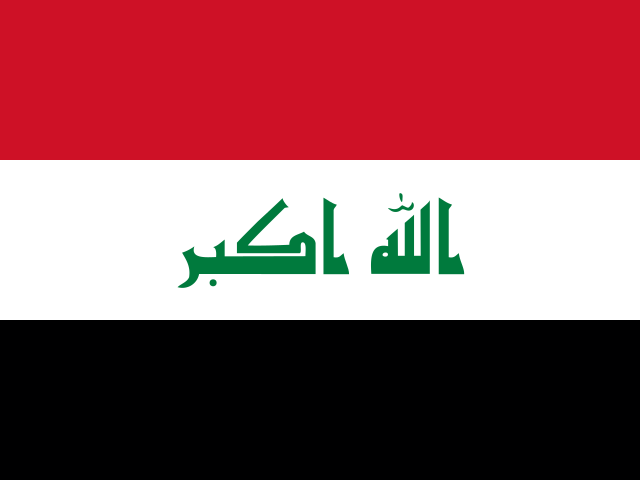
Iraq is a country in the Middle East, bordered by Iran, Turkey, Syria, Jordan, Saudi Arabia, and Kuwait. It is home to ancient Mesopotamia, widely regarded as one of the cradles of human civilization, where early writing, law, and cities first emerged. The Tigris and Euphrates rivers flow through the country, shaping its landscape and history.
- Capital
- Baghdad
- Continent
- Asia
- Region
- Western Asia
- Area
- 438,317 km²
- Coordinates
- 33° N, 44° E
- Languages
- Arabic, Aramaic, Sorani
- Currency
- IQD ع.د
- Domain
- .iq
- Calling code
- +964
On the world map
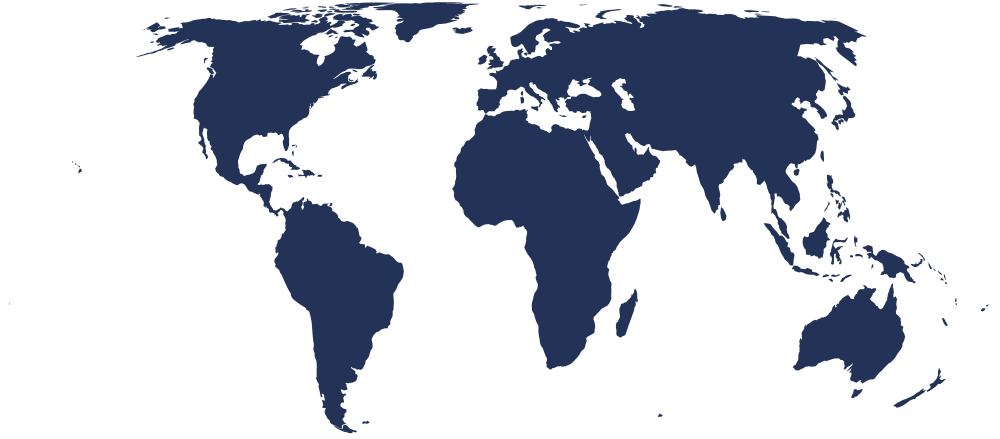
Bordering countries
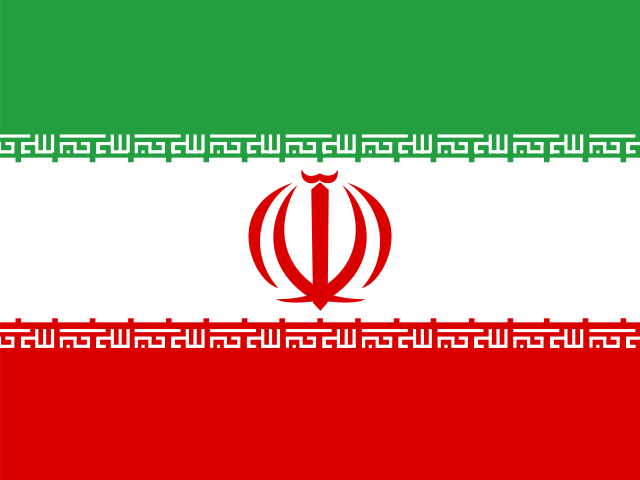 Iran
Iran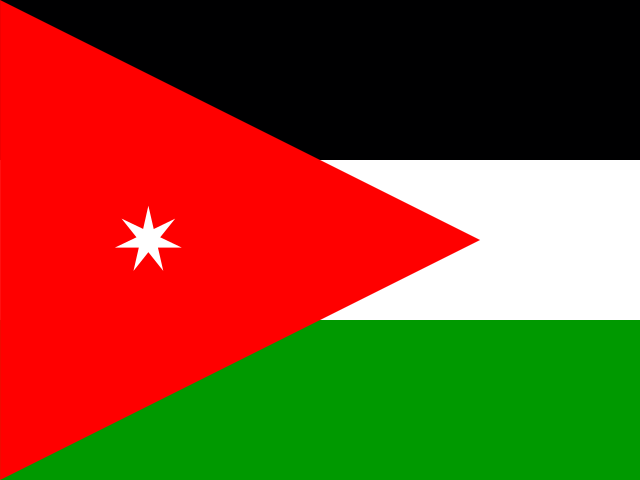 Jordan
 Kuwait
 Saudi Arabia
 Syria
Syria Türkiye
Country facts
- The world's first known writing system, cuneiform, was developed in ancient Mesopotamia in what is now Iraq.
- Iraq is home to the ancient city of Ur, one of the earliest cities in the world and the legendary birthplace of the biblical patriarch Abraham.
- Arabic is the official language of Iraq, though Kurdish is also officially recognized in the Kurdistan Region.
- The Marshes of southern Iraq, home to the Marsh Arabs, were designated a UNESCO World Heritage Site in 2016.
- Iraq has one of the largest proven oil reserves in the world, making petroleum central to its modern economy.
Capital facts
- Baghdad was founded in 762 CE by the Abbasid Caliph Al-Mansur as a planned circular city known as the Round City.
- During the 8th and 9th centuries, Baghdad was one of the largest and most prosperous cities in the world, a center of science, medicine, and culture.
- The National Museum of Iraq in Baghdad houses one of the most significant collections of ancient Mesopotamian artifacts.
- The Al-Mutanabbi Street area in Baghdad has historically been the heart of the city's bookselling and literary culture.
- Baghdad sits on the Tigris River, which has defined the city's location, trade, and daily life for over a thousand years.