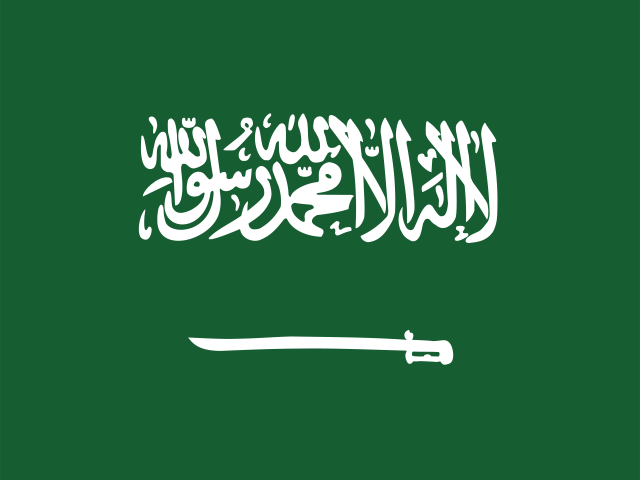
Saudi Arabia occupies most of the Arabian Peninsula in southwestern Asia, bordered by the Red Sea to the west and the Persian Gulf to the east. It is home to Islam's two holiest cities, Mecca and Medina, and draws millions of Muslim pilgrims each year. The country is also one of the world's leading producers and exporters of petroleum.
- Capital
- Riyadh
- Continent
- Asia
- Region
- Western Asia
- Area
- 2,149,690 km²
- Coordinates
- 25° N, 45° E
- Languages
- Arabic
- Currency
- SAR ر.س
- Domain
- .sa .السعودية
- Calling code
- +966
On the world map
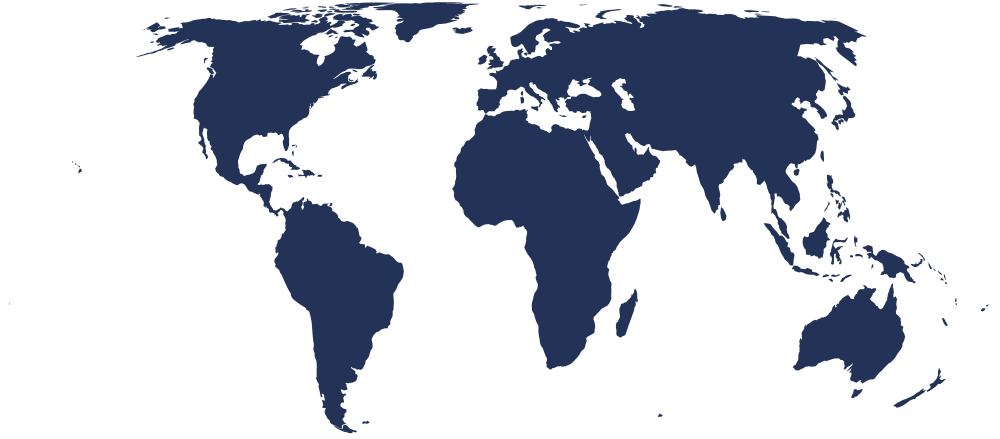
Bordering countries
 Iraq
Iraq Jordan
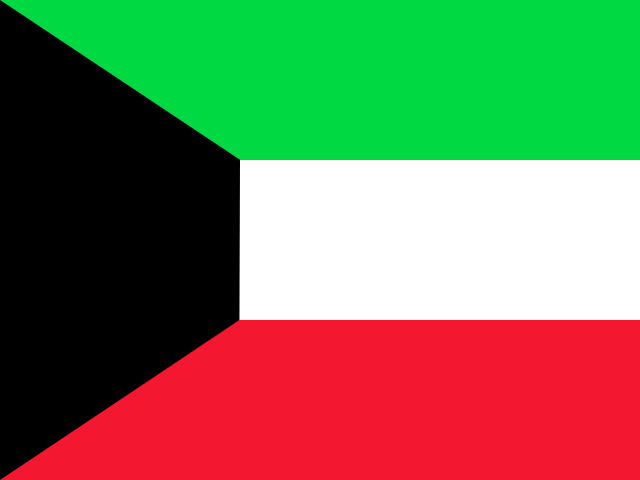 Kuwait
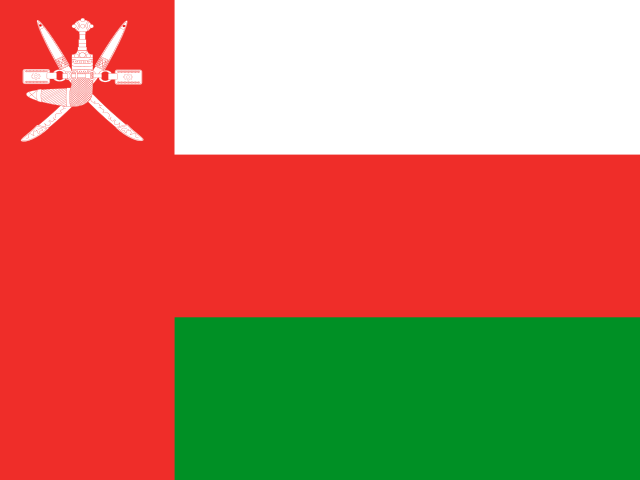 Oman
Oman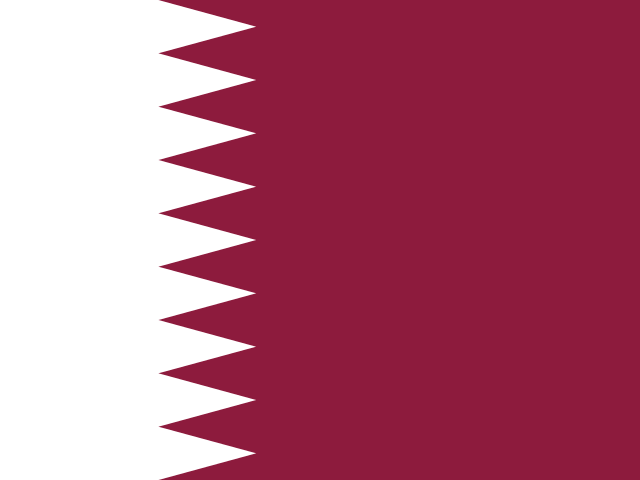 Qatar
Qatar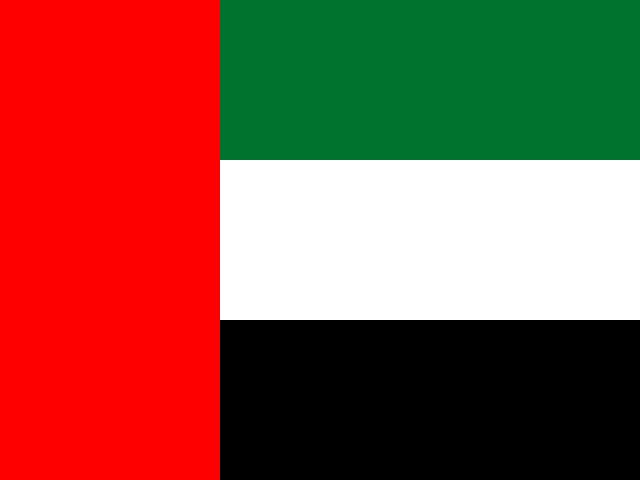 United Arab Emirates
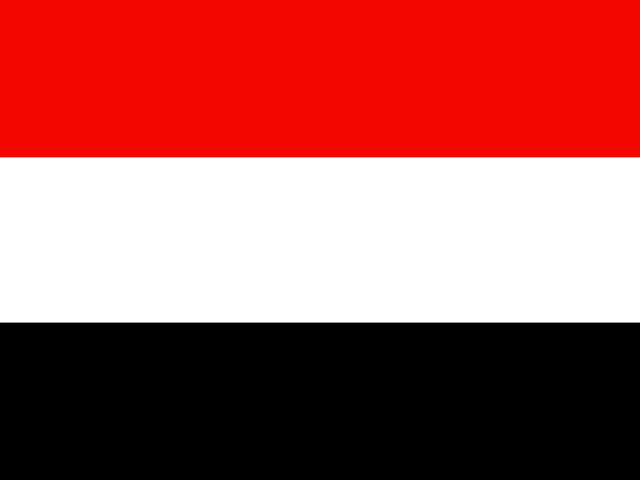 Yemen
YemenCountry facts
- The Kingdom of Saudi Arabia was unified under King Abdulaziz ibn Saud in 1932.
- Arabic is the official language, and the national flag bears the Islamic declaration of faith, the Shahada.
- The Rub' al Khali, or Empty Quarter, is one of the largest continuous sand deserts on Earth and covers much of the country's south.
- Saudi Arabia follows a lunar Islamic calendar alongside the Gregorian calendar for official purposes.
- The ancient Nabataean city of Hegra, also known as Al-Hijr, is Saudi Arabia's first UNESCO World Heritage Site.
Capital facts
- Riyadh sits on a high plateau in the center of the Arabian Peninsula, giving it a dry desert climate with hot summers and cool winters.
- The city's name comes from the Arabic word meaning 'gardens' or 'meadows,' reflecting the oases that once dotted the area.
- The Kingdom Centre Tower, with its distinctive sky bridge, is one of Riyadh's most recognizable modern landmarks.
- Riyadh has been the political capital of Saudi Arabia since the country's founding in 1932.
- The historic Masmak Fortress in central Riyadh was the site of a key battle that helped Ibn Saud recapture the city in 1902.