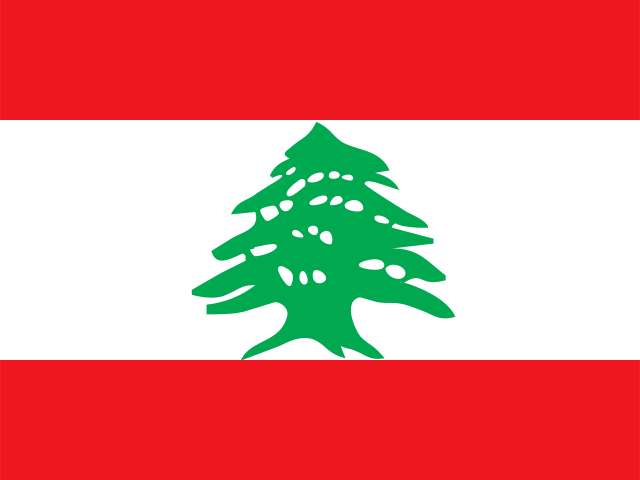
Lebanon is a small country on the eastern shore of the Mediterranean Sea, bordered by Syria to the north and east and Israel to the south. It is known for its rich ancient history, vibrant cuisine, and diverse religious communities. The cedar tree, which appears on its national flag, has been a symbol of Lebanon since antiquity.
- Capital
- Beirut
- Continent
- Asia
- Region
- Western Asia
- Area
- 10,452 km²
- Coordinates
- 34° N, 36° E
- Languages
- Arabic, French
- Currency
- LBP ل.ل
- Domain
- .lb
- Calling code
- +961
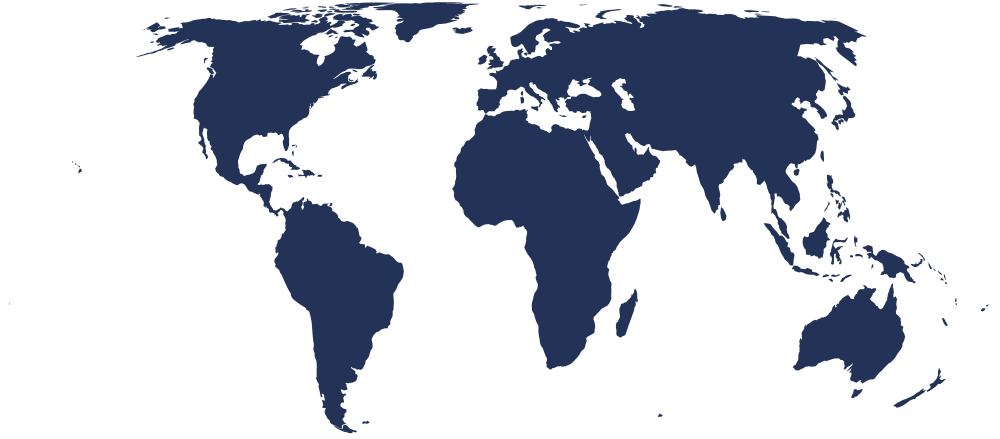
On the world map
Bordering countries
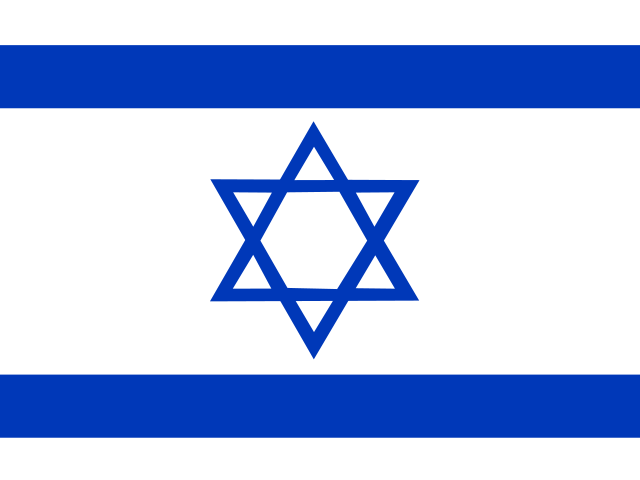 Israel
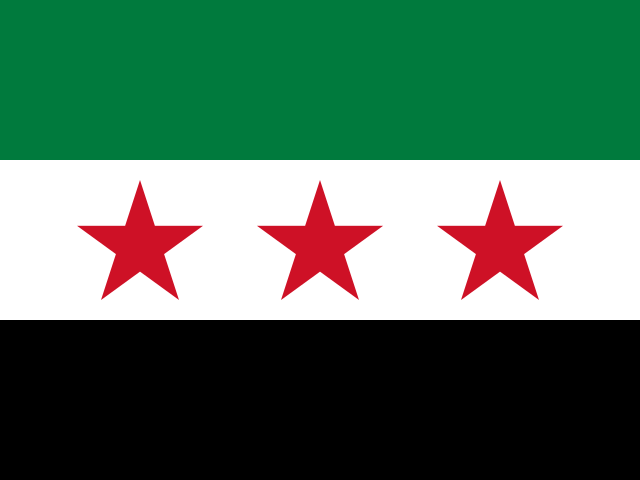 Syria
SyriaCountry facts
- Lebanon is home to Byblos, one of the oldest continuously inhabited cities in the world.
- Arabic is the official language of Lebanon, though French and English are also widely spoken.
- The Phoenicians, who originated in what is now Lebanon, developed one of the earliest alphabets in history.
- Lebanon has eighteen officially recognized religious communities, reflecting its extraordinary diversity of faiths.
- The Bekaa Valley in eastern Lebanon is a fertile agricultural region historically renowned for its wine production.
Capital facts
- Beirut is one of the oldest cities in the world, with evidence of human settlement dating back thousands of years.
- The city served as a major cultural and intellectual hub in the Arab world throughout the twentieth century, earning the nickname 'Paris of the Middle East.'
- Beirut is home to the National Museum of Lebanon, which houses an outstanding collection of Phoenician and Roman artifacts.
- The Roman ruins at the Beirut city center, including ancient baths and columns, were uncovered during post-war reconstruction in the 1990s.
- The Corniche, a seaside promenade stretching along the Mediterranean waterfront, is one of Beirut's most beloved public spaces.