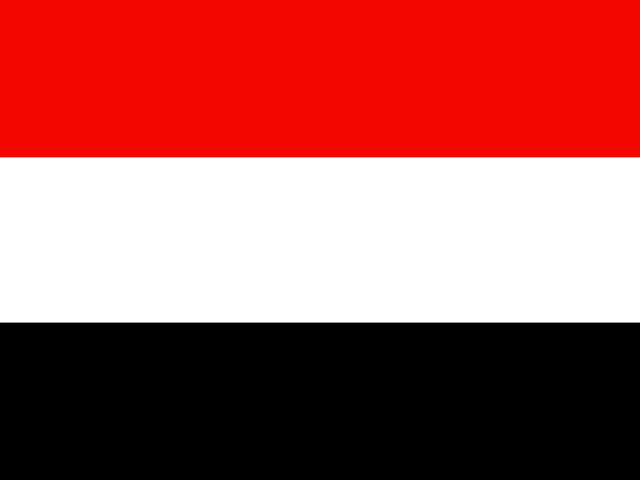
Yemen is located at the southern tip of the Arabian Peninsula, bordered by Saudi Arabia to the north and Oman to the east, with coastlines on the Red Sea and the Gulf of Aden. It is known for its ancient history, distinctive mud-brick tower houses, and the island of Socotra, which hosts remarkable endemic wildlife. Yemen was home to prosperous ancient civilizations, including the kingdom of Sheba, and has long been a crossroads of trade between Africa, Arabia, and Asia.
- Capital
- Sana'a
- Continent
- Asia
- Region
- Western Asia
- Area
- 527,968 km²
- Coordinates
- 15° N, 48° E
- Languages
- Arabic
- Currency
- YER ﷼
- Domain
- .ye
- Calling code
- +967
On the world map
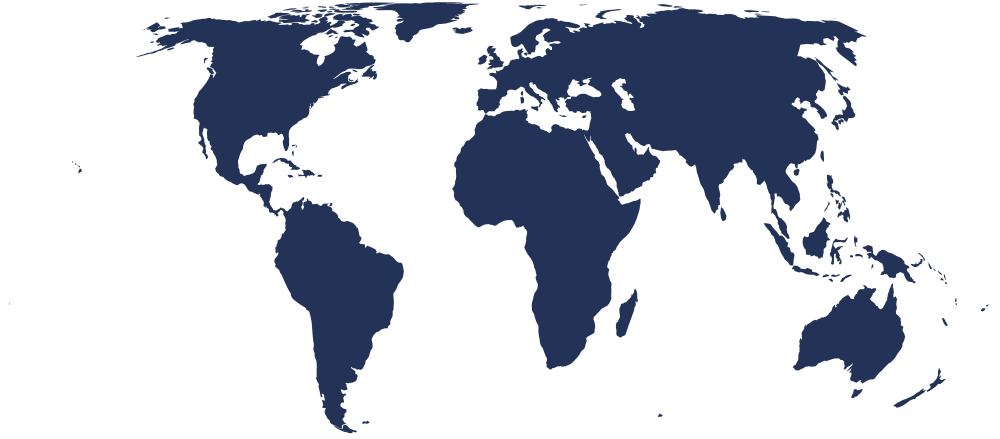
Bordering countries
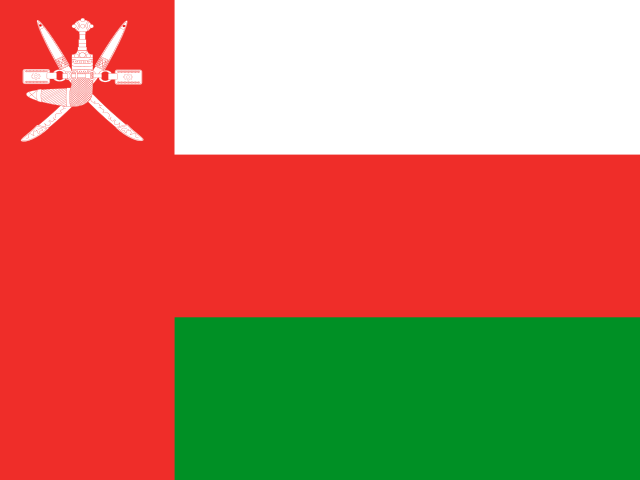 Oman
Oman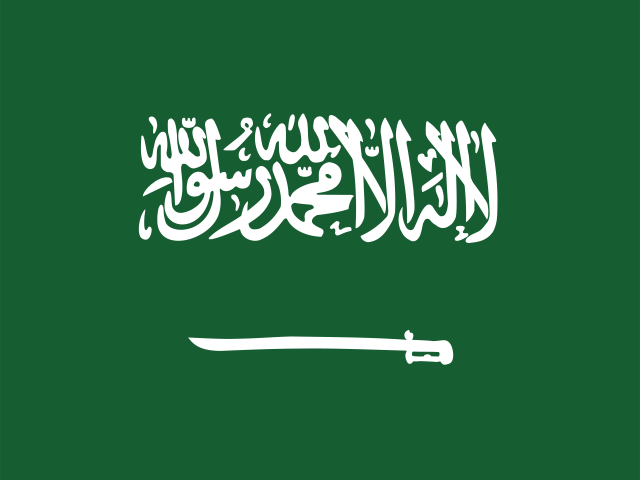 Saudi Arabia
Country facts
- Arabic is the official language of Yemen.
- The island of Socotra is famous for the dragon blood tree, an iconic species found almost nowhere else on Earth.
- Yemen was historically a major center of the global coffee trade, with the port city of Mocha lending its name to the popular coffee style.
- The ancient city of Shibam, often called the 'Manhattan of the Desert,' features towering mud-brick skyscrapers dating back to the 16th century.
- Yemen united its northern and southern regions into a single republic in 1990.
Capital facts
- Sana'a is one of the oldest continuously inhabited cities in the world, with a history spanning more than two and a half thousand years.
- The Old City of Sana'a is a UNESCO World Heritage Site celebrated for its unique architecture of multi-story tower houses decorated with geometric white plasterwork.
- Sana'a sits at an elevation of about 2,300 metres above sea level, making it one of the highest capital cities in Asia.
- The Great Mosque of Sana'a is among the earliest mosques ever built, traditionally said to date to the lifetime of the Prophet Muhammad.
- The city's historic suq, or marketplace, has been a vibrant trading center for centuries, dealing in spices, silverwork, and textiles.