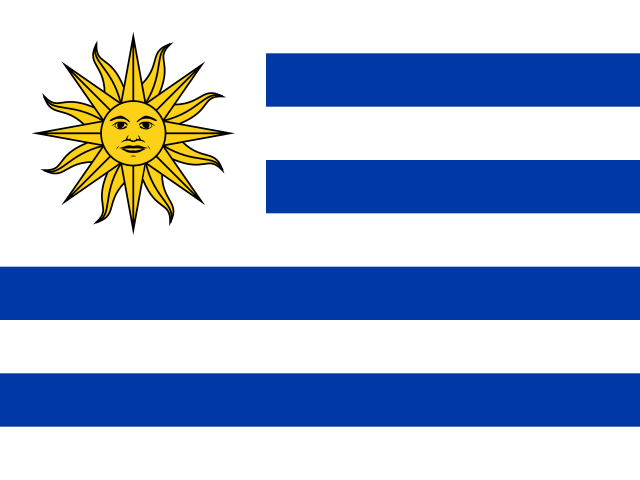
Uruguay is a small country on the southeastern coast of South America, bordered by Brazil to the north and Argentina to the west. It is known for its progressive social policies, rolling grasslands, and strong beef and wine industries. The country enjoys a high standard of living by regional standards and a long tradition of democratic governance.
- Capital
- Montevideo
- Continent
- Americas
- Region
- South America
- Area
- 181,034 km²
- Coordinates
- 33° S, 56° W
- Languages
- Spanish
- Currency
- UYU $
- Domain
- .uy
- Calling code
- +598
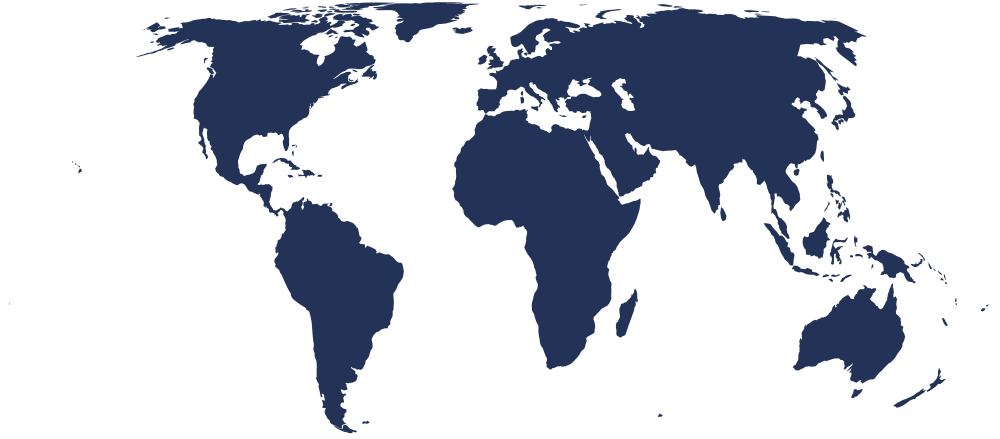
On the world map
Bordering countries
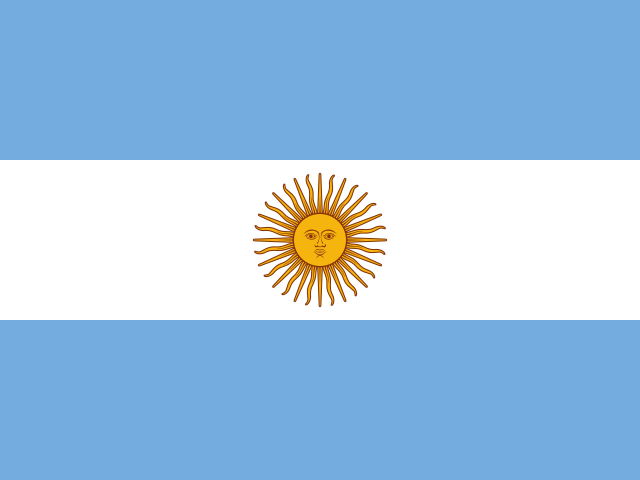 Argentina
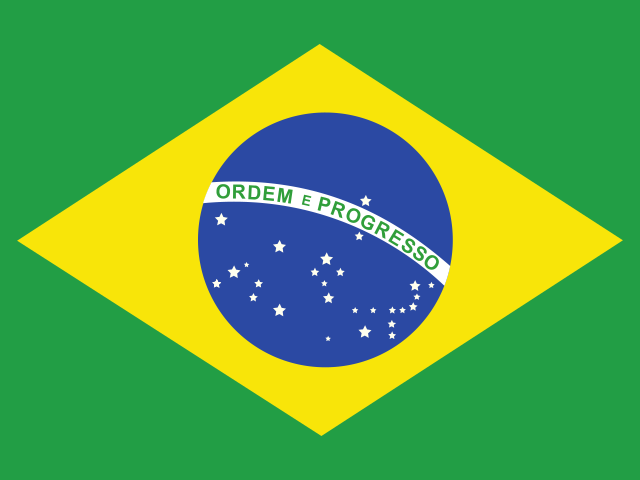 Brazil
Country facts
- Uruguay was the first country in the world to provide every public school student with a free laptop computer, through the Plan Ceibal launched in 2007.
- The country legalized the production, sale, and consumption of cannabis in 2013, becoming one of the first nations to do so nationwide.
- Over 70 percent of Uruguay's electricity comes from renewable energy sources, particularly wind and hydropower.
- The national sport of Uruguay is officially pato, a game played on horseback, though football is by far the most popular sport in practice.
- Uruguay won the first-ever FIFA World Cup in 1930, which it also hosted on home soil.
Capital facts
- Montevideo was formally founded by Spanish colonists in 1724 and grew into a major port city on the Río de la Plata estuary.
- The Ciudad Vieja, or Old City, is Montevideo's historic quarter and home to colonial architecture, museums, and the bustling Mercado del Puerto.
- Montevideo hosts one of the longest carnival celebrations in the world, lasting around 40 days each year.
- The Rambla, a scenic coastal promenade stretching about 22 kilometers, is one of the longest waterfront walkways in South America.
- Montevideo is home to around half of Uruguay's entire population, making it an unusually dominant capital city relative to the country's size.