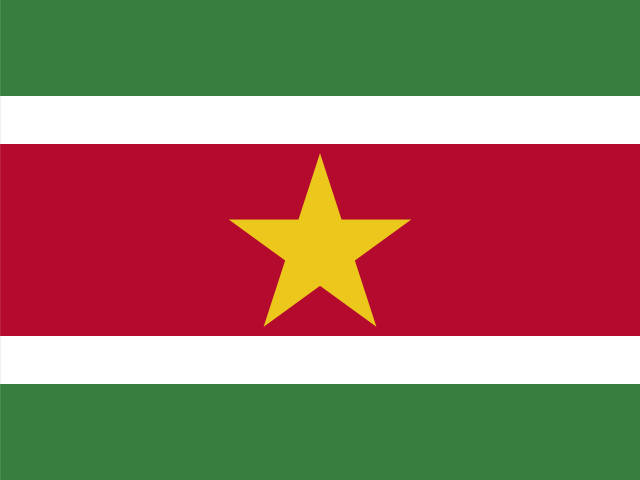
Suriname is a small country on the northeastern coast of South America, bordered by Guyana, Brazil, and French Guiana. It is known for having the largest share of its territory covered by tropical rainforest of any country in the world. Suriname stands out in the Americas for its Dutch colonial heritage and its remarkably diverse population, which includes descendants of South Asian, Javanese, African, Chinese, and Indigenous peoples.
- Capital
- Paramaribo
- Continent
- Americas
- Region
- South America
- Area
- 163,820 km²
- Coordinates
- 4° N, 56° W
- Languages
- Dutch
- Currency
- SRD $
- Domain
- .sr
- Calling code
- +597
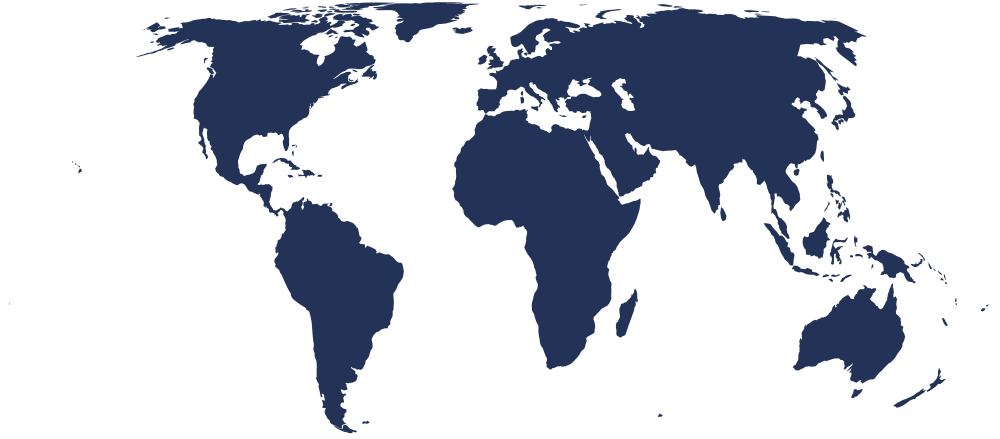
On the world map
Bordering countries
 Brazil
 Guyana
Country facts
- Suriname is the smallest sovereign country in South America by area.
- Dutch is the official language, making Suriname one of the few places outside Europe where Dutch is spoken officially.
- Suriname was a major sugar-producing colony and relied heavily on enslaved African labor before abolition in 1863.
- The country gained independence from the Netherlands on November 25, 1975.
- Suriname's interior is home to Maroon communities descended from escaped enslaved Africans who established free settlements centuries ago.
Capital facts
- Paramaribo sits on the Suriname River, roughly 15 kilometers from the Atlantic coast.
- The historic inner city of Paramaribo is a UNESCO World Heritage Site, recognized for its blend of Dutch colonial and local architectural styles.
- The city's Saint Peter and Paul Cathedral is one of the largest wooden buildings in the Western Hemisphere.
- Paramaribo's central Fort Zeelandia was built by the Dutch in the seventeenth century and still stands today.
- The city's central market and waterfront are vibrant hubs where the multicultural character of Surinamese society is especially visible.