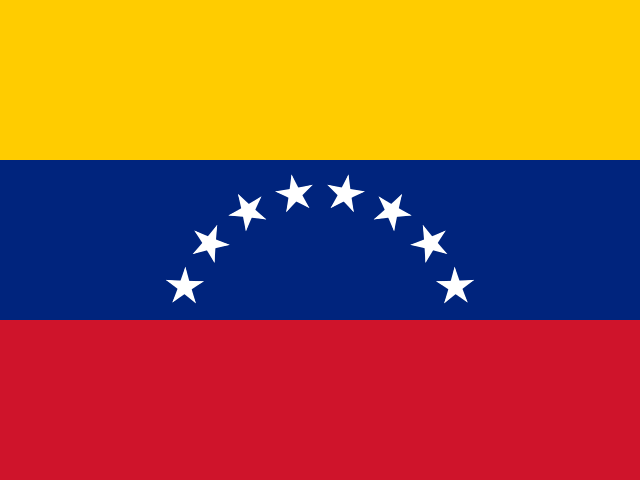
Venezuela is a country on the northern coast of South America, bordered by Colombia, Brazil, and Guyana. It is famous for Angel Falls, the world's highest uninterrupted waterfall, and for its vast oil reserves. The country also boasts remarkable biodiversity, including the unique tabletop mountains known as tepuis.
- Capital
- Caracas
- Continent
- Americas
- Region
- South America
- Area
- 916,445 km²
- Coordinates
- 8° N, 66° W
- Languages
- Spanish
- Currency
- VES Bs.S.
- Domain
- .ve
- Calling code
- +58
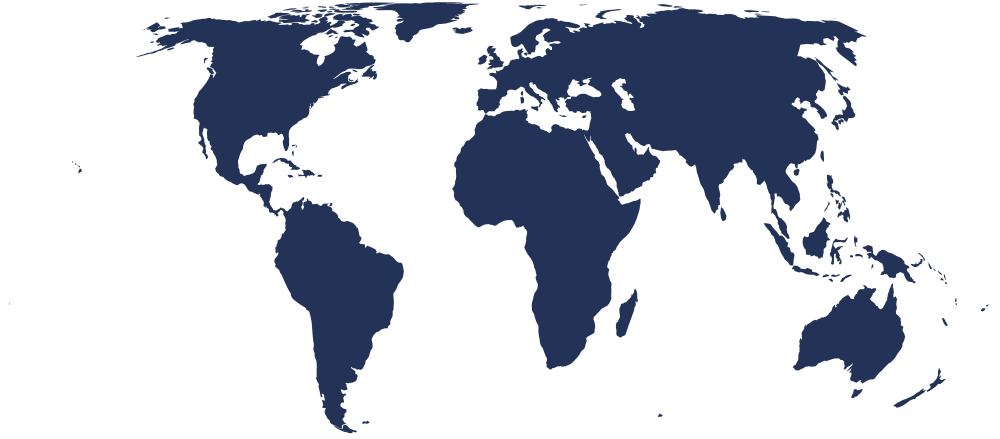
On the world map
Bordering countries
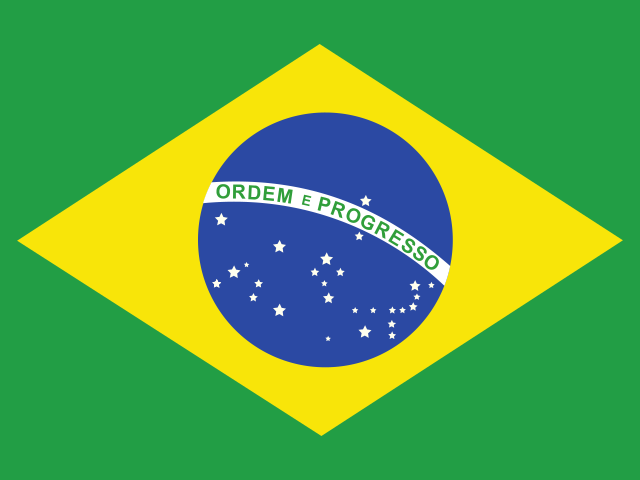 Brazil
 Colombia
 Guyana
Country facts
- Venezuela was part of Gran Colombia before becoming a fully independent republic in 1830.
- The Orinoco River, one of the longest rivers in South America, flows through Venezuela and supports an extraordinary range of wildlife.
- Venezuela is one of the world's leading oil-producing nations, with some of the largest proven petroleum reserves on Earth.
- The national sport of Venezuela is baseball, introduced in the late 19th century and deeply embedded in the country's culture.
- Venezuela's national bird is the Venezuelan troupial, a striking orange-and-black songbird recognized as a symbol of the country.
Capital facts
- Caracas was founded by Spanish conquistador Diego de Losada in 1567 under the name Santiago de León de Caracas.
- The city sits in a narrow mountain valley at roughly 900 meters above sea level, giving it a mild climate despite its tropical location.
- Simón Bolívar, the liberator of much of South America, was born in Caracas in 1783.
- The Teresa Carreño Cultural Complex in Caracas is one of the largest performing arts venues in Latin America.
- Caracas is home to the Central University of Venezuela, whose campus is a UNESCO World Heritage Site celebrated for its modernist architecture.