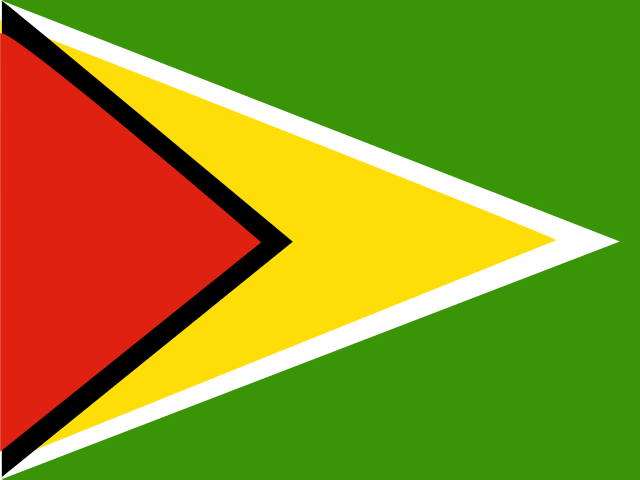
Guyana is a small country on the northeastern coast of South America, bordered by Venezuela, Brazil, and Suriname. It is the only English-speaking country in South America, a legacy of British colonial rule. Guyana is renowned for its vast, largely untouched rainforests, spectacular waterfalls, and exceptional biodiversity.
- Capital
- Georgetown
- Continent
- Americas
- Region
- South America
- Area
- 214,969 km²
- Coordinates
- 5° N, 59° W
- Languages
- English
- Currency
- GYD $
- Domain
- .gy
- Calling code
- +592
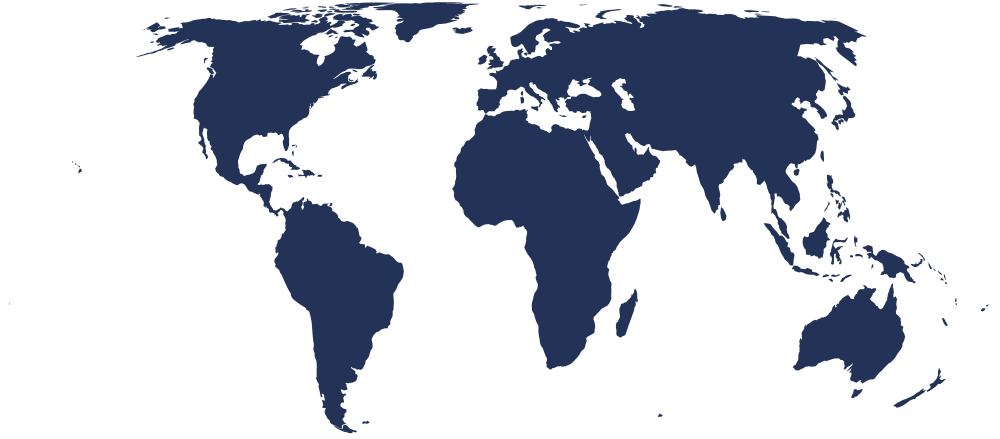
On the world map
Bordering countries
 Brazil
 Suriname
 Venezuela
Country facts
- Kaieteur Falls, located in Guyana's interior, is one of the most powerful waterfalls in the world by volume of water flow.
- Guyana gained independence from Britain in 1966 and became a republic in 1970.
- The country's name is believed to derive from an indigenous word meaning 'land of many waters.'
- Guyana has one of the most ethnically diverse populations in the Americas, with significant African, Indian, Indigenous, and mixed-heritage communities.
- The national bird of Guyana is the Canje Pheasant, also known as the hoatzin, a striking and ancient-looking species found in its wetlands.
Capital facts
- Georgetown was founded by the British in the late eighteenth century and was originally called Stabroek.
- Much of Georgetown was built on land reclaimed from the sea and sits below sea level, protected by a system of seawalls and canals.
- The city's Saint George's Cathedral is a striking wooden Anglican church and one of the tallest wooden buildings in the world.
- Georgetown is home to the Demerara Harbour Bridge, one of the longest floating pontoon bridges in the world.
- The Stabroek Market, with its distinctive cast-iron clock tower, has been a central hub of commerce in the city since the nineteenth century.