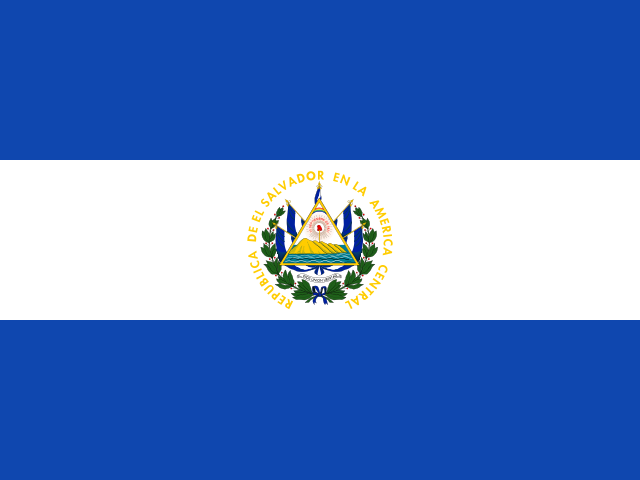
El Salvador is the smallest and most densely populated country in Central America, bordering Guatemala, Honduras, and the Pacific Ocean. It is known for its volcanic landscapes, vibrant surf culture, and ancient Mayan heritage. The country has undergone significant transformation since its civil war ended in 1992 and is celebrated for its pupusas, a beloved traditional dish.
- Capital
- San Salvador
- Continent
- Americas
- Region
- Central America
- Area
- 21,041 km²
- Coordinates
- 14° N, 89° W
- Languages
- Spanish
- Currency
- USD $
- Domain
- .sv
- Calling code
- +503
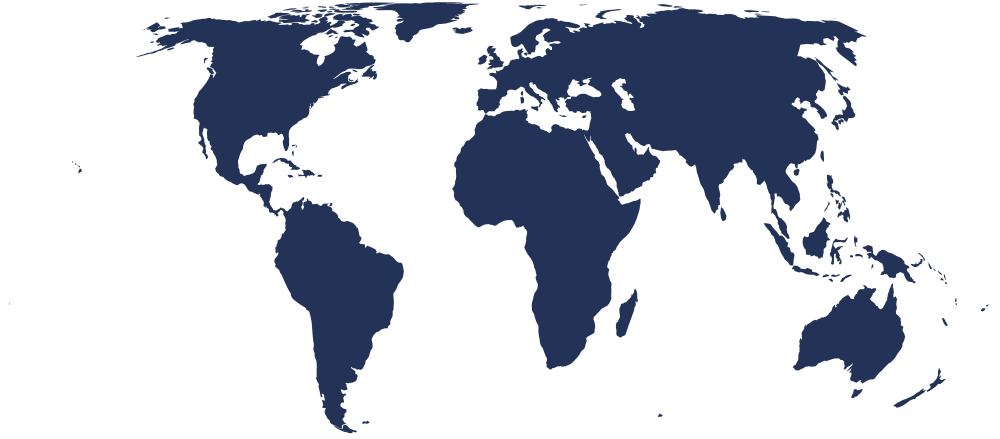
On the world map
Bordering countries
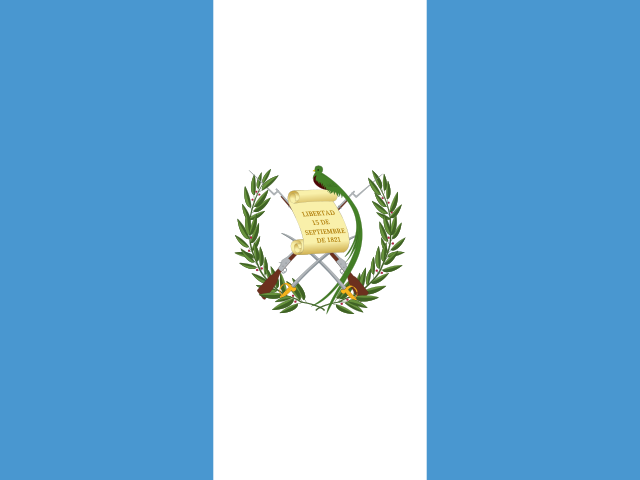 Guatemala
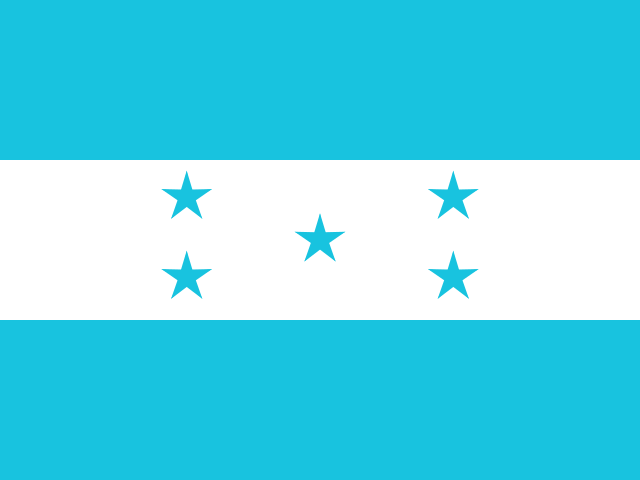 Honduras
Country facts
- El Salvador is the only country in Central America without a Caribbean coastline.
- The country lies along the Pacific Ring of Fire and has more than twenty volcanoes, several of which are still active.
- Spanish is the official language, and it is the predominant language spoken by virtually the entire population.
- The ancient Maya site of Joya de Cerén was buried by a volcanic eruption around 600 CE and is now a UNESCO World Heritage Site.
- El Salvador was the first country to make Bitcoin legal tender, in 2021, but it reversed the decision in 2025 under an agreement with the IMF.
Capital facts
- San Salvador was founded by Spanish conquistadors in 1525, making it one of the oldest continuously inhabited cities in the Americas.
- The city sits in a valley surrounded by volcanoes, including the iconic Santa Ana and San Salvador volcanoes.
- The Metropolitan Cathedral of San Salvador is a landmark in the historic center and houses the tomb of Archbishop Óscar Romero.
- San Salvador has been rebuilt multiple times after devastating earthquakes, most notably after major quakes in 1854, 1917, and 1986.
- The National Palace, located on the central plaza, is a neoclassical building that served as the seat of Salvadoran government for much of the twentieth century.