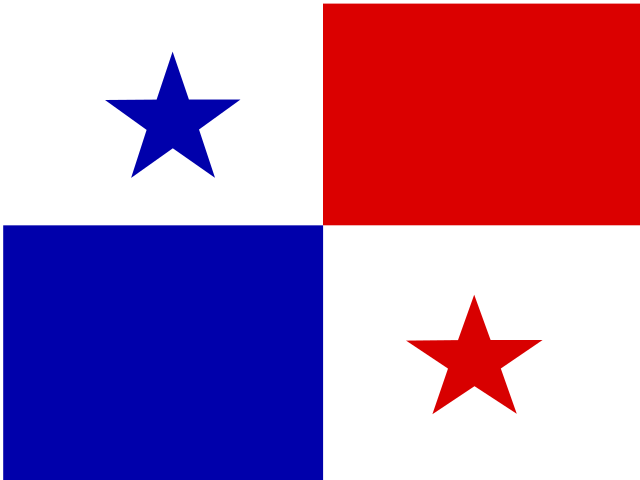
Panama is a narrow country in Central America connecting North and South America, bordered by Costa Rica to the west and Colombia to the east. It is best known for the Panama Canal, an engineering marvel that links the Atlantic and Pacific Oceans. The country also boasts remarkable biodiversity, with lush rainforests, coral reefs, and hundreds of bird species.
- Capital
- Panama City
- Continent
- Americas
- Region
- Central America
- Area
- 75,417 km²
- Coordinates
- 9° N, 80° W
- Languages
- Spanish
- Currency
- PAB B/., USD $
- Domain
- .pa
- Calling code
- +507
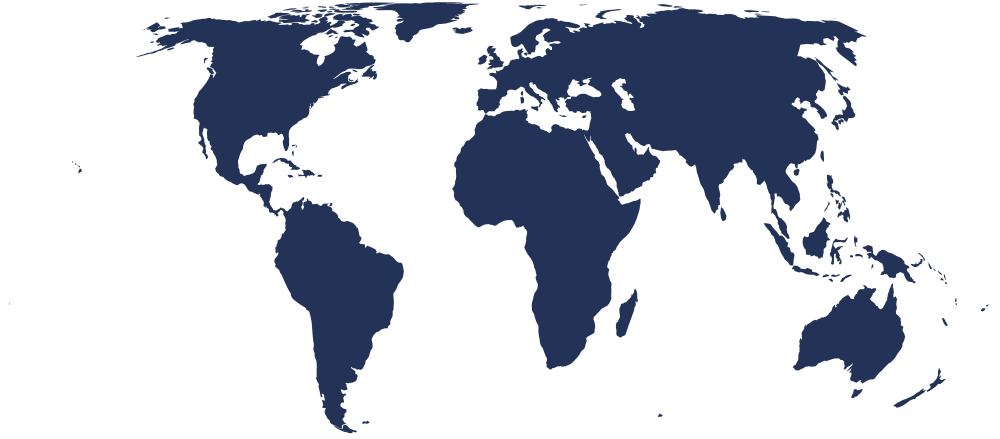
On the world map
Bordering countries
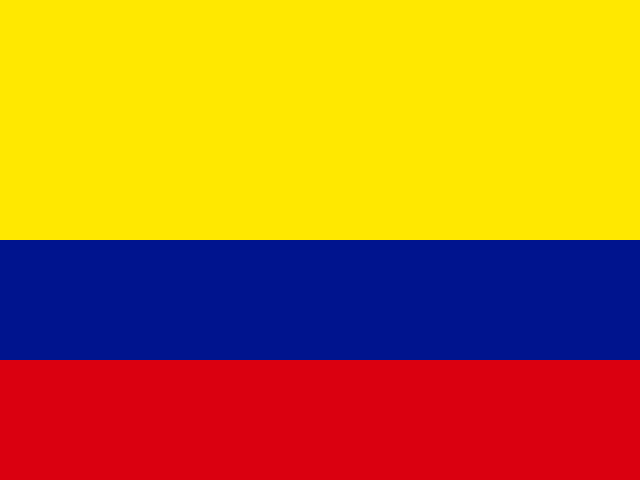 Colombia
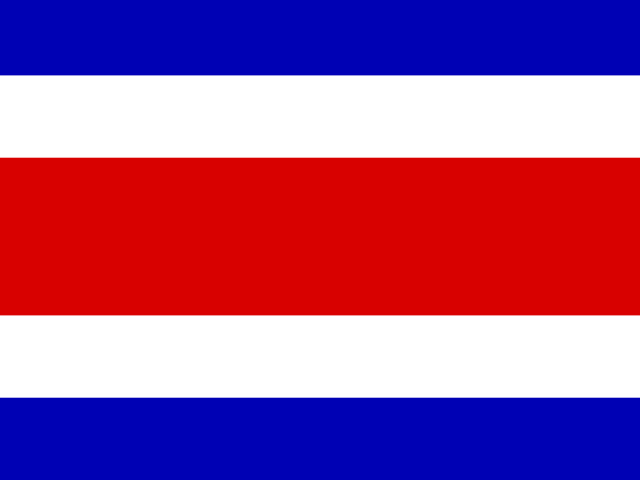 Costa Rica
Country facts
- Panama gained independence from Colombia in 1903, with the United States playing a key role in supporting the separation.
- The Panama Canal, opened in 1914, handles roughly 3 to 4 percent of global maritime trade each year.
- Panama is home to the harpy eagle, one of the world's largest and most powerful eagles, which is also the country's national bird.
- Spanish is the official language, but over 60 indigenous languages are also spoken across the country.
- The traditional pollera, an elaborate handmade dress, is considered one of the most beautiful folk costumes in Latin America.
Capital facts
- Panama City was founded by Spanish colonizers in 1519, making it one of the oldest continuously inhabited European-established cities on the Pacific coast of the Americas.
- The historic district of Casco Viejo, established after the original city was destroyed by the privateer Henry Morgan in 1671, is a UNESCO World Heritage Site.
- Panama City's skyline is one of the most striking in Latin America, featuring a dense cluster of modern skyscrapers along the Pacific waterfront.
- The Miraflores Locks, where visitors can watch massive ships pass through the Panama Canal, are located just a short drive from the city center.
- Panama City sits at the Pacific entrance of the Panama Canal, making it a major hub for global shipping and international finance.